 Ferndale
 Building New in Custer? The Windows Need to Match the Site
Custer sits close enough to the water that salt-laden air is a real factor in how building materials age, and far enough into Whatcom County's rain belt that a home here will see months of steady, driving rain every winter. Add a moss season that runs longer than most of the state deals with, and you've got a set of conditions that punishes any weak point in a building envelope. New-construction windows are one of the biggest openings in that envelope, so getting them right the first time — during framing, before siding and trim close everything up — matters more here than it does in a drier inland town.
This page is about one job specifically: installing windows in new construction (not retrofitting old openings) for homes being built in and around Custer. It's a different process from replacement window work, with different failure points if it's done wrong, and different opportunities to get it right when the wall is still open.
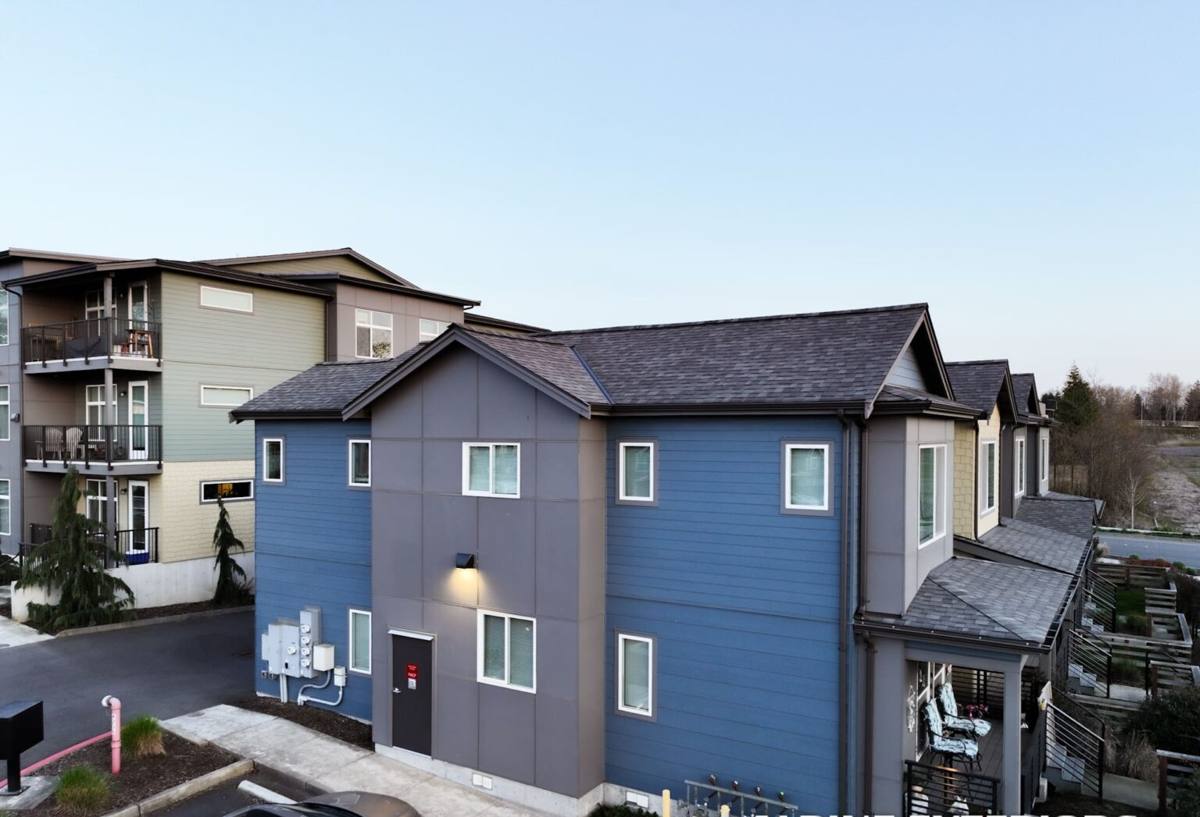
Why New-Construction Windows Are a Different Job Than Replacements
A new-construction window has a nailing flange (fin) around the perimeter that fastens to the sheathing before the weather-resistive barrier (WRB) and siding go on. That's what separates it from a "replacement" or "pocket" window, which gets slipped into an existing frame with no access to the rough opening. The advantage of doing it right at the framing stage is real: we can build a proper sill pan, lap the WRB and flashing tape in the correct shingle-style order, and integrate the window into the drainage plane before anything covers it up. Once siding is on, most of that access is gone.
That's also why mistakes made at this stage are expensive to fix later. A window installed without a sloped sill pan, or with house wrap taped in the wrong order, can leak for years before anyone notices — usually as rot inside the wall cavity rather than a visible drip. In a climate that delivers sustained wind-driven rain off the water, that margin for error is thinner than it would be in a drier region.
What "Correct" Actually Means at the Rough Opening
- A sloped, sealed sill pan under every window — not just a bead of caulk on the sill framing
- Flashing tape and WRB integrated in proper shingle-lap order (sill, jambs, then head) so water is always directed outward and down
- Backer rod and sealant at the interior air seal, separate from the exterior weather seal — one job for water, one for air
- Shims and fasteners set so the frame isn't racked or bowed, which affects both the seal and how the sash operates for the life of the window
- Head flashing with a drip cap detail, especially under any wall areas exposed to prevailing wind and rain
- Nailing fin fully and evenly fastened per the manufacturer's schedule — skipped fasteners are a common source of long-term air and water infiltration
What the Coastal Whatcom County Climate Asks of a Window Installation
Three conditions drive most of our decisions on a Custer job: salt air, driving rain, and a moss/algae season that runs long because of persistent damp and shade.
Salt Air
Proximity to the water means airborne salt settles on exterior surfaces and hardware over time. It's not enough to strip paint overnight, but it accelerates corrosion on unprotected fasteners, hinges, and lower-grade cladding finishes. We factor this into fastener selection (corrosion-resistant, not just galvanized) and frame material recommendations, since some finishes hold up to salt exposure noticeably better than others over a couple of decades.
Driving Rain
Rain that falls straight down is a much easier problem than rain that's being pushed sideways by wind — and Whatcom County gets plenty of the second kind, especially in exposed sites. Driving rain finds gaps that vertical rain never would, which is exactly why sill pan drainage and correct flashing lap order aren't optional details — they're the difference between a window that sheds wind-driven water and one that lets it track sideways into the wall.
Extended Moss and Algae Season
Persistent moisture and lower winter light keep moss and algae active on north- and shade-facing wall sections for much of the year. On windows, that mostly shows up as grime and green staining on sills, frames, and trim rather than structural damage — but it's a maintenance and appearance issue worth planning for with frame materials and finishes that clean up easily and don't have porous surfaces where organic growth gets a foothold.
Choosing Window Products for a Custer New Build
We don't push one brand as the answer for every home — the right product depends on budget, architectural style, and how exposed the site is. What we do insist on is matching the frame material and glazing package to the climate conditions above, rather than defaulting to whatever's cheapest per unit.
| Frame Material | Salt Air / Coastal Fit | Maintenance | Typical Trade-offs |
|---|---|---|---|
| Vinyl | Good — won't corrode or rust | Low; occasional rinse | Lower cost, fewer color/paint options, can expand/contract with temperature swings |
| Fiberglass | Very good — dimensionally stable, holds finishes well | Low | Higher upfront cost, longer lead times on some lines |
| Aluminum-clad wood | Good exterior protection if properly finished; wood interior needs upkeep | Moderate — exterior low, interior wood needs periodic attention | Higher cost, premium appearance, thermal bridging unless thermally broken |
| Bare wood | Weakest fit for this climate without diligent maintenance | High — regular refinishing needed | Best traditional appearance, but the maintenance burden is real in a wet, salt-air climate |
For most Custer new-construction projects we lean toward vinyl or fiberglass for their combination of low maintenance and predictable performance in wet, salt-exposed conditions. Where a homeowner wants the look of wood, we talk through the maintenance commitment honestly rather than let it be a surprise five years in.
Glazing and Performance
Double-pane, Low-E glazing with argon fill is the practical baseline for this region — it manages both winter heat loss and the low-angle glare common in the Pacific Northwest's overcast months. Look for a U-factor and Solar Heat Gain Coefficient (SHGC) suited to a marine climate; a certified NFRC label on the window lets you compare products on real numbers rather than marketing claims. We can walk through what those numbers mean for a specific home's orientation and window count.
Our Process for New-Construction Window Installs
- Plan review and rough opening verification — confirm window sizes and rough openings match the architectural plans before framing is finalized, catching sizing conflicts early rather than mid-install.
- Sill pan and flashing prep — build a sloped, sealed sill pan at every opening before the window ever goes in.
- Window set and fastening — shim, level, and plumb the unit, then fasten the nailing fin per manufacturer schedule with corrosion-resistant fasteners.
- Flashing integration — tape and lap flashing with the WRB in the correct shingle order so the drainage plane stays continuous.
- Interior air seal — backer rod and sealant at the interior gap, separate from exterior weatherproofing.
- Operation and quality check — every sash opens, closes, and locks smoothly before we move on, and every unit gets a visual and water-path check.
- Final walkthrough — review the completed openings with the builder or homeowner before siding closes them up for good.
Cost Factors on a New-Construction Window Job
Costs vary by window count, size, frame material, and glazing package, so we don't quote broad numbers without seeing the plans. What we can tell you is what tends to move the price:
- Frame material — vinyl is typically the most budget-friendly, fiberglass and clad-wood cost more upfront
- Window size and configuration — large picture windows, bays, and multi-unit combinations cost more to supply and install than standard single units
- Glazing upgrades — triple-pane or higher-performance Low-E coatings add cost but can be worth it on exposed elevations
- Site conditions — access, framing stage timing, and how many trades we're coordinating around affect labor time
The most reliable way to get an accurate number is a look at the actual plans and a walk of the site — we're happy to provide that as part of a free estimate.
Why It Matters to Hire a Crew That Already Works Custer
Window installation done by a crew unfamiliar with coastal Whatcom County conditions tends to treat every job the same way regardless of exposure, orientation, or how much wind-driven rain a wall will actually see. A crew that regularly works Custer and the surrounding Ferndale area already accounts for the salt air, the rain patterns, and the moss/algae exposure in how we sequence flashing, choose fasteners, and recommend frame materials — it's built into the process, not an afterthought. We also know how local building department expectations and inspection timing typically run for new construction in this part of the county, which keeps the framing schedule moving instead of stalling on window rough-in.
Get a Straightforward Estimate
If you're framing a new home in Custer or elsewhere around Ferndale, we're glad to walk the plans, talk through frame material and glazing options suited to a coastal Whatcom County site, and give you a clear, no-pressure estimate — just fill out the form below to get started.