 Ferndale
 Why Bellingham Roofs Wear Differently Than Roofs Inland
A roof in Bellingham does more work than a roof fifty miles inland. Homes near the water deal with a steady drift of salt-laden air off Bellingham Bay, which speeds up corrosion on fasteners, flashing, and any exposed metal. Add in Whatcom County's long stretch of driving rain each fall and winter, and a roof here has to shed water fast, from every angle, for months at a time without a real break to dry out. Then there's moss — the region's mild, wet climate is close to ideal for it, especially on north-facing slopes and roofs shaded by mature evergreens, which describes a lot of Bellingham lots.
None of this means a roof here needs to be exotic or overbuilt. It means the details that get skipped on an easy job — fastener choice, underlayment coverage, flashing laps, ventilation balance — are exactly the details that decide whether a Bellingham roof looks and performs well at year fifteen, or starts showing problems at year six.
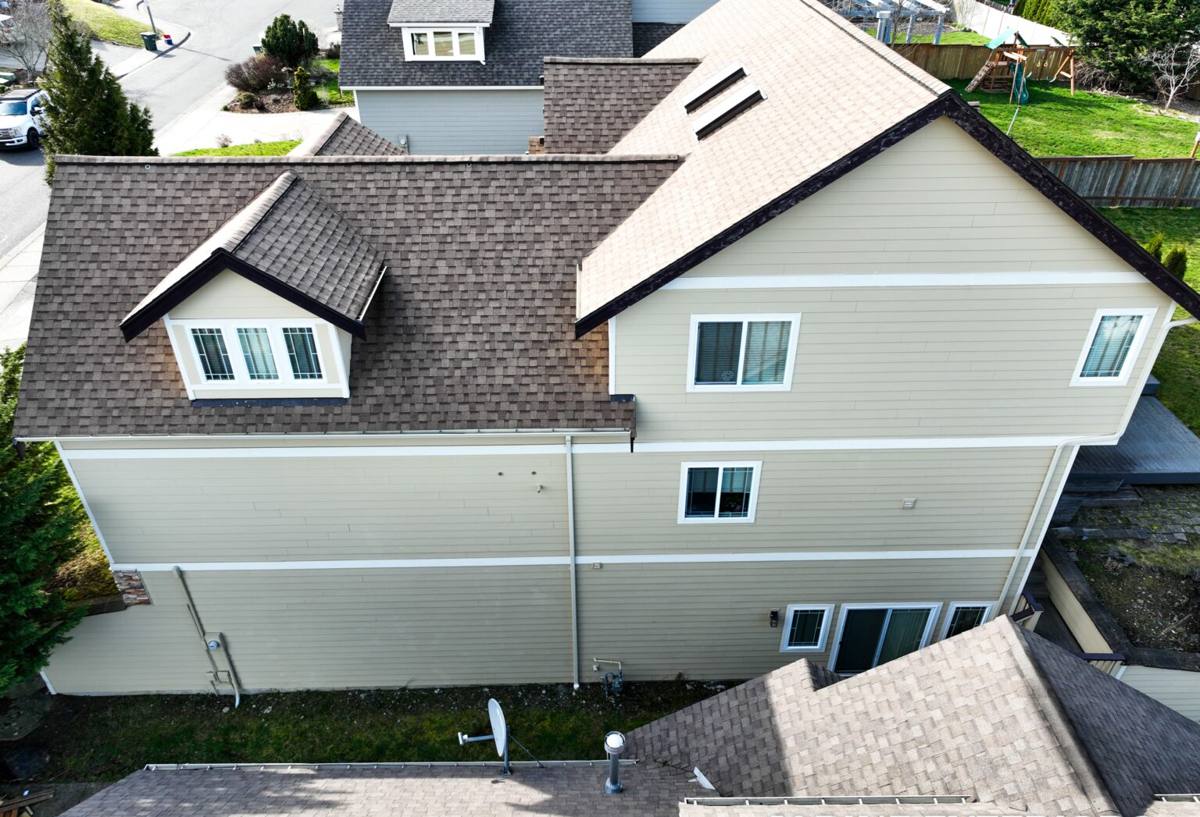
What a Correct New Roof Installation Actually Involves
"New roof" sounds simple, but it's really a stack of separate systems that all have to work together. Skipping or shortcutting any one of them is where most premature roof failures start.
Tear-Off and Deck Inspection
A proper installation starts with full tear-off down to the roof deck, not a layover on top of old material. This is the only point in the job where the plywood or OSB sheathing underneath is actually visible. Soft spots, delamination, or water staining get found and repaired here — not discovered later as a leak.
Underlayment
Underlayment is the roof's real waterproofing layer; the shingles or panels on top are largely there to protect it from sun and shed the bulk of the water. Given how much rain Bellingham gets, we treat underlayment coverage and lap direction as non-negotiable, not a place to save time.
Flashing
Valleys, chimneys, skylights, and wall intersections fail more often at the flashing than anywhere else on the roof. Correctly formed and lapped flashing — installed in the right order relative to the underlayment and roofing material — is what keeps driving rain from finding its way sideways under the surface.
Ventilation
An attic that can't breathe traps moisture, which shortens the life of the decking from underneath and can encourage the same damp conditions that feed moss on the outside. Balanced intake and exhaust ventilation is part of a correct installation, not an upgrade.
Choosing a Roofing Material for the Bellingham Climate
There's no single "best" roofing material — the right choice depends on your home's exposure, roof pitch, budget, and how much long-term maintenance you're willing to take on. Here's how the common options stack up for a coastal Whatcom County home specifically.
| Material | Salt Air Durability | Moss Resistance | Typical Lifespan | Maintenance Level |
|---|---|---|---|---|
| Architectural asphalt shingle | Good with quality fasteners/flashing | Moderate — benefits from zinc/copper strips | 25–30 years | Low to moderate |
| Standing seam metal | Very good with coastal-rated coatings | Good — sheds moss more easily than shingle | 40–50+ years | Low |
| Cedar shake | Fair — needs diligent maintenance near salt air | Poor without regular treatment | 20–30 years with upkeep | High |
| Synthetic/composite shingle | Good | Moderate to good depending on product | 30–50 years | Low |
We're honest with homeowners about trade-offs rather than pushing one product. Cedar shake, for example, can look great, but it demands consistent maintenance to hold up against this region's damp conditions and won't stay low-maintenance the way metal or a good architectural shingle will. That's a maintenance-burden conversation, not a knock on the material itself.
Building In Moss and Algae Resistance From the Start
Moss doesn't just sit on top of a roof — over time it holds moisture against the surface and can work under shingle edges, which shortens the roof's life. Because Bellingham's moss season runs long, we treat resistance as something to design in during installation, not something to fight after the fact.
- Zinc or copper control strips installed near the ridge, which release trace metal ions with every rain to inhibit moss and algae growth down-slope
- Shingle products with built-in algae-resistant granules where that fits the material and budget
- Attention to roof sections shaded by trees, where airflow and sun exposure are naturally lower
- Clean valleys and properly lapped flashing so debris and moisture don't collect in the first place
No roof in this climate is completely moss-proof forever, but these choices meaningfully extend the time between cleanings and reduce how aggressively moss can take hold.
Fasteners and Metal Components: Where Salt Air Does the Most Damage
The metal parts of a roof — nails, flashing, drip edge, vents — are usually where salt air causes trouble first, well before the shingles or panels themselves show wear. On homes with meaningful exposure to air coming off the water, we favor corrosion-resistant fastener and flashing materials over standard-grade options, since the cost difference is small relative to the roof's overall price and the payoff is fewer hidden failure points over the roof's life.
Our Installation Process
A new roof installation runs smoother when the homeowner knows what to expect at each stage. Here's the general order we follow:
- Roof assessment and estimate — we inspect the existing roof, note pitch, layers, decking condition where visible, and ventilation setup, then walk through material options honestly.
- Material selection — we help match a product to your home's exposure, roofline, and budget rather than defaulting to one option for every job.
- Scheduling around weather — given how much of the year sees rain here, we plan tear-off in stages sized to what can be dried in and protected the same day.
- Tear-off and deck repair — old material removed, deck inspected, and any damaged sheathing replaced before anything new goes down.
- Underlayment, flashing, and ventilation install — the systems that do the real waterproofing and moisture management work, installed before the finished surface.
- Roofing material installation — installed to manufacturer specification, since that's also what keeps the material's warranty intact.
- Final walkthrough and cleanup — magnetic sweep for stray fasteners, site cleanup, and a walkthrough so you know what was done and what to watch for going forward.
Permits and Local Considerations
Re-roofing work typically requires a permit, and requirements can vary depending on your specific jurisdiction within Whatcom County. We handle the permitting process as part of the job so homeowners aren't left tracking down paperwork on their own. We also factor in Bellingham's typical wind exposure and rainfall patterns when recommending fastening schedules and material ratings, rather than defaulting to a generic inland spec.
Signs Your Roof Needs Replacement, Not Another Repair
Not every roof problem calls for full replacement — but in a climate this wet, small issues compound faster than they would elsewhere. Here's what tends to signal it's time for a new roof rather than another patch:
- Shingles that are curling, cracking, or losing granules across large areas rather than one isolated spot
- Repeated leaks in different locations after previous repairs
- Visible sagging anywhere in the roofline
- Heavy, persistent moss coverage that keeps returning shortly after cleaning
- Daylight visible through the roof deck from inside the attic
- A roof already at or past the upper end of its expected lifespan for its material
- Rising energy bills tied to poor attic ventilation or insulation performance
If you're only seeing one or two of these and the roof is otherwise mid-life, a repair may still be the right call — we'll tell you that directly rather than upselling a full replacement you don't need yet.
Why Local Experience on Bellingham Homes Matters
A roofing crew that mostly works dry, inland climates will size up a Bellingham roof differently than one that installs here regularly. Knowing which slopes in this area tend to hold moss, how much wind-driven rain a given roofline actually sees, and which fastener and flashing upgrades are worth the cost near the water isn't something you get from a spec sheet — it comes from doing the work here, on homes like yours, season after season. That local knowledge is what turns a roof installation from "code minimum" into a roof that's actually built for where it sits.
If you're weighing a new roof for your Bellingham home, we're happy to take a look and walk you through your options with no pressure and no hard sell. Use the form below to request a free estimate, and we'll give you a straight answer about what your roof actually needs.