 Ferndale
 Why Roofs in the Nooksack Area Wear Differently
Nooksack sits in that stretch of Whatcom County where three things gang up on a roof at once: salt-laden air rolling in off the Strait, long stretches of driving rain that don't let up for days, and a moss season that can run eight or nine months out of the year in shaded spots. None of those three things alone is unusual for Western Washington. Together, on the same roof, year after year, they shorten the useful life of a shingle roof that wasn't built with this specific combination in mind.
Salt air accelerates corrosion on exposed metal — flashing, fasteners, vent caps, gutter hardware. Driving rain, especially when it comes in sideways during a fall or winter blow, finds every weak lap, short nail, or under-flashed penetration and works water in behind it instead of over it. And moss doesn't just look bad; it holds moisture against the shingle mat, lifts tabs as it grows, and works its way under the granule layer until the shingle underneath starts to break down years before it should. A roof assembled correctly for this climate handles all three. A roof assembled to a generic spec usually shows problems in one of them within the first five to seven years.
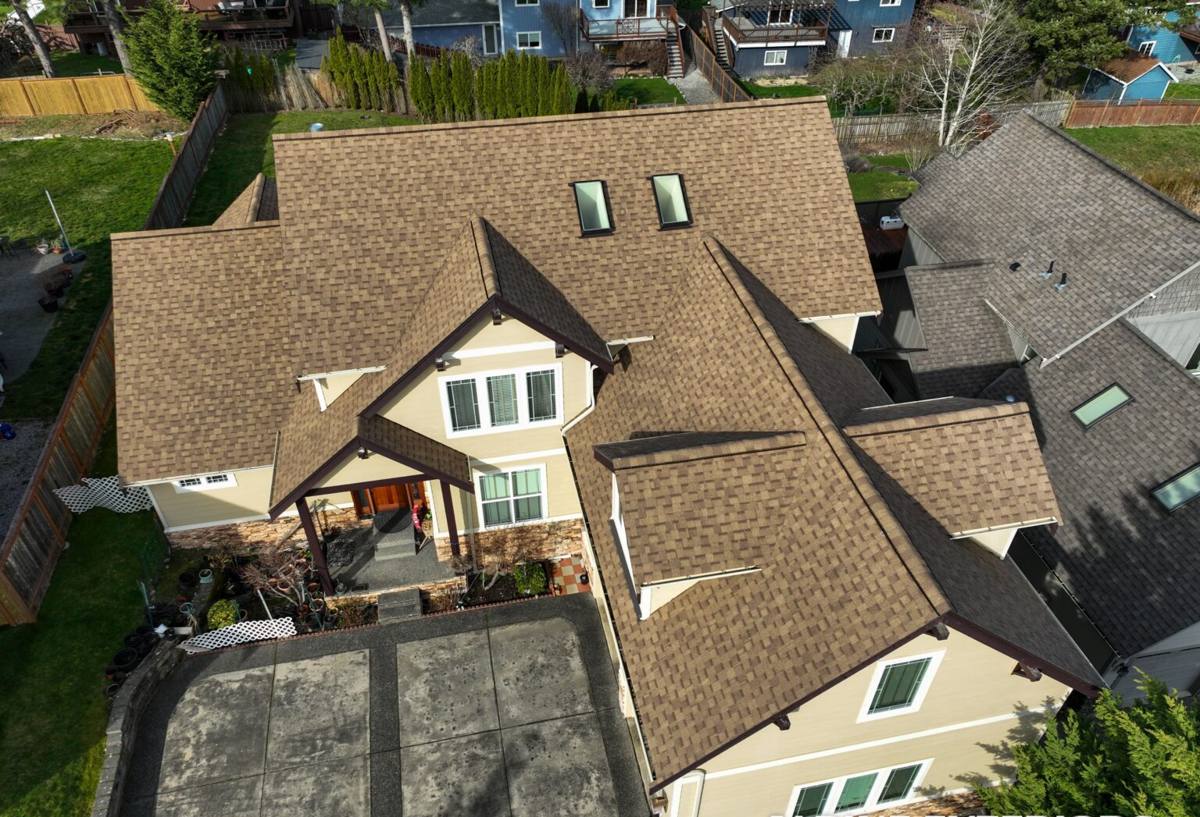
What "Correct" Actually Means on a Shingle Roof Here
A lot of roofing problems we get called out to look at aren't shingle failures — they're installation shortcuts that only show themselves after a few wet seasons. Getting it right the first time isn't complicated, but it does mean not skipping steps that don't show up in a photo.
Starting From the Deck Up
The deck gets inspected and any soft or delaminated sheathing gets replaced before anything else happens — nailing shingles over a spongy deck just hides a problem that will come back as a sag or a leak. From there, a full synthetic or self-adhered underlayment goes down as the actual water barrier; the shingles are the wear layer, not the primary defense, and in a climate that gets this much rain, that distinction matters. Ice-and-water shield gets run at eaves, valleys, and around every penetration — not because Whatcom County sees deep freezes often, but because that same membrane is what stops wind-driven rain from working backward under the shingle course above it.
Flashing Is Where Roofs Actually Fail
Step flashing at every wall intersection, properly lapped valley metal, and correctly sized drip edge at eaves and rakes are what keep a roof watertight through a real coastal storm. Pipe boots, especially the rubber-collar type, are a known weak point in salt air — they harden and crack faster here than inland, so we favor metal-flanged or storm-collar boots on jobs where longevity matters more than shaving a few dollars off the material list. Every one of these details is invisible once the roof is finished, which is exactly why they're the first thing worth asking a contractor about.
Choosing a Shingle That Actually Fits This Climate
Not every asphalt shingle on the market is a good match for salt air and heavy moss pressure. The differences aren't marketing — they show up in how the shingle ages over ten and twenty years.
| Shingle Type | Typical Lifespan Here | How It Handles Local Conditions |
|---|---|---|
| 3-tab | 12–18 years | Lower upfront cost, but thinner mat and less wind resistance; moss and rain exposure tend to shorten its practical life on this coast |
| Architectural / laminate | 22–30 years | Heavier mat, better wind rating, holds up well against driving rain; the standard choice for most Nooksack-area reroofs |
| Algae-resistant (copper/zinc-granule) | 25–30+ years | Same base performance as architectural, with granules formulated to slow moss and algae growth in shaded, damp roof sections |
| Impact-rated / heavier-class | 25–30+ years | Thicker mat resists granule loss from wind-driven debris; worth considering on exposed sites near the Strait |
For most homes in this area, an algae-resistant architectural shingle is the right balance of upfront cost and long-term performance — the growth-resistant granules pay for themselves by cutting down how often the roof needs cleaning and how early moss starts undermining the shingle mat.
Moss: Prevention Beats Removal Every Time
Moss doesn't start on a roof by accident — it starts wherever shade, moisture, and organic debris sit together long enough. North-facing slopes, valleys under overhanging trees, and low-slope sections that don't dry out between storms are where we see it first on Nooksack roofs. Zinc or copper strips installed at the ridge do the ongoing work of suppressing new growth as rain washes trace metal down the roof plane — it's a passive system that requires no maintenance once it's in, and it's far cheaper than repeated moss treatments or early shingle replacement.
Existing moss should be removed with a soft-bristle push or a low-pressure rinse, never scraped or power-washed — pressure washing strips granules and takes years off a shingle's life in a few passes. If a roof already has heavy moss growth, that's worth a real inspection before deciding whether cleaning is enough or whether the mat underneath has already started to degrade.
How We Approach a Roofing Job in Nooksack
Inspection First
We walk the roof, check the deck from the attic side where possible, and look specifically at flashing, valleys, and any past repair points before quoting anything. A roof that looks fine from the ground can be hiding soft decking or failed flashing that changes the scope of the job.
Tear-Off and Deck Check
Full tear-off to bare deck on reroofs — we don't install over existing layers. That's the only way to actually see and fix deck problems instead of covering them up. Any damaged sheathing gets replaced before underlayment goes down.
Dry-In Before Weather Moves In
Underlayment and ice-and-water membrane go down the same day the deck is exposed whenever the schedule allows it. We watch the forecast closely and sequence jobs so a deck isn't left open overnight during an active weather system — not a given with every crew, but it's how open decking stays dry in a place that gets rain on short notice.
Shingle Install and Detail Work
Shingles go down to the manufacturer's nailing pattern and exposure spec — not a shortcut pattern to move faster. Flashing, valleys, and penetrations get the attention described above, since that's where nearly all leaks originate on a roof that's otherwise in good shape.
Cleanup and Walkthrough
Magnetic sweep for nails, gutters checked and cleared of installation debris, and a walkthrough so you know what was done and what to watch for over the first few seasons.
Ventilation Matters More Than Most Homeowners Expect
In a marine climate, a poorly ventilated attic doesn't just waste energy — it traps moisture that condenses on the underside of the deck, which rots sheathing from the inside long before the shingles above it show any sign of trouble. Balanced intake at the eaves and exhaust at the ridge keeps air moving through the attic space year-round. On a reroof, we check existing ventilation as part of the inspection, because fixing shingles above bad ventilation just delays a deck problem instead of solving it.
Why a Crew That Already Works This Area Is Worth Something
Roofing crews that work Whatcom County regularly know which details actually matter here versus what's fine to skip. That's not a sales pitch — it's the difference between a crew that treats every roof identically and one that adjusts pipe boot material, ridge vent metal, and shingle class based on what actually holds up a few miles from the Strait. Being local also means we're not driving in from out of the area for a warranty callback, and we're not guessing at typical wind exposure or rainfall patterns for this specific stretch of coastline — we see the results of past jobs every time we drive through Ferndale and the surrounding area.
Homeowner Maintenance Checklist
Between professional inspections, a few simple habits go a long way toward getting the full lifespan out of a shingle roof in this climate:
- Clear gutters and downspouts at least twice a year — clogged gutters back water up under the shingle edge
- Trim overhanging branches to cut down on shade and debris buildup that feeds moss growth
- Rinse visible moss with a soft brush or low-pressure water — never a pressure washer
- Check attic ventilation isn't blocked by insulation at the eaves
- Have flashing and pipe boots visually checked every few years, since these are the first components to fail in salt air
- Walk the roofline after major windstorms and note any lifted or missing shingles for prompt repair
What Drives the Cost of a Nooksack Reroof
Every roof is different, but the same handful of factors move the price up or down on jobs in this area:
| Factor | Why It Matters |
|---|---|
| Roof complexity (valleys, hips, dormers) | More flashing and cut waste; steeper and more cut-up roofs take longer to install correctly |
| Deck condition | Rot or delamination found at tear-off adds sheathing replacement not visible in an initial quote |
| Shingle class chosen | Algae-resistant and heavier-class shingles cost more upfront but reduce moss-related maintenance and last longer in this climate |
| Ventilation upgrades | Adding or correcting ridge and intake venting is inexpensive during a reroof, far costlier as a standalone project later |
| Access and site conditions | Steep pitches, tree cover, or tight lot access affect labor time and staging |
If you're weighing a repair versus a full reroof, or just want an honest read on how much life is left in your current roof, we're happy to take a look. Reach out for a free, no-pressure estimate — the form below gets you a straightforward answer, not a sales pitch.