 Ferndale
 Board & Batten Siding Built for the Nooksack River Corridor
Board and batten is one of the oldest siding profiles in the Pacific Northwest for a reason — the vertical lines shed water cleanly, the look fits both farmhouses and newer builds, and it holds up visually in a way that flat lap siding sometimes doesn't on rural and semi-rural lots. Homes along the Nooksack River corridor near Ferndale sit in a spot where that vertical shedding matters more than most places: low-lying land, river moisture, and a marine air mass moving in off Bellingham Bay all combine to keep exterior walls wetter, longer, than homes further inland in Whatcom County.
We install board and batten siding for homeowners in this area regularly, and we do it with one product system: James Hardie fiber cement. Not because it's the only option on the market, but because it's the only vertical siding system we've found that holds paint, resists moisture intrusion, and stands up to the specific combination of salt-tinged air and near-constant damp that this stretch of Whatcom County produces.
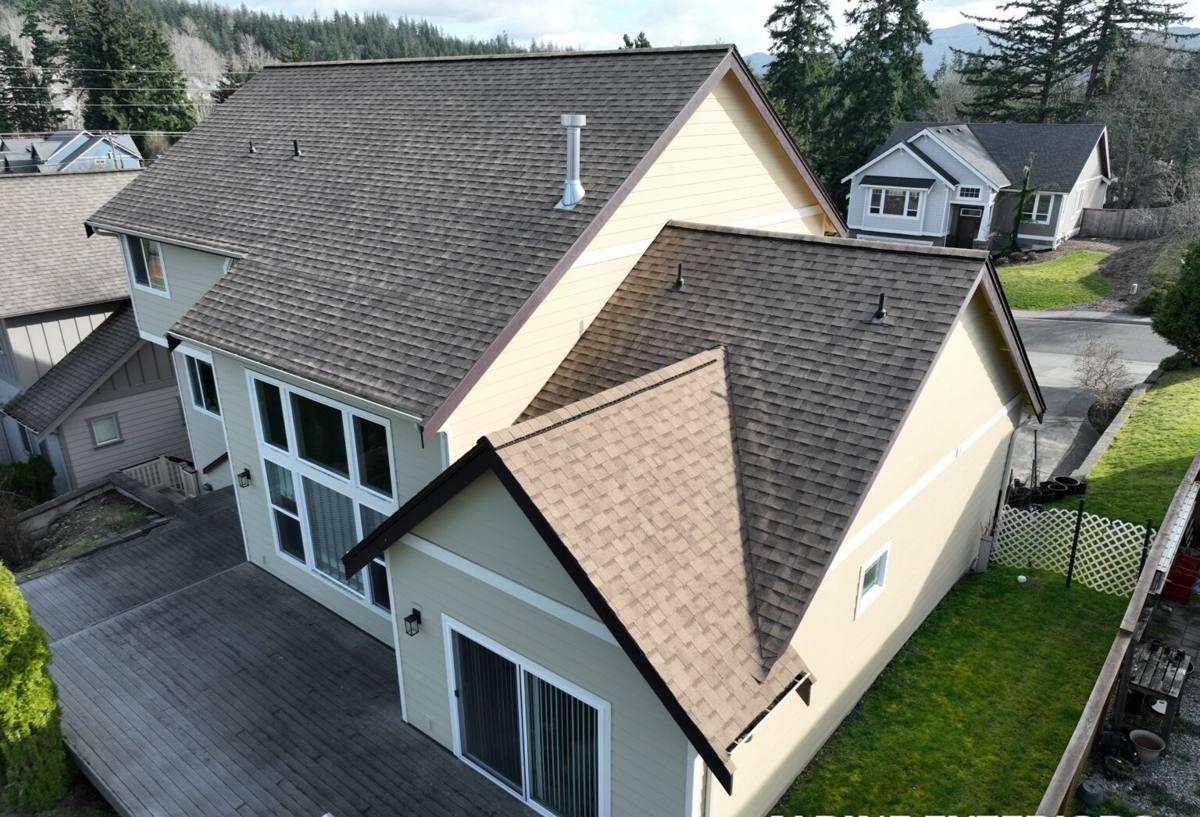
What the Nooksack-Area Climate Actually Does to Vertical Siding
Three things drive siding failure in this part of Ferndale, and they hit board and batten siding differently than they hit horizontal lap siding.
Salt Air
Homes near the Nooksack River and closer to the bay pick up airborne salt that settles on exterior surfaces. On wood-based or composite sidings, that salt film holds moisture against the surface longer between rain events, which accelerates swelling, checking, and paint failure — especially at the vertical seams where battens meet the panel underneath.
Driving Rain
Whatcom County storms often come with wind-driven rain rather than straight-down rain. On a vertical board and batten wall, wind-driven water gets pushed sideways into every seam and fastener line. If the underlying water-resistive barrier, flashing, and batten spacing aren't done correctly, that water finds its way behind the siding — not through it, but around it, at the joints.
Moss Season
Western Washington's long wet season, roughly October through April, gives moss and algae months of shade and moisture to establish on north-facing and tree-shaded walls. Vertical battens create dozens of narrow horizontal ledges (the top edge of every board) where organic debris and moisture collect if the material underneath can't handle sustained dampness.
None of these are exotic problems — they're just steady, cumulative ones. A siding system that isn't engineered for them doesn't fail dramatically; it fails slowly, over years, in ways that are expensive to catch late.
Why Board & Batten Is Less Forgiving Than Lap Siding
Board and batten has more vertical seams per square foot of wall than horizontal lap siding, and every one of those seams is a place water can try to get behind the cladding. That means the installation details matter more here than on almost any other siding profile:
- Batten spacing and fastening pattern have to account for the wider board's expansion and contraction — get this wrong and boards cup, bow, or crack at the fastener line.
- The water-resistive barrier and flashing details behind the siding carry more of the waterproofing burden, because the cladding itself has more penetration points.
- Bottom starter strips and inside/outside corners need to be built correctly the first time — vertical siding makes sloppy corner work far more visible than lap siding does.
- Caulking and sealant choices at seams have to be rated for sustained damp exposure, not just occasional rain.
This is the core reason we don't treat board and batten as a "use whatever siding line and just turn it vertical" job. The profile changes what the material and the installer both need to get right.
James Hardie Board & Batten: The One System We Install
For vertical applications, we install James Hardie's fiber cement panel and batten systems, factory-finished with ColorPlus Technology. Fiber cement doesn't swell, cup, or rot the way wood-based battens can, and it doesn't rely on a field-applied paint job to keep moisture out — the color coat is baked on at the factory under controlled conditions, which is a meaningfully more durable finish than anything applied on-site with a brush or sprayer in Whatcom County's damp working conditions.
We don't install LP SmartSide, vinyl board and batten, Cemplank, Allura, or primed wood battens for this application. Each of those has situations where it performs fine — but for the specific combination of salt air, driving rain, and moss exposure that Nooksack-area homes see, we've standardized on Hardie because:
- It's non-combustible, which matters as wildfire-smoke seasons have become a more regular part of the Pacific Northwest summer.
- The ColorPlus factory finish is warrantied against fading and doesn't require repainting on the schedule that field-painted wood or primed products do.
- Hardie's HZ5 product line is engineered specifically for the wetter, harsher climate zones the Pacific Northwest falls into, rather than a one-size-fits-all national spec.
- The transferable limited warranty holds up through a home sale, which matters to homeowners planning to stay in the Ferndale area long-term or not.
We're upfront that Hardie board and batten costs more up front than vinyl or engineered wood alternatives. What we're not willing to do is install a vertical siding system in this climate that we don't trust to still look and perform correctly a decade from now.
What a Correct Installation Involves
A board and batten job that holds up in this climate isn't just "panel goes on, battens go over the seams." Here's what we build into every install:
| Installation Element | Why It Matters Here |
|---|---|
| Weather-resistive barrier, properly lapped | Backstops any water that gets past the cladding at seams during driving rain |
| Correct flashing at windows, doors, and penetrations | Prevents the most common source of hidden moisture intrusion on vertical siding |
| Proper fastener type, spacing, and placement per Hardie spec | Prevents cracking, popping, and panel movement from repeated wet/dry cycles |
| Rain-screen or ventilation gap where called for | Lets moisture that does get behind the wall dry out instead of sitting against sheathing |
| Factory-primed and factory-painted panels (ColorPlus) | Removes the weak point of field-applied paint failing in a damp climate |
| Correctly sized starter strips and corner details | Keeps the bottom edge, the most exposed part of the wall, sealed and squared |
Skip any one of these and the siding may look fine for a year or two before the underlying problem shows up as staining, soft spots, or paint failure at the seams.
Our Process for Nooksack-Area Homes
- On-site assessment — we look at your home's exposure: how close to the river or open water, tree cover, prevailing wind direction, and the condition of the current siding and sheathing underneath.
- Moisture and substrate check — before any new siding goes up, we confirm what's underneath is sound. Board and batten over compromised sheathing just hides a problem instead of fixing it.
- Water management plan — barrier, flashing, and ventilation details are planned around your home's specific exposure, not applied as a generic template.
- Installation to Hardie spec — fastening, spacing, and finishing done to manufacturer installation requirements, which is also what keeps the material warranty intact.
- Final walkthrough — we go over seams, corners, and trim details with you directly before calling the job done.
Keeping Board & Batten Siding Clean Through Moss Season
Even the right siding system benefits from basic upkeep in a climate this wet. A simple annual routine goes a long way:
- Rinse siding with a garden hose (not a pressure washer aimed directly at seams) once or twice a year, especially shaded north-facing walls.
- Trim back vegetation and tree limbs that keep a wall in constant shade — sunlight exposure is the single biggest factor in whether moss gets a foothold.
- Check and clear gutters before the fall rains start, since overflowing gutters dump extra water directly onto siding and battens below.
- Look at caulked seams and trim joints once a year for cracking or gaps, and have them resealed before winter.
- Address any dark streaking or green growth early with a mild cleaning solution rather than letting it sit through another wet season.
What Board & Batten Siding Costs to Do Right
Exact pricing depends on your home's size, current condition, and site access, but the factors that move the number are the same on every job:
| Cost Factor | Why It Affects Price |
|---|---|
| Removal of existing siding | Tear-off, disposal, and any sheathing repair found underneath |
| Wall complexity | More corners, gables, and trim details mean more cutting and finishing labor |
| Panel width and reveal choice | Wider boards or custom batten spacing change material yield and labor time |
| Color and trim package | Standard ColorPlus colors vs. custom trim accents affect material cost |
| Site access | Rural or river-adjacent lots can affect staging, scaffolding, and material delivery |
We give straightforward written estimates that break these out, so you know what you're paying for rather than getting a single lump number.
Why a Crew That Already Works in Nooksack Matters
A siding contractor who's worked this specific area of Whatcom County has already seen how the river's moisture pattern, the salt-tinged air, and the shaded, moss-prone lots common to this part of the county actually behave on real houses — not just in a manufacturer's install manual. That translates into decisions made on-site: where to add extra flashing attention, which walls need a closer look at ventilation, and how to sequence a job around this region's wet season instead of fighting it.
We'd rather walk your property, look at your home's actual exposure, and give you a straight answer about what your siding needs than sell you a generic package. If you're in the Nooksack area near Ferndale and considering board and batten siding, we're happy to come out for a free, no-pressure estimate — no obligation, just a clear look at what your home needs and what it would cost to do right. The form below gets that started.