 Ferndale
 Point Roberts Sits in a Tougher Climate Than Most of Whatcom County
Point Roberts is geographically unusual, and that matters for siding. It sits on a peninsula bordered by water on three sides, cut off from the rest of Whatcom County by the international border, and fully exposed to wind and weather coming off the Strait of Georgia and Boundary Bay. A home a few miles inland in Ferndale gets some shelter from trees, terrain, and distance from open water. A home in Point Roberts often doesn't get that buffer.
That exposure shows up in three ways on the outside of a house: salt-laden air that never fully clears, driving rain that hits siding at an angle instead of falling straight down, and a moss season that runs longer here than it does on drier, more open lots elsewhere in the county. None of that is unique to Point Roberts in a dramatic sense — it's Pacific Northwest coastal weather — but it's more concentrated here than in most of the areas we work.
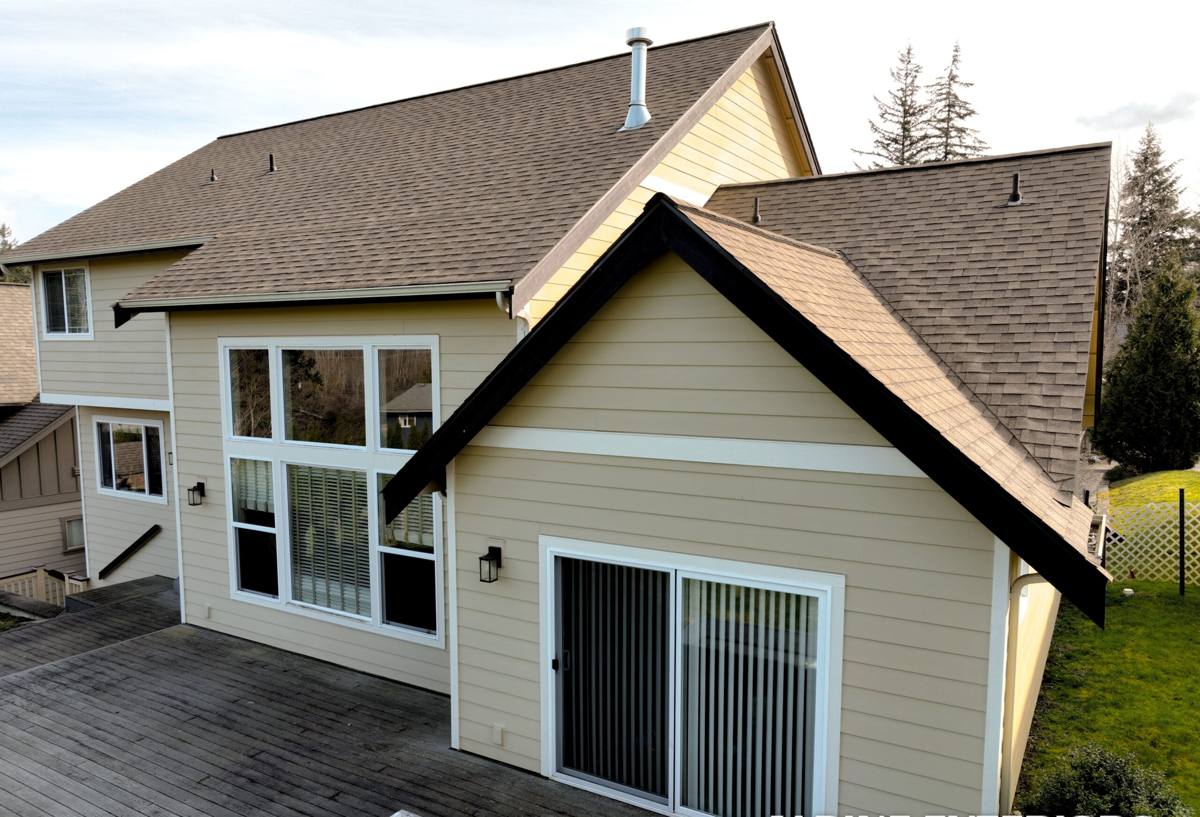
What Salt Air, Wind-Driven Rain, and Moss Actually Do to Siding
Salt and Moisture
Salt in the air settles on exterior surfaces and holds moisture against them longer than it would otherwise sit. On siding materials with exposed fasteners or metal trim, that moisture accelerates corrosion. On painted wood-based siding, salt residue breaks down the paint film faster, which means more frequent repainting just to keep water out — not just to keep the house looking good.
Wind-Driven Rain
Rain that comes in sideways behaves differently than rain that falls straight down. It gets forced up under laps, into seams, and around window and door penetrations that would stay dry in calmer conditions. This is where the water-resistive barrier behind the siding and the flashing at every penetration matter more than the siding material itself — a good product installed with sloppy flashing will still leak.
Moss and Organic Growth
Shaded, damp exterior walls in this climate grow moss and algae faster than open, sun-exposed ones. On wood-based siding, that growth holds moisture directly against a material that can rot. On fiber cement, it's mostly a cosmetic issue that a rinse handles, because there's no wood fiber underneath for the moisture to feed on.
Why We Only Install James Hardie in Conditions Like This
We standardized on James Hardie fiber cement siding for every job we take on, and in a climate like Point Roberts' the reasoning is straightforward. Hardie's boards are made from cement, sand, and cellulose fiber — there's no wood fiber for moss or rot to work on, and the material itself won't absorb and swell the way wood-based products can. It's also non-combustible, which matters anywhere but carries extra weight for homes with limited access for emergency response.
Hardie's HZ5 product line is engineered specifically for climates with the kind of moisture cycling the Pacific Northwest sees — freeze-thaw swings, sustained damp periods, and coastal exposure. And the ColorPlus factory finish is baked on in multiple coats under controlled conditions, which holds color and resists chipping and fading far better than paint applied on-site after installation. In a location where getting a crew and equipment back out for touch-up work is its own logistics project, a finish that doesn't need frequent attention is worth more than it might be somewhere easier to reach.
The Hardie Product System We Use on Point Roberts Homes
A correct siding job isn't one product — it's a system of pieces that work together. Here's what that typically looks like on a Point Roberts home:
| Product | Where It's Used | Why It Fits This Climate |
|---|---|---|
| HardiePlank lap siding | Primary field siding across most of the exterior | Overlapping profile sheds wind-driven rain when installed with correct exposure and fastening |
| HardiePanel vertical siding | Accent areas, gables, or modern-style facades | Fewer horizontal laps for water to work into on vertical wall sections |
| HardieTrim boards | Corners, window and door casings, fascia | Non-combustible, moisture-stable trim that won't cup or rot at high-exposure edges |
| Hardie soffit panels | Under eaves and overhangs | Resists the damp, shaded conditions where moss and mildew take hold fastest |
What a Correct Installation Actually Involves
The siding board is only part of the job. Most siding failures we see in coastal, high-moisture areas trace back to installation details, not the product itself. On a Point Roberts home, we pay particular attention to:
- A properly lapped water-resistive barrier behind the siding, installed before the first board goes up
- A drainage gap or rainscreen so any moisture that does get behind the siding can drain and dry instead of sitting against the wall
- Flashing at every window, door, deck ledger, and roof-to-wall intersection — the points where wind-driven rain finds its way in
- Fastener placement and spacing that follows Hardie's published installation requirements for this exposure zone, not a generic pattern
- Correct minimum clearance from grade, decking, and roof lines so siding isn't sitting in standing water or debris
- Joints and butt seams treated the way Hardie's install manual specifies, rather than caulked over as a catch-all fix
Skipping any one of these doesn't usually cause an obvious problem right away. It shows up two or three years later as a soft spot, a stain, or moss establishing itself somewhere it shouldn't. That's why we install to Hardie's written specification rather than "how it's usually done."
Why a Crew That Already Works Point Roberts Matters
Point Roberts is separated from the rest of Whatcom County by the Canadian border, which means crews, tools, and material deliveries all have to cross through Canada to get there. That's not a dramatic obstacle, but it is a real scheduling factor that a crew unfamiliar with the area often doesn't plan for — border wait times, coordinating a delivery truck's arrival, and structuring a work week so a job doesn't stall out waiting on a single missing bundle of boards or trim pieces.
A crew that already works in Point Roberts builds that planning into the estimate from the start: staging enough material for the full scope in one trip, scheduling around weather windows instead of guessing, and not treating the crossing as an afterthought that eats into install days. That's a logistics advantage as much as a skill one, and it's part of why hiring locally-experienced crews matters here more than it might on a job five minutes from the shop.
Cost Factors for a Point Roberts Siding Job
Every home is different, so we don't quote a number without seeing the house, but the same handful of factors drive cost on most jobs in this area:
| Factor | Why It Affects Cost |
|---|---|
| Home size and siding profile | More square footage and more complex board width/exposure choices mean more material and labor |
| Tear-off vs. installing over existing siding | Full tear-off costs more up front but lets us inspect and fix sheathing issues before they're covered up again |
| Trim and corner complexity | Multiple gables, dormers, or architectural details require more cutting, flashing, and finish trim work |
| Condition of underlying sheathing | Rot or moisture damage found during tear-off has to be repaired before new siding goes on |
| Access and logistics | Material staging and delivery timing for a Point Roberts job factor into scheduling and cost |
| Color and accent choices | ColorPlus color selection and any mixed-profile accent areas (panel vs. plank) affect material pricing |
Our Process From Estimate to Finished Job
We start with an on-site walkthrough, not a phone quote. That includes checking the condition of the existing siding and, where we can, getting a sense of moisture behind it — soft spots, staining, or bubbling paint tell us a lot before we ever pull a board off. From there we put together a written scope covering which Hardie products we're using where, trim details, and color.
Once a job is scheduled, we plan install around weather windows rather than pushing through a soaked stretch — installing over wet sheathing or in driving rain is exactly how moisture problems get built into a "new" job. Tear-off comes with a sheathing inspection, so anything that needs repair gets addressed before new siding goes over it, not after. Installation follows Hardie's fastening, flashing, and clearance specifications for this exposure zone, and we finish with a walkthrough so you know what was done and what to expect from the material going forward.
Keeping Hardie Siding Looking Right Through Moss Season
Hardie siding with a ColorPlus finish needs less upkeep than painted wood-based siding, but "less" isn't "none." An occasional gentle rinse — not a high-pressure wash aimed directly at seams — keeps moss and grime from building up on shaded, north-facing walls. Trimming back vegetation and tree cover near the house reduces the shade and trapped moisture that moss depends on in the first place. It's also worth a periodic look at caulking around windows, doors, and penetrations, since that's the part of the system most likely to need attention over time, even when the siding itself is holding up fine.
If you're weighing a siding project on a Point Roberts home, we're glad to come take a look and talk through what your specific house needs — no pressure, no obligation. Use the form below to request a free estimate.