 Ferndale
 Why Nooksack Roofs Wear Differently
Homes in the Nooksack area, just outside Ferndale in Whatcom County, deal with a specific combination of weather that most roofing guidance never addresses. You're close enough to the coast to pick up salt-laden air, which accelerates corrosion on exposed metal fasteners, flashing, and gutter hardware. You're also sitting under a long wet season where driving rain comes in sideways as often as it falls straight down, pushing water up under shingle edges and into places a roof built for a drier climate was never designed to shed. And because the region rarely gets a hard, sustained freeze to knock back organic growth, moss and lichen get months of uninterrupted growing time on north-facing slopes and shaded valleys.
None of these factors alone is dramatic. Together, over several years, they add up to the kind of roof problems we see over and over in this area: lifted shingle tabs, rusted-through flashing, soft decking under moss mats, and slow leaks that homeowners don't notice until there's a stain on a ceiling. A roof repair here isn't just "patch the leak" — it's addressing the specific way Whatcom County weather attacks a roof.
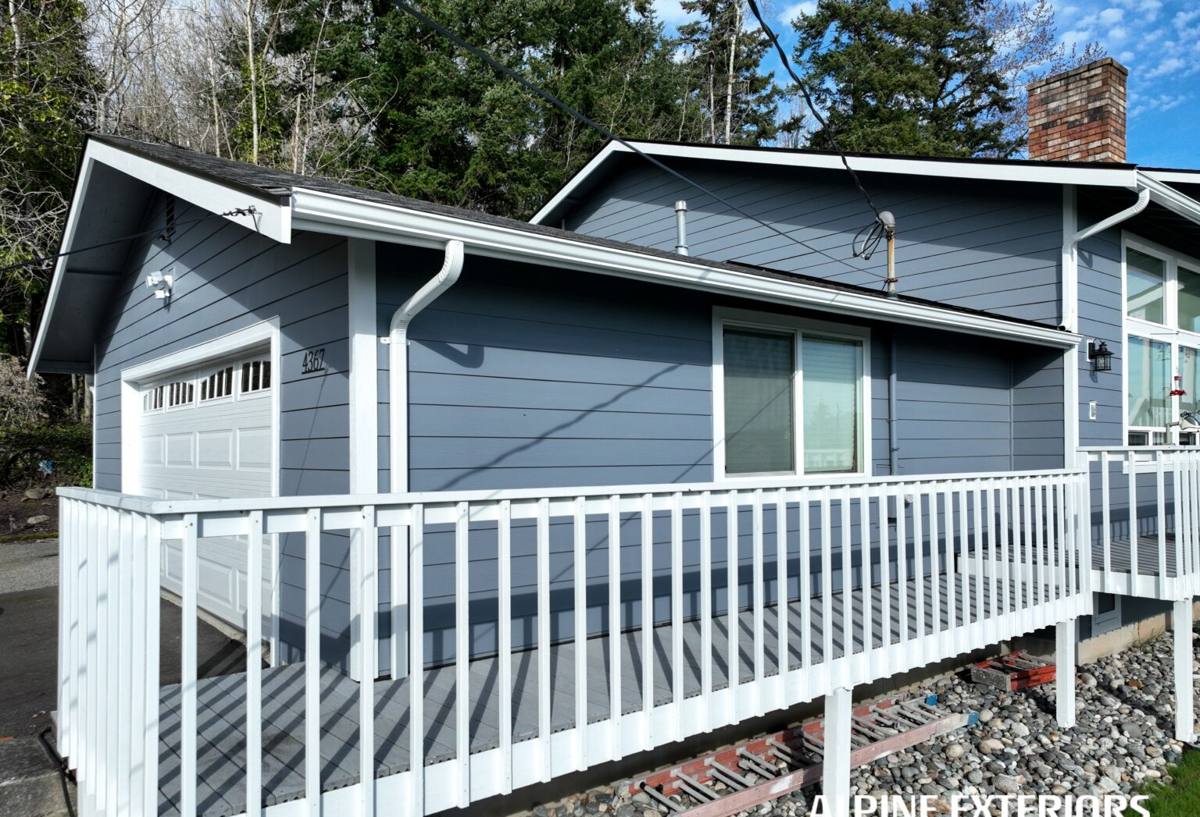
Signs a Nooksack Roof Needs Repair
Most roof damage in this area doesn't announce itself with a dramatic leak on day one. It shows up gradually, and catching it early is the difference between a repair bill and a full tear-off. Watch for:
- Granules collecting in gutters or at downspout outlets — a sign shingles are wearing thin
- Dark streaking or green-black patches, especially on shaded or north-facing sections
- Moss growing in a raised mat rather than a thin film — the mat holds moisture against the shingle
- Curling, cupping, or lifted shingle tabs, particularly along the roof's edges and ridges
- Rust staining running down from flashing around chimneys, vents, or skylights
- Soft or spongy spots underfoot when walking the roof for inspection
- Daylight visible through the attic roof deck, or damp insulation below it
- Water stains on interior ceilings, especially after a stretch of heavy rain
If you're seeing more than one or two of these, it's worth having someone look at the whole roof rather than just the spot that's bothering you. Leaks in this climate rarely stay isolated — water finds the path of least resistance and can travel well away from where it entered.
What a Correct Repair Actually Involves
It Starts With Finding the Real Source
The hardest part of roof repair isn't patching a hole — it's finding where the water is actually getting in. In a climate with this much wind-driven rain, water can enter at a flashing seam, travel along the underlayment, and show up as a stain feet away from the actual failure point. A repair that just seals the visible symptom without tracing the source tends to come back within a season or two.
Flashing and Valleys Get Priority Attention
Flashing around chimneys, skylights, vent pipes, and roof valleys is where most Nooksack-area leaks originate. Salt-influenced air speeds up corrosion on lower-grade metal flashing, and once flashing rusts through or a seam opens up, it's a direct path for water. A proper repair means resealing or replacing flashing with corrosion-resistant material and proper counterflashing — not just running a bead of caulk over the problem, which is a short-term fix at best.
Moss and Debris Removal Comes Before Any Repair Work
You can't properly assess or repair a roof section that's covered in a moss mat — it hides the condition of the shingles underneath and holds moisture against the roof surface, which is exactly what accelerates decay. Removal has to be done carefully with the right tools; pressure washing or aggressive scraping can strip granules and do more damage than the moss itself. Once cleared, we can see the actual state of the shingles and decking and treat the area to slow regrowth.
Decking Repair When Needed
If moisture has been sitting under a moss mat or a slow flashing leak for a while, the plywood or OSB decking underneath can go soft. Shingles laid over compromised decking will never seal properly and will fail again quickly. Part of an honest repair is checking the decking at the repair site and replacing any section that's lost structural integrity, not just re-shingling over it.
Our Repair Process
- Inspection: We walk the roof (weather permitting) and check the attic from inside, looking for the actual water path rather than just the visible symptom.
- Documentation and estimate: You get a clear explanation of what's failing, why, and what it will take to fix it correctly — including whether a repair is the right call or a larger section needs attention.
- Moss and debris clearing: Any growth or buildup around the repair area is removed so we can see and work on sound material.
- Repair work: Damaged shingles, flashing, or decking are replaced with correctly installed, weather-appropriate materials and proper fastening for coastal wind exposure.
- Sealing and detail work: Valleys, transitions, and penetrations are resealed with attention to how water actually moves across this roof in a driving rain.
- Cleanup and walkthrough: We clear debris and show you what was done and why, along with any maintenance notes specific to your roof.
Repair or Replace? Weighing the Real Factors
Not every roof problem in Nooksack needs a full replacement, but not every leak should be patched indefinitely either. These are the factors that actually determine which makes sense:
| Factor | Leans Toward Repair | Leans Toward Replacement |
|---|---|---|
| Age of roofing material | Under roughly 12-15 years, otherwise sound | Approaching or past its expected service life |
| Extent of damage | Isolated to one section or penetration | Widespread granule loss, curling, or multiple leak points |
| Decking condition | Solid, dry decking at the repair site | Soft or rotted decking across multiple areas |
| Moss/algae history | First occurrence, caught early | Repeated growth suggesting chronic moisture retention |
| Flashing condition | Localized corrosion or seam failure | Flashing failing broadly across the roof |
| Budget timeline | Extends roof life a reasonable number of years | Repairs would cost close to replacement within a short span |
Cost for repairs varies widely depending on what's actually found once we're on the roof — a single flashing reseal is a different job than replacing a section of decking and shingles. We'll always give you the honest read on which category your roof falls into before any work starts, and we won't push a full replacement when a solid repair will do the job.
Materials We Work With
Most Nooksack-area homes are roofed in asphalt composition shingles, with some cedar shake and standing-seam metal on older or higher-end properties. Each material fails differently in this climate and needs to be repaired with the right approach:
- Asphalt composition shingles: The most common material locally. Repairs focus on replacing individual shingles and resealing tab adhesion, which weakens with age and repeated wetting.
- Cedar shake: Needs careful moss management, since shake is more vulnerable to rot when organic growth sits on it long-term. Individual shake replacement has to match the surrounding weathering for a proper seal.
- Standing-seam metal: Generally holds up well against moss and rain but is sensitive to seam and fastener failures; salt-influenced corrosion on lower-grade fasteners is the main repair driver we see.
When we replace flashing or fasteners on any of these systems, we use corrosion-resistant materials suited to a coastal-influenced climate rather than the cheapest option available — it costs a little more up front and saves you from doing the same repair again in three years.
Keeping Your Roof Between Repairs
A repair only holds as well as the maintenance that follows it. A short seasonal checklist goes a long way toward keeping Whatcom County weather from undoing the work:
- Clear gutters and downspouts before the fall rains start, and again mid-winter if trees drop needles or leaves
- Have moss growth treated before it forms a raised mat, not after
- Trim back tree limbs that overhang the roof — they shade the surface and shed debris that holds moisture
- Check the attic after a heavy storm for any sign of new moisture or daylight
- Have flashing and seals around chimneys and vents checked every couple of years, since these fail well before the shingle field does
Why Local Experience Matters for This Work
Roof repair advice that isn't calibrated to this specific stretch of Whatcom County can steer you wrong — a crew used to drier inland climates might underestimate how fast moss returns here, or use flashing hardware that isn't rated for salt-influenced air. Working roofs in and around Nooksack and Ferndale regularly means we already know which slopes hold moss longest, which flashing details tend to fail first on local rooflines, and how driving rain off Bellingham Bay actually behaves against a roof edge. That's not something you get from a general roofing checklist — it's built from doing this work, on these roofs, through the same wet seasons your house has been through.
Get an Honest Look at Your Roof
If you're seeing granules in the gutters, moss building up, or a stain that wasn't there last season, it's worth getting a straight answer on what's actually going on before it turns into a bigger repair. We offer free, no-pressure estimates for Nooksack and Ferndale-area homes — fill out the form below and we'll take a look and tell you honestly what your roof needs.