 Ferndale
 Roofing in a Marine Exclave: What Point Roberts Homes Face
Point Roberts sits on its own peninsula at the bottom of the Tsawwassen Peninsula, cut off from the rest of Whatcom County by water and by an international border. That geography is great for privacy and views, and it's hard on roofs. The community is surrounded by water on three sides, which means almost every home there takes on salt-laden air, wind-driven rain off the Strait of Georgia and Boundary Bay, and the kind of persistent damp shade that keeps moss and moisture active most of the year. A roof that would hold up fine twenty minutes inland in Ferndale can show its age years earlier out on the point.
None of that means Point Roberts homes need exotic materials or gimmicks. It means the fundamentals — ventilation, flashing, fastener choice, and underlayment — have to be done right the first time, because callbacks and warranty repairs are a lot more expensive to run out here than they are anywhere else in Whatcom County.
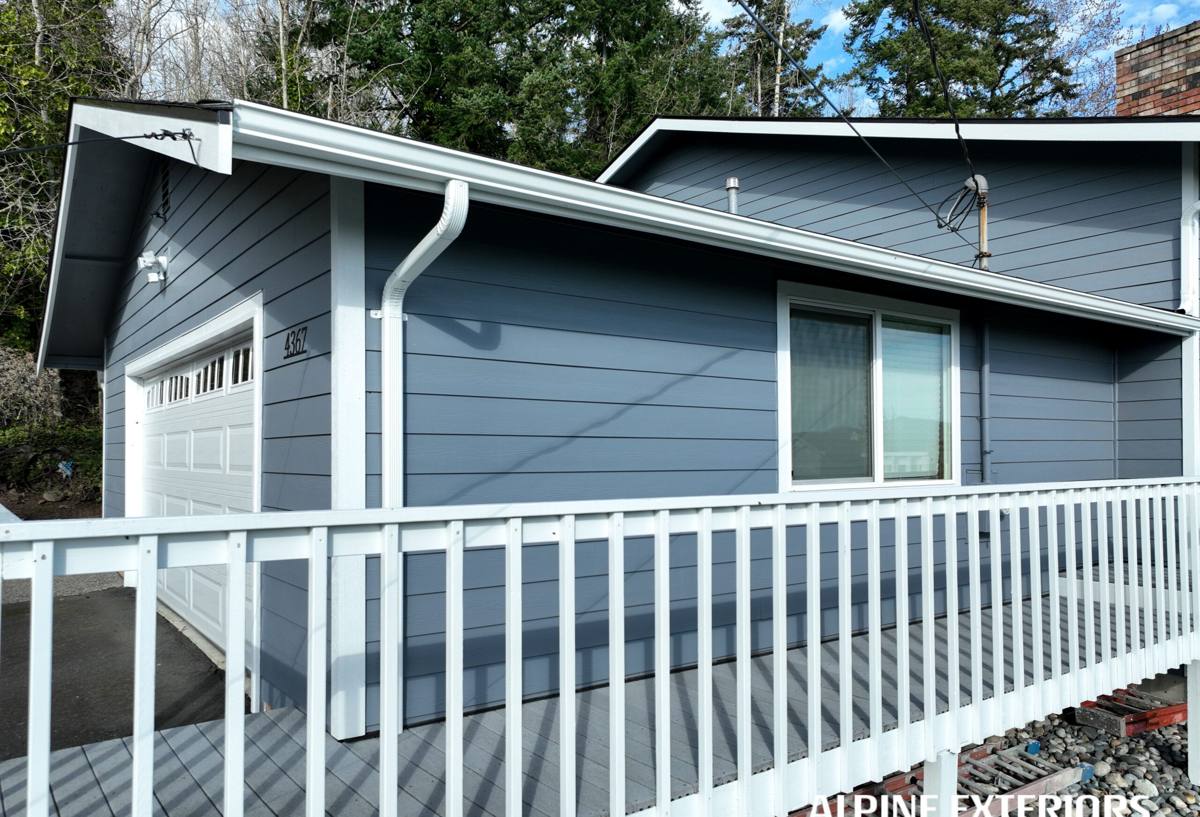
Why Salt Air, Rain, and Moss Wear Roofs Differently Here
Salt air and metal fasteners
Airborne salt accelerates corrosion on exposed metal — nails, flashing, vents, and fastener heads. On a lot of older Point Roberts roofs we see galvanized fasteners that have started to rust and bleed rust streaks down the shingle field years before the shingles themselves are worn out. Replacement work out here should spec corrosion-resistant fasteners and flashing as a baseline, not an upgrade.
Driving rain and wind exposure
Because the peninsula is exposed on multiple sides, wind-driven rain gets pushed up under shingle edges, around chimneys, and into valleys in a way that flatter, more sheltered inland roofs rarely deal with. Underlayment quality and how carefully flashing details are installed matter more here than the shingle brand printed on the wrapper.
Moss, shade, and moisture retention
Whatcom County's long wet season already favors moss growth, and Point Roberts' tree cover and marine humidity extend that window further. Moss holds moisture against the roof deck, works its way under shingle tabs, and can lift edges enough to let water in — long before most homeowners notice a leak.
Signs a Point Roberts Roof Needs Replacement, Not Just a Patch
- Granule loss heavy enough that you can see bare, shiny patches on shingles
- Moss or algae established in mats rather than light surface staining
- Rusted or lifting fasteners, flashing, or vent boots
- Soft spots or sagging when walked (a sign the deck itself may be compromised)
- Daylight visible through the attic at roof boards, or damp insulation below the deck
- Shingles curling, cracking, or missing tabs after wind events
- A roof approaching or past its material's expected service life, especially if it's never been replaced
A single leak or a few missing shingles is usually a repair. Widespread granule loss, a compromised deck, or a roof already past its expected life span is where replacement starts making more financial sense than another round of patching.
Choosing Materials for This Climate
There's no single "right" roofing material for Point Roberts — the right call depends on the home, the budget, and how much maintenance the owner wants to take on, especially given that many Point Roberts properties are used seasonally and sit unattended for stretches. We walk every homeowner through the real trade-offs rather than pushing one product.
| Material | How it handles salt air & rain | Moss resistance | Maintenance |
|---|---|---|---|
| Architectural asphalt shingles | Good, with corrosion-resistant fasteners and proper flashing | Moderate — benefits from algae-resistant granules | Periodic cleaning, watch for granule loss |
| Standing seam metal | Excellent when properly coated and fastened | High — sheds moisture quickly, little for moss to grip | Low, but panel and fastener quality matters |
| Composite/synthetic shingle | Good; consistent factory materials resist moisture uptake | Moderate to high depending on product | Low to moderate |
| Cedar shake | Requires diligent maintenance in a wet, salty climate | Low without regular treatment | High — needs regular upkeep to avoid rot and moss |
We're honest about cedar shake in a spot like Point Roberts: it can look great, but between the marine moisture and the moss pressure, it demands a maintenance schedule most seasonal homeowners can't realistically keep up with. If a homeowner wants that look, we'll talk through what upkeep it actually takes rather than let it become a bigger problem down the road.
What a Correct Roof Replacement Actually Involves
A roof replacement is more than swapping old shingles for new ones. On a coastal, moss-prone property, skipping any of these steps is usually where the next leak comes from:
Full tear-off and deck inspection
We remove the old roofing down to the deck so we can actually see the plywood or boards underneath. Any soft, rotted, or delaminated sections get replaced before anything new goes down — covering over a compromised deck just hides the problem.
Underlayment built for wind-driven rain
Given how exposed much of Point Roberts is, we treat quality synthetic underlayment and properly detailed ice-and-water membrane at eaves, valleys, and penetrations as standard, not optional add-ons.
Flashing at every transition
Chimneys, skylights, sidewalls, and valleys are where roofs actually fail. New step flashing, counter-flashing, and valley metal — installed correctly, not just caulked — is what keeps wind-driven rain out.
Ventilation that matches the home
Poor attic ventilation traps moisture, which speeds up moss growth and can rot the deck from underneath. We size and balance intake and exhaust ventilation to the home rather than reusing whatever vents were there before.
Corrosion-resistant fasteners and hardware
Given the salt air, we spec fasteners and metal components rated for a marine environment rather than standard-grade hardware that will show rust streaks within a few seasons.
Our Process for a Point Roberts Job
Point Roberts is only reachable by road through Canada, or by boat or small plane — there's no direct land route from the rest of Whatcom County. That single fact shapes how a roofing job out there has to be run:
- Material staging: we plan deliveries so the full material order — shingles, underlayment, flashing, ventilation components, fasteners — is on site before the crew starts, since a mid-job supply run isn't a quick trip.
- Crew and equipment scheduling: the crew, trailer, and equipment cross the border together on a planned schedule, so weather windows aren't wasted waiting on logistics.
- Weather-driven timing: we build the schedule around forecast windows, since a partially torn-off roof is the last thing you want caught in driving rain.
- Permitting: Point Roberts is unincorporated Whatcom County, so the same county permitting and inspection process applies as anywhere else in the county — we handle that paperwork as part of the job.
- Seasonal-home coordination: for owners who aren't on the peninsula full-time, we coordinate access, photos, and updates remotely so the job doesn't require the homeowner to be on site the whole time.
Cost Factors for a Point Roberts Roof Replacement
Every roof is priced on its own specifics, but the main variables we walk homeowners through are:
| Factor | Why it moves the price |
|---|---|
| Roof size and pitch | More square footage and steeper pitches take more material and labor time |
| Deck condition | Rotted or damaged sheathing found during tear-off adds repair cost |
| Material choice | Asphalt, composite, and metal carry different material and labor costs |
| Number of penetrations | Chimneys, skylights, and vents each need individual flashing work |
| Access and logistics | Point Roberts staging and scheduling is a real, if modest, factor versus mainland jobs |
| Tear-off layers | Removing multiple old roofing layers takes more labor than a single layer |
We'd rather give a homeowner a clear, itemized estimate after actually looking at the roof than throw out a ballpark number that doesn't hold up once we're up there.
Maintenance That Extends the Life of a New Roof
A well-installed roof still needs some upkeep in this climate, especially for owners who aren't on the property year-round:
- Clear moss and debris from valleys and gutters at least once a year, more often under heavy tree cover
- Keep gutters and downspouts flowing so water isn't backing up under roof edges
- Trim back overhanging branches that keep sections of the roof shaded and damp
- Have the roof looked at after major windstorms, not just when a leak shows up
- Check attic ventilation isn't blocked by insulation or debris
- Arrange a periodic check-in if the home sits vacant for long stretches
Why a Crew That Already Works Point Roberts Matters
A roofing crew that's never worked the peninsula before has to learn the border logistics, the material staging, and the weather patterns on your job — on your dime, in real time. We've already built the process for getting a full crew, trailer, and materials across, staged, and working efficiently, so the job runs on schedule instead of being the crew's first attempt at figuring out the exclave. Coming from Ferndale, we know Whatcom County's permitting and inspection process, and we know what this specific climate — salt air, driving rain, and a long moss season — does to a roof over time, because we see it on jobs across the county, not just in theory.
If you're weighing a repair against a full replacement, or just want an honest look at where your roof stands, we're happy to come out and give you a straight answer. Fill out the form below for a free, no-pressure estimate.