 Ferndale
 Building Decks That Hold Up on Semiahmoo's Waterfront
Semiahmoo sits right up against the water, and that changes what a deck has to survive. A deck built to a generic inland spec — the kind you'd see in a catalog or on a big-box how-to sheet — will often look fine for the first year or two out here. Then the fasteners start weeping rust down the boards, the north-facing joists stay damp long after a storm passes, and a green film starts creeping across anything that doesn't get direct sun. None of that means the deck was built badly by someone's normal standard. It means it wasn't built for this stretch of Whatcom County.
We build decks specifically for waterfront and near-waterfront conditions in and around Ferndale, including properties on Semiahmoo where salt air, driving rain, and a long stretch of gray, wet months are just part of the year. That means different material choices, different fastener grades, different framing details, and a layout that actually manages water instead of just shedding it and hoping.
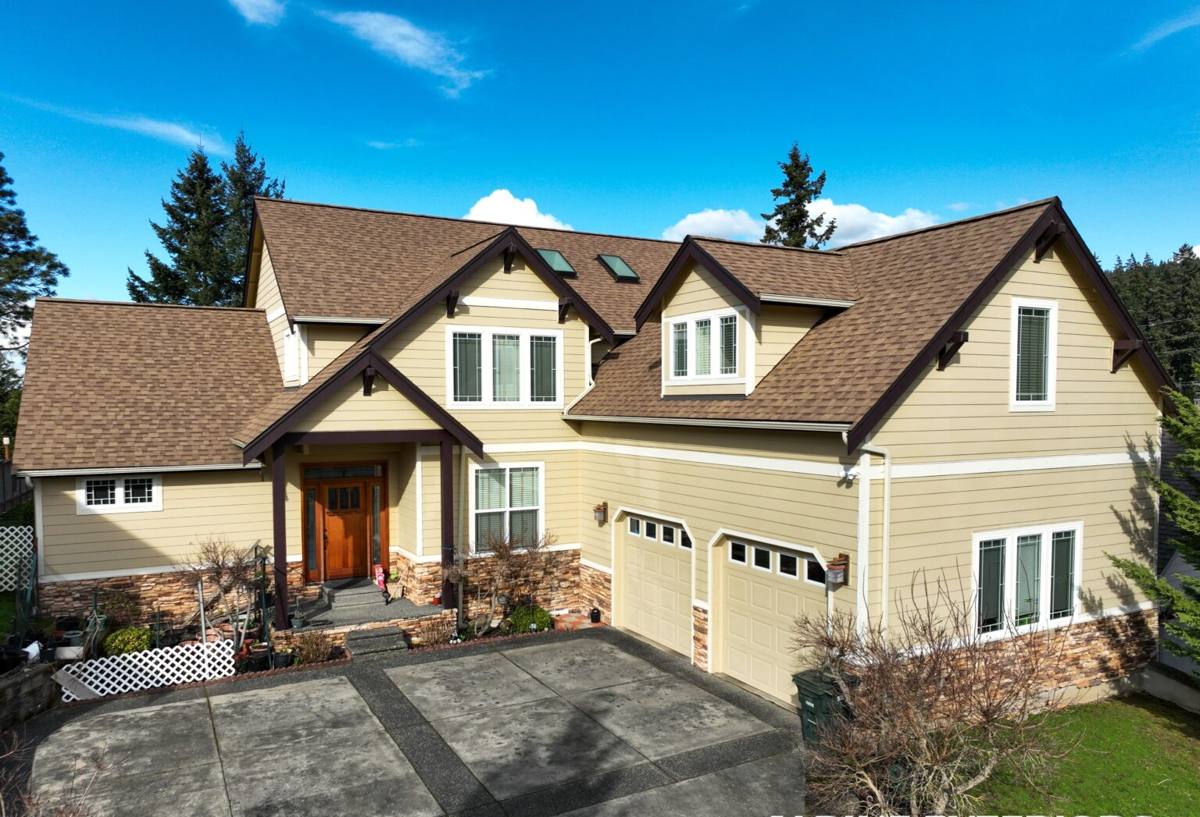
What Salt Air and Driving Rain Actually Do to a Deck
Salt in the air, not just in the water
You don't have to be standing in the surf for salt to affect your deck. Salt travels in the air, settles on every horizontal and vertical surface, and accelerates corrosion on anything metal — screws, joist hangers, post bases, railing hardware. On a standard inland deck, galvanized fasteners might last the life of the structure. On a Semiahmoo deck exposed to onshore air, the same fasteners can start corroding within a few seasons, which is a real problem when those fasteners are the only thing holding your ledger board or your railing posts in place.
Driving rain finds the gaps
Rain that comes in sideways off the water doesn't behave like rain falling straight down. It gets pushed into board gaps, under flashing, behind fascia, and into any joint that wasn't detailed to shed water actively rather than passively. Over time, wind-driven rain is what turns a small flashing gap into a rotted ledger board or a soft spot in the framing that you can't see from above.
Slow drying between storms
Whatcom County's marine climate means long stretches where a deck simply doesn't get a chance to fully dry out. Shaded sides, north exposures, and areas under overhangs stay damp for days. That constant low-level moisture is what feeds rot in untreated wood and what keeps moss and algae established even when it isn't actively raining.
Choosing the Right Decking Material for a Coastal Property
There's no single "best" decking material — there's a best material for your budget, your maintenance appetite, and how exposed your specific lot is to wind and salt spray. Here's how the common options actually compare for a site like Semiahmoo.
| Material | Upfront Cost | Maintenance | Salt Air / Moisture Behavior | Realistic Lifespan |
|---|---|---|---|---|
| Pressure-treated fir/hem-fir | Lowest | Annual cleaning, periodic sealing | Prone to checking and fastener corrosion staining without upkeep | 10–15 years before major repair |
| Cedar | Moderate | Regular cleaning, stain/seal every 2–3 years | Naturally rot-resistant but softens faster in constant damp shade | 15–20 years with upkeep |
| Composite decking | Higher | Occasional wash, no staining | Handles moisture well, but capped boards resist moss better than uncapped | 20–30 years |
| PVC decking | Highest | Wash only | Fully synthetic, best resistance to salt spray and standing moisture | 25–30+ years |
On Semiahmoo, we lean toward capped composite or PVC decking for anything with real salt exposure, simply because uncapped wood needs a maintenance schedule that most homeowners fall behind on within a couple of years — and once you're behind on sealing wood in this climate, moisture damage moves fast. That said, cedar is still a reasonable choice for a covered, less-exposed deck if you want the look and are willing to keep up with it. We'll walk your site with you and tell you honestly which category fits your exposure, not just push the highest-margin product.
Framing and Fasteners: Where Coastal Decks Actually Fail First
The decking surface gets all the attention, but the framing underneath is what determines whether your deck is safe and how long it really lasts. This is also where a lot of corner-cutting happens because it's hidden once the boards go down.
- Ledger board flashing that actively directs water away from the house band joist, not just a strip of tape
- Stainless steel or heavy hot-dip galvanized fasteners and joist hangers rated for coastal/high-corrosion exposure
- Post bases set above grade with a clear water break, not embedded directly in soil or concrete that traps moisture
- Joist tape or a water-shedding barrier on top of framing lumber before decking is installed
- Proper spacing between deck boards so water actually drains instead of pooling on the framing below
None of this is visible once the project is finished, which is exactly why it matters who's doing the work. A deck that looks identical from the yard can have a completely different service life depending on what fastener grade and flashing detail went in underneath.
Designing for a Long Moss Season
Whatcom County's moss season isn't a short window — shaded, damp surfaces here can stay green for most of the year. On a deck, moss isn't just cosmetic. It holds moisture against the board surface, and on wood decking, that constant dampness is what accelerates rot underneath a surface that still looks intact from a few feet away.
We manage moss risk with a few practical design choices: decking orientation and gap spacing that lets airflow actually reach the underside of boards, avoiding solid skirting that traps humid air against framing, and grading or drainage work underneath the deck so water doesn't sit and re-wet the structure after every rain. On shaded, north-facing decks — common on tighter waterfront lots — we'll also talk with you honestly about which materials resist moss growth best, since no decking material is fully moss-proof in a spot that never sees direct sun.
Railings, Guards, and Hardware Built for Exposed Sites
Railings take a beating on waterfront lots — they're the part of the deck most directly exposed to wind-driven spray and rain, and they're also a safety-critical structural element, not just a design feature. We spec railing hardware and post connections the same way we spec framing fasteners: rated for coastal corrosion resistance, not just whatever's cheapest at the standard hardware grade. Cable rail and glass panel systems, both popular for view lots, need particular attention here because their hardware is often smaller-gauge and more exposed to spray than a solid baluster railing.
Our Deck Building Process for Semiahmoo Homes
Every deck we build goes through the same honest sequence, whether it's a simple ground-level platform or a multi-level deck off a waterfront home.
- Site walk and exposure assessment — we look at your specific wind direction, sun exposure, shade patterns, and how close you are to salt spray before recommending materials.
- Design and material selection — you get a straight comparison of options for your budget and exposure, not just one default recommendation.
- Permitting — we handle the permit application and inspections required for your project.
- Framing with coastal-grade hardware — proper flashing, corrosion-resistant fasteners, and post bases set for drainage.
- Decking and railing installation — installed with the gap spacing and airflow considerations your site actually needs.
- Final walkthrough — we go over basic maintenance expectations for your specific material so you know what upkeep, if any, is ahead of you.
What a properly built coastal deck includes:
- Flashing at the ledger board that actively sheds water away from the house
- Corrosion-resistant fasteners and connectors throughout, not just at visible points
- Post bases and footings designed to avoid standing water against wood or metal
- Decking material matched to your actual sun and salt exposure, not a one-size-fits-all default
- Board spacing and underdeck airflow that supports drying between storms
- Railing hardware rated for the same exposure as the rest of the structure
Permits and Building Near the Water
Deck projects in Ferndale and unincorporated Whatcom County typically require a building permit, and waterfront or near-waterfront lots can carry additional setback or shoreline considerations depending on your property's exact location relative to the water. We handle the permit process as part of the job, but it's worth knowing up front that a Semiahmoo project may involve more paperwork review than a straightforward inland deck — that's normal for the area, not a sign something's wrong with your property.
Why a Crew That Already Works Semiahmoo Matters
A contractor who mostly builds decks a few miles inland isn't necessarily thinking about corrosion-rated hardware, moss-conscious spacing, or ledger flashing detailed for wind-driven rain — because most of their projects don't need it. We build in this specific coastal pocket of Whatcom County regularly, so those aren't upgrades we have to be talked into; they're the baseline we start from. That's the difference between a deck that needs major repair in eight years and one that's still solid in twenty-five, and it's a difference you mostly can't see just by looking at the finished surface.
If you're planning a new deck or replacing one that's showing its age on your Semiahmoo property, we're happy to walk the site with you and put together a straightforward, no-pressure estimate. Just fill out the form below and we'll go from there.