 Ferndale
 Semiahmoo's Siding Takes a Different Kind of Beating
Semiahmoo sits about as close to the water as a Whatcom County neighborhood gets, and that proximity shows up on siding faster than it does a few miles inland. Homes here deal with salt-laden air off the bay, wind-driven rain that hits walls sideways instead of straight down, and long stretches of shade and dampness that keep moss and algae established on north- and west-facing walls almost year-round. None of that is dramatic on any single day. It's the accumulation — months and years of it — that turns small siding problems into bigger ones if they sit unaddressed.
A siding repair call in Semiahmoo isn't the same job as a siding repair call in a dry, sheltered part of town. The causes are different, the materials behave differently once they're wet, and the fix has to account for a wall that's going to keep facing that same exposure the day after we leave. This page is about that one job, in that one area: what it actually takes to repair siding correctly on a Semiahmoo home.
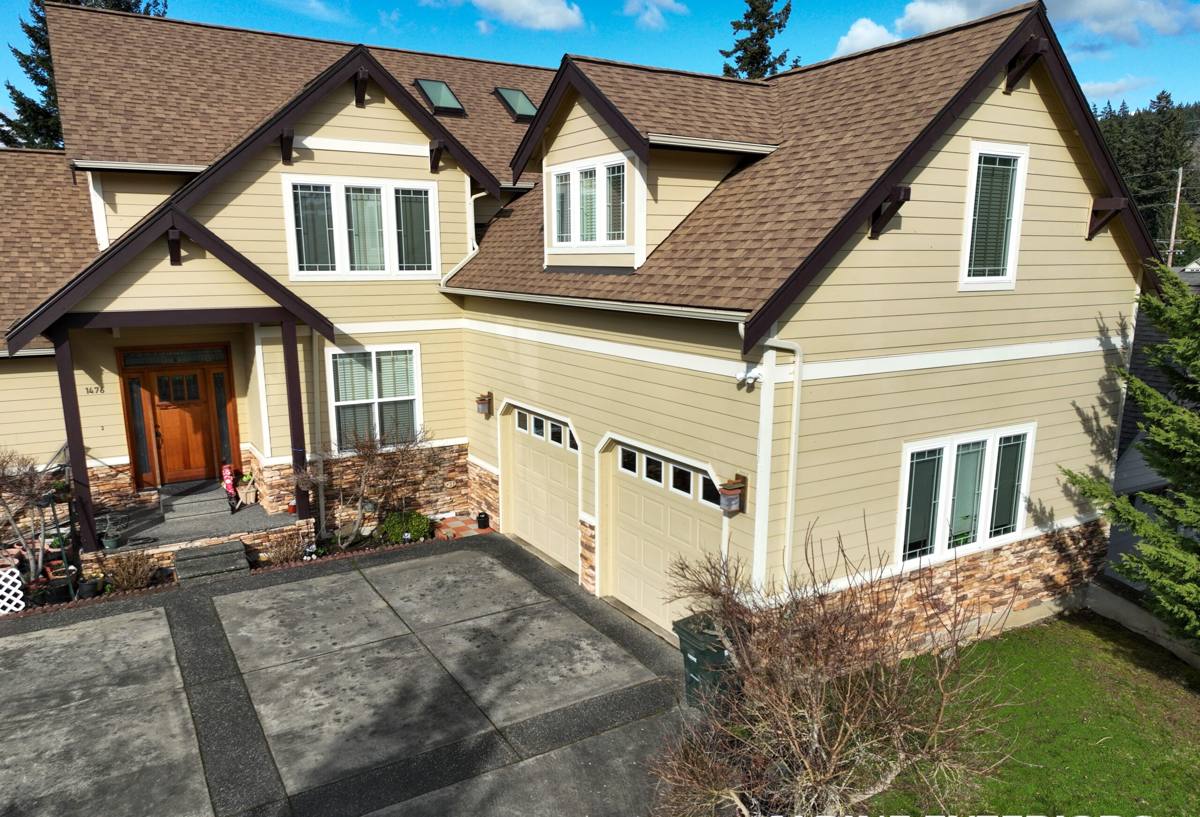
What the Local Climate Does to Siding Over Time
Salt Air
Airborne salt doesn't just affect metal fasteners and flashing, though that's part of it — corroded nails and rusting trim pieces are a common repair trigger near the water. Salt residue also holds moisture against a wall surface longer than plain rainwater would, which matters a lot for any siding material that isn't fully sealed on every cut edge and fastener point.
Driving Rain
Wind off the water pushes rain into seams, laps, and trim joints that would stay dry in a calmer part of the county. Repairs that don't account for wind-driven rain — patch jobs that rely on caulk alone instead of proper lap and flashing detail — tend to fail again within a season or two.
Moss and Algae Season
Shaded walls and roof overhangs near mature trees keep certain sections of a home damp for weeks at a stretch, especially through the fall and winter. Moss and algae growth on siding isn't just cosmetic — it holds moisture against the surface and, on the wrong material, can accelerate the very damage that leads to a repair call in the first place.
Signs a Semiahmoo Home Needs Siding Repair
- Soft or spongy spots when you press on the siding, especially near the bottom courses or around window and door trim
- Visible gaps, cracks, or separation at seams, corners, or trim joints
- Persistent dark staining or streaking that doesn't wash off, particularly on shaded walls
- Bubbling, peeling, or bulging paint or finish in localized areas rather than across the whole wall
- Rust streaks below nail heads or trim fasteners
- Moss or algae buildup that's thick enough to hold visible moisture against the surface
- Warping, buckling, or panels that no longer sit flat against the wall
- A musty smell or visible moisture inside on an exterior wall, which usually points to a problem that's already gone past the surface
Any one of these on its own might be minor. Several showing up in the same section of wall usually means water has been getting behind the siding for a while, and the repair needs to address what's underneath, not just what's visible.
What a Correct Repair Actually Involves
A siding repair that's done right is not just "replace the bad piece and caulk the edges." On a Semiahmoo home, where the wall is going to keep taking salt air and driving rain after we leave, a repair has to hold up to the same conditions that caused the original damage. That means:
Finding the Real Cause
Damaged siding is usually a symptom, not the root problem. Failed flashing, a gap in the house wrap, a downspout dumping water against a wall, or a trim detail that was never sealed correctly are common underlying causes. Replacing the siding without fixing the cause just buys a few more years before the same spot fails again.
Checking What's Behind the Wall
Once a section is opened up, we look at the sheathing and house wrap underneath. If water has been getting in for a while, there can be rot or soft sheathing that needs to be addressed before any new siding goes back on. Covering up compromised sheathing with new siding is a repair in appearance only.
Matching Lap, Reveal, and Fastening
New siding pieces need to match the existing lap spacing, reveal, and fastening pattern so water sheds the way the wall was originally designed to shed it. A patch that's installed slightly off can create a new place for wind-driven rain to collect.
Proper Flashing and Sealant Detail
Around windows, doors, corners, and anywhere two materials meet, flashing does the real work of keeping water out — sealant is a secondary line of defense, not the primary one. A repair that leans on caulk instead of correcting the flashing underneath is a repair that's likely to need doing again.
Our Repair Process
- Inspection. We look at the damaged area and the surrounding wall, not just the spot you called about — problems near the water often show up in more than one place at once.
- Diagnosis. We identify the actual cause of the damage, not just the visible symptom, and explain what we find in plain terms.
- Honest scope. If it's a straightforward repair, we say so. If the damage points to a bigger underlying issue, or if enough of the wall is compromised that repair isn't a good long-term use of your money, we'll tell you that too.
- The repair itself. Matched materials, correct flashing and fastening, and attention to how the finished area will perform in the same wind and rain exposure that caused the original problem.
- Follow-through. We stand behind the work we do and expect it to hold up — that's the standard we hold ourselves to on every wall we touch.
Repair vs. Replacement: What Actually Drives the Decision
| Factor | Leans Toward Repair | Leans Toward Replacement |
|---|---|---|
| Extent of damage | Isolated to one or two small areas | Spread across multiple walls or elevations |
| Sheathing condition | Dry, solid material behind the siding | Soft, rotted, or water-stained sheathing found on inspection |
| Siding material | Sound James Hardie fiber cement with isolated damage | Failing wood, vinyl, or other material reaching the end of its service life |
| Age of existing siding | Relatively young installation with a clear, fixable cause | Siding already near or past its expected lifespan |
| Underlying cause | A single identifiable defect (flashing, fastener, trim detail) | A systemic issue affecting the whole wall assembly |
We won't sell a full replacement when a repair is the honest answer, and we won't patch something that's going to fail again in a year just to avoid a harder conversation. The inspection tells us which side of that line a given home is on.
How This Looks Different on Hardie Siding vs. Other Materials
We install James Hardie fiber cement exclusively, which means most of the repair work we do is on Hardie siding — and it behaves differently from other materials in a repair. It doesn't rot, it isn't a food source for moss and algae the way untreated wood can be, and its factory-applied ColorPlus finish means a correctly matched replacement plank can blend into the existing wall rather than standing out as an obvious patch. Fastener corrosion and flashing failures are still possible on any siding, including Hardie, which is why the diagnosis step matters regardless of material.
If your Semiahmoo home currently has vinyl, LP SmartSide, cedar, or another product and it's showing damage, we'll still assess it honestly. Depending on what we find, that can mean a straightforward repair with matching material, or — if the damage is tied to how that product handles moisture over time in this climate — a conversation about what replacing the damaged section, or eventually the whole wall, with fiber cement would look like. We won't push a full-house replacement onto a repair call, but we'll be straight with you about what we're seeing and why we standardized on Hardie for the homes we build from scratch.
Why a Crew That Already Works Semiahmoo Matters
Siding repair in a coastal-influenced neighborhood is different enough from inland work that experience in the specific area is worth something. A crew that's already worked on Semiahmoo homes knows what wind-driven rain does to certain trim details, knows which wall orientations tend to hold moss the longest, and isn't guessing about how salt air affects fasteners and flashing over time. That familiarity shortens the diagnosis step and reduces the odds of a repair that looks fine going in but doesn't hold up to the conditions it's actually facing.
Being local also means shorter response times if a repair needs a follow-up visit, and a crew that has to stand behind its work in the same community it lives and drives through every day.
Preventing the Next Repair Call
- Rinse moss and algae off shaded siding sections at least once a year before it builds up thick enough to hold moisture
- Keep gutters and downspouts clear so water isn't dumping directly onto or behind siding
- Trim back vegetation and tree cover that keeps specific wall sections damp and shaded longer than the rest of the house
- Walk the exterior once or twice a year and press on suspect areas near the bottom courses and around trim
- Address small caulk cracks and gaps at trim joints before winter's driving rain finds them
- Have any rust streaking below fasteners looked at early — it's cheaper to fix at the fastener stage than after water has tracked behind the panel
Getting an Honest Assessment
If you're seeing damage, staining, or moss buildup on your Semiahmoo home's siding, the first step is a straightforward inspection — not a sales pitch. We'll tell you what we find, what's causing it, and what it actually takes to fix it correctly for a home in this location. We're happy to put together a free, no-pressure estimate whenever you're ready.