 Ferndale
 Why Semiahmoo Siding Wears Differently
Semiahmoo sits right on the water, and that changes what siding has to deal with compared to a house a few miles inland. Salt-laden air moves off the bay and settles on exterior surfaces daily, not just during storms. Combine that with Whatcom County's long wet season, driving rain that comes in sideways off the water, and shaded north sides that hold moisture for weeks at a time, and you get a climate that's genuinely harder on siding than most of the region realizes. Homes here don't just need paint touch-ups — they need a siding system engineered to handle constant moisture cycling and airborne salt without breaking down.
We've replaced siding on enough homes in this pocket of Whatcom County to know the failure patterns are consistent: coatings that chalk and fade early from salt exposure, seams that trap water instead of shedding it, and moss that takes hold on shaded elevations and never lets go. A replacement done right here has to address all three, not just make the house look new for a season.
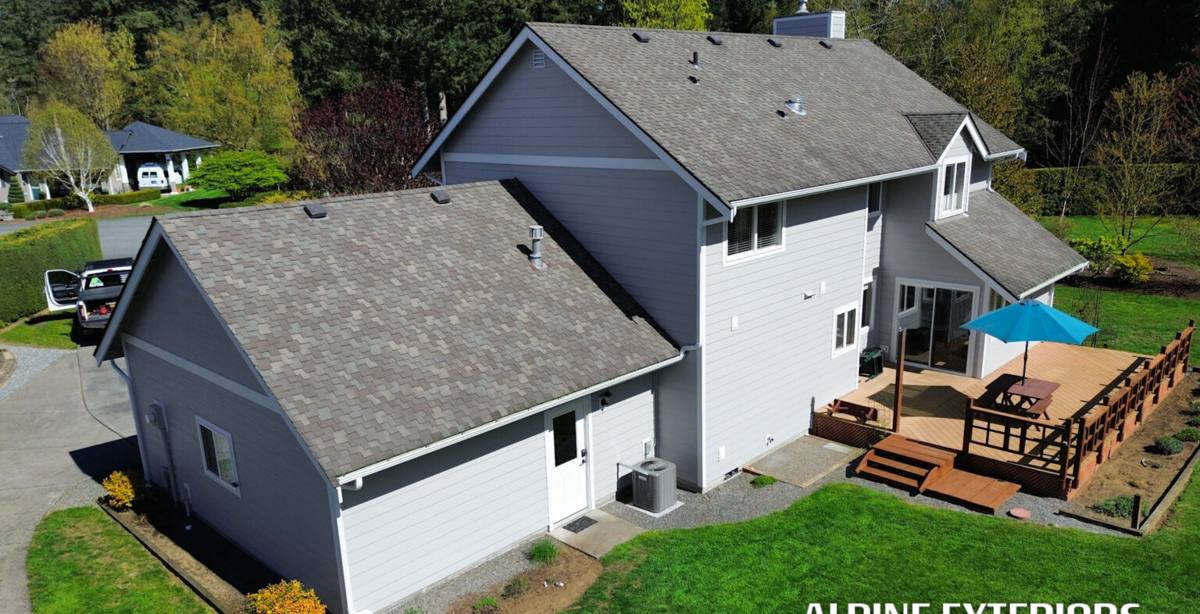
Signs Your Semiahmoo Home Needs Siding Replacement
Siding failure near the water rarely shows up as one dramatic problem — it's usually a handful of smaller signs that add up. Worth checking for:
- Soft or spongy spots when you press on siding near the bottom courses, corners, or window trim
- Paint that's chalking, peeling, or fading noticeably faster on the water-facing side of the house
- Persistent moss or algae streaking on north- and west-facing walls that pressure washing only knocks back temporarily
- Visible gaps, warping, or buckling at seams and butt joints
- A musty smell or discoloration on interior walls that back up to exterior siding
- Caulk that's cracked or pulled away at trim and window edges
Any one of these can be a cosmetic issue. Two or three together, especially on the bay-facing side, usually mean moisture has been getting behind the siding for a while — and that's a repair-vs-replace conversation worth having before it spreads to the sheathing.
What a Correct Siding Replacement Actually Involves
Replacing siding on a coastal home isn't just pulling off old boards and nailing up new ones. Done right, it's a system, and every layer matters as much as the visible siding itself.
Tear-Off and Inspection
Full removal of the old siding lets us actually see the sheathing underneath — which is where the real damage usually lives on a house that's been absorbing salt air and rain for years. Soft sheathing, rot at window and door openings, and compromised framing all get addressed before anything new goes up. Covering over hidden damage with new siding just buys a few years before the same problem reappears from the inside out.
Weather-Resistive Barrier
A properly lapped, sealed weather-resistive barrier goes on before any siding. In a location like Semiahmoo, where wind-driven rain is a regular event rather than an occasional storm, this layer is what actually keeps water out of the wall assembly — the siding itself is the second line of defense, not the only one.
Flashing and Drainage Details
Window heads, sills, deck ledgers, and roof-to-wall intersections are where water finds its way in. Correct flashing, kick-out flashing at roof lines, and a drainage gap behind the siding (so any moisture that does get in can drain and dry) are non-negotiable on a house this exposed. Skipping or shortcutting these details is the single most common cause of repeat siding failure we see on coastal homes.
Fastening and Clearances
Manufacturer-specified nailing patterns, correct fastener type for a salt-air environment, and proper clearance from grade, roof lines, and decks all affect how long the siding actually lasts. Siding installed too close to grade or a walking surface wicks moisture and fails early, no matter how good the product is.
Why We Install Only James Hardie Fiber Cement Here
We don't install vinyl, LP SmartSide, or other fiber cement brands, and that's a deliberate call, not a limitation. In a salt-air, high-moisture environment like Semiahmoo, the material choice matters more than almost anywhere else in the county.
Vinyl expands and contracts with temperature swings and can warp or become brittle over time in salt-heavy coastal air; it also isn't a moisture-managed product in the same way fiber cement is. Engineered wood products perform well in many climates but are more sensitive to sustained moisture exposure at cut edges and seams — a real concern on a site that stays damp for months at a stretch. James Hardie fiber cement is non-combustible, dimensionally stable, and specifically engineered in HZ (HardieZone) product lines for wet, coastal Pacific Northwest conditions. The ColorPlus factory finish is baked on under controlled conditions and holds color and resists fading far better than field-applied paint exposed to constant salt spray. It's backed by a strong, transferable manufacturer warranty — which matters on a house near the water, where premature coating failure is a real risk with lesser products.
That's not a knock on every alternative product on the market. It's a standard we hold because of what we've seen hold up — and not hold up — on homes exactly like the ones around Semiahmoo Bay.
Our Process for a Semiahmoo Replacement
- On-site assessment — we walk the exterior, check moisture readings where there's visible concern, and identify which elevations are taking the worst of the salt air and rain exposure.
- Written scope and product plan — Hardie plank, panel, or shingle profile and ColorPlus color selected based on your home's exposure and style, with a clear, itemized estimate.
- Full tear-off — old siding removed, sheathing inspected, and any rot or damage repaired before new materials go on.
- Weather barrier and flashing install — the moisture-management layer, done to manufacturer and code spec, not shortcut.
- Hardie siding installation — installed to James Hardie's fastening, clearance, and caulking specifications, which is also what keeps the warranty valid.
- Final walkthrough and cleanup — site cleared of debris, and we walk the finished job with you before calling it done.
Cost Factors for Siding Replacement Near the Water
Every home is different, but these are the variables that most affect the scope and cost of a Semiahmoo siding replacement:
| Factor | Why It Matters Here |
|---|---|
| Extent of hidden sheathing damage | Salt air and long moisture exposure often mean more repair work is found once old siding comes off |
| Home size and elevation exposure | Bay-facing and shaded sides usually need the most attention to detail and sometimes different siding profiles |
| Siding profile chosen | Lap, shingle, and panel Hardie products vary in material and labor cost |
| Trim and detail work | Window, corner, and fascia trim replacement adds scope but is often needed for a proper moisture-managed system |
| Access and site conditions | Waterfront lots, slopes, and limited access can affect staging and labor time |
We give straightforward, itemized estimates after an in-person look — not a phone-quote guess. On a coastal home, the honest answer is usually "we won't know the full scope until the old siding is off," and we tell homeowners that upfront rather than surprise them mid-job.
Why a Crew That Already Works Semiahmoo Matters
Siding installation isn't one-size-fits-all, and a crew that's only worked drier, inland parts of Whatcom County will make different assumptions than one that regularly works this stretch of coastline. Knowing which elevations typically take the worst weather, how much drainage gap and flashing detail a bay-facing wall actually needs, and how moss behaves on shaded coastal sides isn't something you learn from a manual — it's something you learn from doing the work here, repeatedly, and seeing what holds up years later. That local pattern recognition is what keeps a replacement from becoming a repeat job in five years.
A Simple Pre-Replacement Checklist
- Walk your home's exterior and note soft spots, moss buildup, and paint failure by elevation
- Check for interior signs — musty smells, stains, or soft drywall on exterior-facing walls
- Ask any contractor you're vetting whether they do full tear-off or install over existing siding
- Confirm what weather-resistive barrier and flashing details are included in the scope, not just the siding brand
- Get the manufacturer warranty terms in writing, not just verbal assurance
If your Semiahmoo home is showing any of the wear signs above, we're happy to take a look and give you an honest, no-pressure assessment of what it actually needs. Use the form below to request a free estimate — we'll walk the exterior with you and tell you straight what we find.