 Ferndale
 Why Lummi Nation Homes Take a Different Kind of Beating
Homes along the Lummi Peninsula and the surrounding reservation community sit right where Bellingham Bay, Hale Passage, and the mouth of the Nooksack River meet. That location is beautiful, but it's also one of the harder places in Whatcom County to keep siding intact. Salt-laden air moves in off the water and settles on exterior walls day after day, slowly working into seams, fastener heads, and any spot where paint or caulk has thinned. Add the driving, wind-pushed rain that comes with a shoreline exposure, and water finds its way into places it never would on a home a few miles inland.
Then there's the moss. Whatcom County's long, wet, mild winters are practically a growing season for it, and homes with tree cover or north-facing walls near the water can go from a light green haze to a thick mat in a single season if nothing is done. Moss holds moisture against the surface of siding for weeks at a time, which is exactly the condition that causes rot in wood-based products and accelerates paint and caulk failure on almost anything. Siding repair out here isn't just patching a dent — it's addressing what salt air, wind-driven rain, and moss have been doing to a wall system, often for years before it becomes visible.
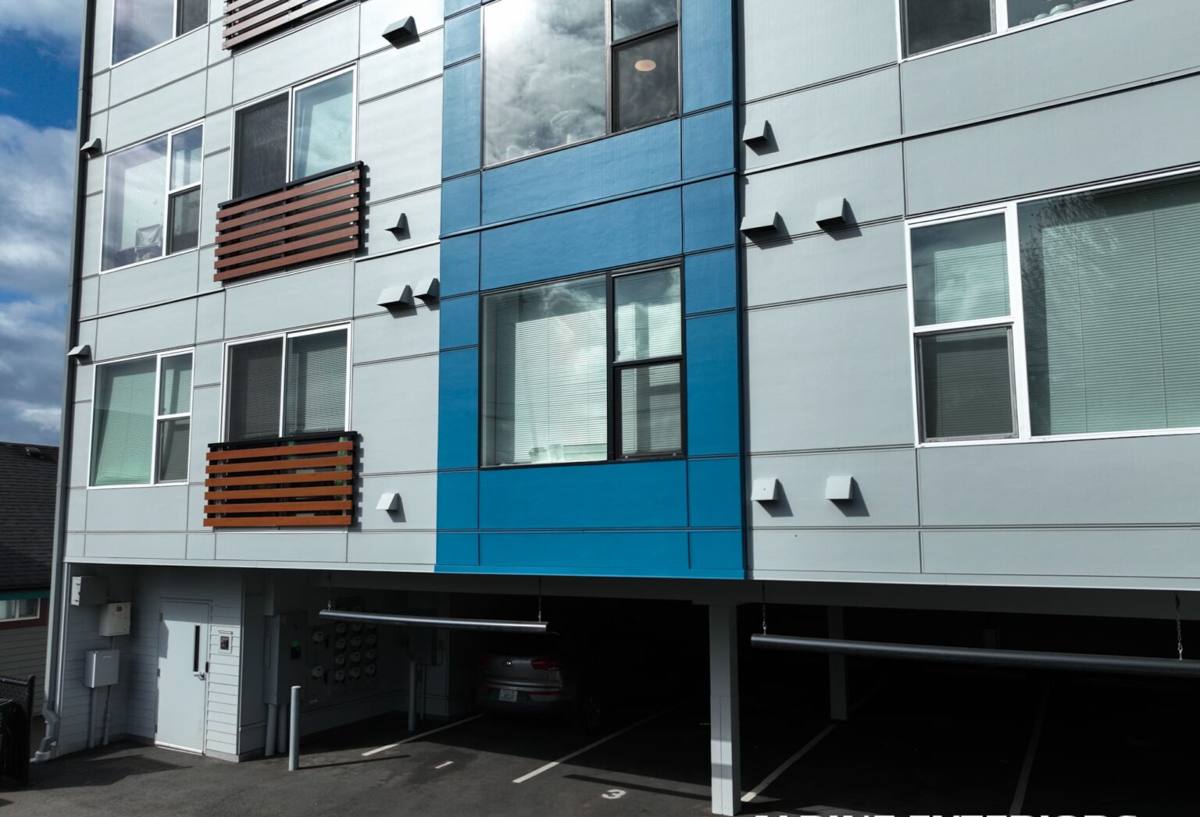
Signs Your Siding Needs Repair, Not Full Replacement
Most siding problems we see on Lummi Nation homes are still repairable if they're caught in time. Knowing what to look for keeps a small, affordable fix from turning into a bigger project.
- Cracked, bubbled, or peeling paint concentrated on one wall — usually the side that takes the most wind and rain
- Soft or spongy spots when you press on siding near the bottom courses, corners, or under windows
- Visible gaps at seams, corner boards, or trim where caulk has shrunk or pulled away
- Persistent moss or algae growth that comes back within a season of cleaning
- Staining or discoloration below nail heads or at panel joints, which often signals moisture getting behind the surface
- Warping, buckling, or siding that no longer sits flat against the wall
If you're seeing one or two of these on an otherwise sound wall, that's a repair. If the damage is spread across multiple walls, or if probing reveals soft sheathing underneath, that's a conversation about targeted section replacement instead of a whole-house job — and we'll always tell you honestly which situation you're in.
What a Correct Repair Actually Involves
A siding repair that's done right is more than swapping a cracked board for a new one. It starts with figuring out why the damage happened in the first place — a failed flashing detail, a caulk joint that was never sealed correctly, or moisture that's been trapped by nearby moss or vegetation. Skipping that step means the same failure shows up again in two or three years.
Diagnosis before repair
We check moisture readings at the affected area and the surrounding material, inspect flashing above windows, doors, and any wall penetrations, and look at how water is actually moving across that section of the house. On a coastal, tree-shaded property, that often means checking whether gutters and downspouts are directing water away from the repair area, and whether nearby foliage is keeping that wall damp longer than it should be.
Matching materials and finish
Repairing a section of James Hardie fiber cement siding means matching the exact plank profile, exposure, and ColorPlus finish so the repaired area blends in rather than standing out as an obvious patch. This is one of the advantages of a single-manufacturer product line — Hardie's HZ5 products and factory-finish color system are consistent and traceable, which makes an honest match possible years after the original install.
Sealing and fastening correctly
Every repaired seam, corner, and penetration gets properly sealed with a compatible sealant rated for exterior exposure, and every panel gets fastened per manufacturer spec — correct nail placement, spacing, and depth matter as much on a repair as they do on a full install. A repair that's caulked over without addressing fastening or flashing is a repair that fails again.
Repair vs. Replacement: How We Help You Decide
| Situation | Usually a Repair | Usually Needs Replacement |
|---|---|---|
| Damage location | Isolated to one or two wall sections | Spread across multiple elevations |
| Underlying sheathing | Solid, dry when probed | Soft, spongy, or visibly rotted |
| Age of existing siding | Under 15-20 years, well-maintained | Original material near or past its service life |
| Cause of damage | Impact damage, caulk failure, isolated moisture entry | Long-term moisture intrusion, chronic moss/rot cycle |
| Material | Existing James Hardie, matchable and sound | Non-fiber-cement siding failing at the material level |
We'll always start by assuming repair is possible and only recommend replacing more than what's damaged when the evidence supports it — not because a bigger job is more profitable for us.
When the Existing Siding Isn't James Hardie
We install and repair James Hardie fiber cement siding exclusively — it's the only product we stand behind for this climate. If your home currently has vinyl, cedar, engineered wood, or another fiber cement brand and a section has failed, we'll be straightforward with you: we can often make a sound, honest repair using compatible techniques, but if a wall section is too far gone to repair properly, our recommendation will be to replace that section with James Hardie rather than more of the original material. That's not a sales pitch — it's the same standard we hold for our own installs, because we've seen how each of those materials actually holds up against salt air and sustained moisture over time, and fiber cement built to Hardie's HZ5 specification is what performs best in a marine exposure like this one.
Our Repair Process, Start to Finish
- On-site inspection. We walk the exterior, probe suspect areas, check moisture levels, and photograph the damage before recommending anything.
- Honest scope and estimate. You get a clear explanation of what's actually needed — repair, section replacement, or a larger conversation — with no pressure to upsize the job.
- Root-cause correction. Flashing, caulking, or drainage issues that caused the damage get fixed as part of the repair, not left in place.
- Material matching. Replacement panels are matched to existing profile, exposure, and finish so the repair blends into the wall.
- Proper installation. Fastening, sealing, and flashing follow manufacturer specification, not shortcuts.
- Final walkthrough. We review the completed work with you and point out anything worth keeping an eye on going forward.
Working Respectfully on Lummi Nation Property
Repair work in this community means being mindful of the land and the people who live here — showing up on time, keeping work areas clean, respecting property boundaries, and communicating clearly about scheduling around weather. Coastal wind events can change a repair timeline quickly, and homes closer to the shoreline sometimes need work sequenced around tide and weather windows. A crew that's done this work in the area before understands that rhythm instead of treating every job like it's on a standard suburban lot.
What Homeowners Can Check Between Professional Inspections
- Walk the exterior twice a year and look for new cracking, gaps, or discoloration
- Keep gutters and downspouts clear so water isn't overflowing onto siding below
- Trim back branches and shrubs that keep a wall shaded and damp
- Rinse off visible moss or algae buildup before it thickens — avoid high-pressure washing, which can force water behind panels
- Check caulk lines at corners, trim, and window edges for shrinkage or separation
- Note any soft spots when pressing gently on lower siding courses, especially near grade
What Repair Work Typically Costs
| Factor | Why It Affects Price |
|---|---|
| Extent of damage | A single panel swap costs far less than repairing several wall sections |
| Root cause found | Correcting flashing or drainage issues adds labor but prevents repeat failures |
| Access and height | Second-story or hard-to-reach areas near steep grade take more time and equipment |
| Color and profile matching | Matching older ColorPlus finishes or discontinued profiles can require special ordering |
| Underlying sheathing condition | Rotted sheathing discovered during repair adds scope beyond the siding itself |
Every repair is different, which is why we quote after an actual inspection rather than over the phone. What we can promise is a straight answer about what's needed and why.
Why a Crew That Already Works This Area Matters
Siding behaves differently a quarter mile from open water than it does further inland, and a contractor who only occasionally works near Bellingham Bay or the Lummi Peninsula may not recognize how much faster salt exposure, wind-driven rain, and moss growth compound out here. Crews already familiar with this stretch of Whatcom County know which wall orientations fail first, which flashing details tend to have been missed on older builds, and how to sequence a repair around this area's weather instead of guessing. That familiarity shows up in faster, more accurate diagnoses and repairs that actually hold up through the next wet season.
If you've noticed damage, discoloration, or persistent moss on your home's siding, we're happy to take a look and give you a straightforward assessment — no pressure, no obligation. Use the form below to request a free estimate.