 Ferndale
 Storm Damage Repair Built for Everson's Weather, Not a Generic Checklist
Everson sits out on the flat farmland along the Nooksack River, away from the shelter of hills and tree lines that break up wind in other parts of Whatcom County. When a storm rolls through off the Strait of Juan de Fuca and pushes inland, that open exposure means Everson roofs often take a harder, more direct hit than roofs closer to Bellingham Bay or tucked into Ferndale's residential streets. Add in a wet, moss-friendly climate and months of driving rain every winter, and you get a roof that's under more or less constant low-grade stress even between storms.
Storm damage repair in this area isn't just about patching whatever blew loose last week. It's about understanding how wind, water, and moss work together on an Everson roof over a full year, and repairing in a way that holds up to the next storm instead of just the inspection.
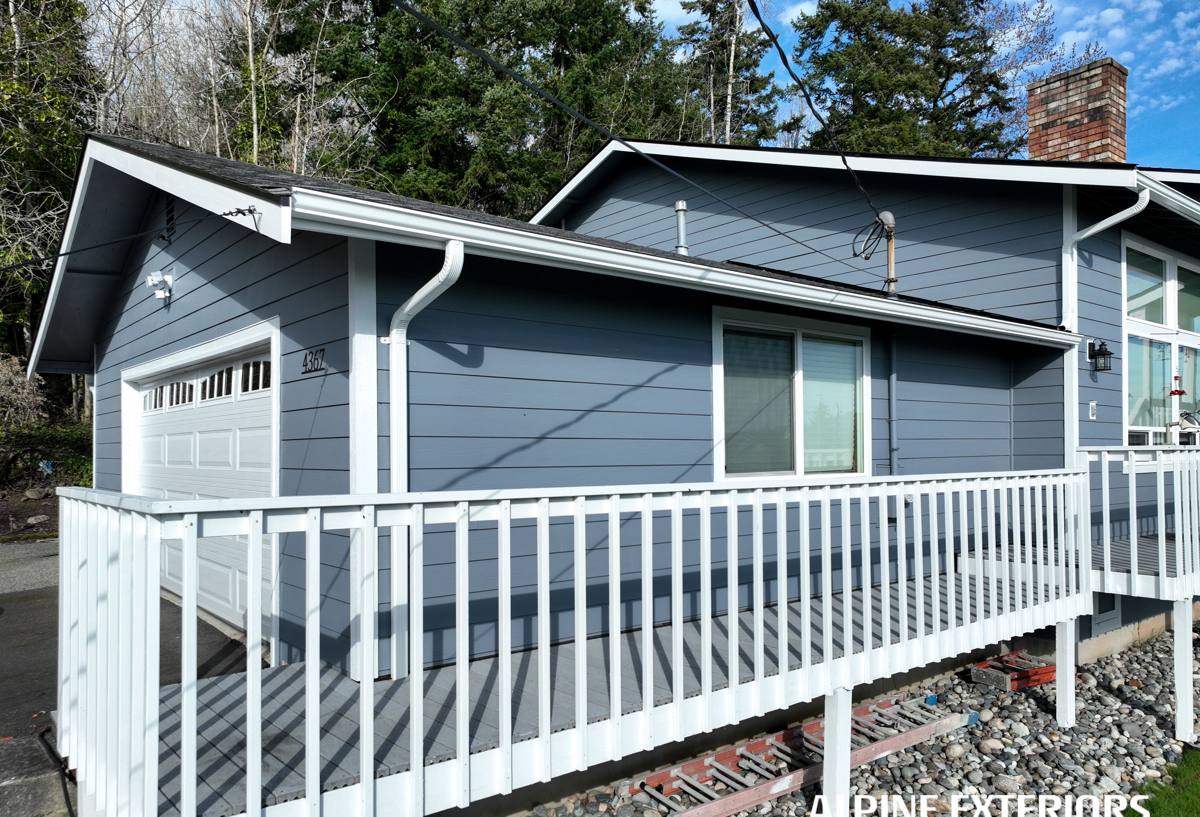
What Storm Damage Actually Looks Like Here
Not all storm damage announces itself with a hole in the roof. Some of the most costly damage is the kind homeowners don't notice until water shows up inside.
Wind Damage
- Shingles lifted, creased, or torn loose at the edges and ridges — the first places wind gets underneath
- Granule loss from shingles flexing in gusts, which shows up as bald patches and grit in the gutters
- Flashing bent or pulled away from chimneys, vents, and roof-to-wall transitions
- Debris strikes from branches or blown material, which can puncture or bruise shingles without an obvious hole
Water Damage
Driving rain in this part of Whatcom County doesn't fall straight down — it comes in sideways, which means it finds gaps that a calmer rain never would. Once a storm has loosened flashing or lifted a shingle edge, every rain after that is a chance for water to work its way under the roof covering and into the sheathing, insulation, or wall framing below.
Where Roof Damage and Siding Damage Meet
Because we work on the whole exterior envelope, not just the roof deck, we see something a roofing-only crew often misses: a lot of "roof" leaks in Everson actually start — or end up — at the point where the roof meets the siding. Roof-to-wall flashing, step flashing along dormers, and the kick-out flashing at roofline transitions are common failure points after wind events. When those fail, water doesn't always show up as a ceiling stain. It can travel down behind the siding first, which means the damage is often worse than it looks from the ground.
| Symptom | Likely Roof-Only Cause | Likely Roof-to-Wall / Siding Cause |
|---|---|---|
| Ceiling stain near an exterior wall | Torn shingle or worn underlayment above | Failed step or kick-out flashing letting water behind the wall |
| Peeling paint or soft siding low on a wall | Unrelated to the roof | Water running down from a roof leak with no diverter |
| Musty smell in an upstairs room | Attic ventilation or minor leak | Chronic moisture trapped behind flashing and siding |
| Visible granules or shingle pieces in gutters | Storm-related shingle wear | Usually not siding-related |
This is the practical reason storm damage repair should be handled by a crew that understands both trades: a roof-only patch can leave a siding-side leak untouched, and it will keep coming back after every storm until someone traces it to the actual entry point.
Moss: The Slow-Motion Storm Damage Nobody Calls a Storm
Whatcom County's long, wet moss season doesn't do damage all at once, but it sets a roof up to fail faster the next time wind or heavy rain hits. Moss holds moisture against shingles year-round, which accelerates granule loss and rot at the roof deck underneath. It also builds up at valleys and behind flashing, damming water exactly where it needs to run off freely. A roof going into storm season with heavy moss buildup is starting from behind — damage that would be minor on a clean, well-maintained roof can turn into a real leak on one that's been carrying moss all year.
Our Storm Damage Repair Process
1. Inspection, Not Guesswork
We start on the ground and in the attic before we ever get on the roof, looking for interior staining, sagging, or daylight where there shouldn't be any. Then we inspect the roof surface, flashing points, and the roof-to-wall intersections specifically — not just the spot where the damage was reported, since wind damage is rarely limited to one section.
2. Temporary Protection
If there's an active leak or exposed decking, our first priority is stopping ongoing water intrusion — tarping or temporary sealing — before anything else. A few more days of rain into an open roof does more damage than the original storm did.
3. Documentation for Insurance
We document damage with photos and a written scope before repair begins, which gives homeowners something concrete to work with if they're filing an insurance claim. We're not an insurance adjuster and won't pretend to be one, but a clear, honest record of what we found makes that conversation easier.
4. Repair to Match, Not Just to Cover
Matching shingle color and profile where possible, replacing damaged flashing rather than resealing it, and checking underlayment condition anywhere it's exposed. A repair that just caulks over a problem is a repair that comes back.
5. Follow-Up Check
After the next significant rain, we're willing to take a second look if something doesn't seem right. Storm repairs are only as good as how they hold up in the next storm.
Repair or Replace? Honest Factors, Not a Sales Pitch
Most storm damage doesn't require a full roof replacement, but sometimes a repair is just delaying an expense that's coming anyway. Here's how we think through it.
| Factor | Leans Toward Repair | Leans Toward Replacement |
|---|---|---|
| Roof age | Under 12-15 years, asphalt shingle | Nearing or past expected service life |
| Extent of damage | Isolated to one slope or section | Widespread across multiple slopes |
| Underlying deck condition | Sheathing solid, no rot found | Soft or rotted decking discovered |
| Moss/granule history | Minimal, roof otherwise healthy | Heavy moss and granule loss pre-dating the storm |
| Prior repairs | First repair needed | Multiple past patches in different spots |
We'll always give you the repair option first if it's a sound one. If a full section is compromised, we'll say so plainly and explain why, rather than defaulting to the bigger job.
How We Handle Materials and Flashing Details
On repair work, our standard is to replace flashing rather than reseal it whenever it's been displaced by wind — sealant is a short-term fix on a metal piece that's already been bent or pulled loose, and it tends to fail again within a season or two, especially with the amount of rain this area gets. At roof-to-wall transitions we pay particular attention to proper step and kick-out flashing installation, since a flashing detail that's technically "there" but installed wrong is one of the most common causes of repeat leaks we see on older Everson homes. It's slower work than a quick tar patch, but it's the difference between a repair that lasts and one you're calling about again next winter.
What to Do Right After a Storm
- Check the attic and ceilings for staining or damp spots — don't wait for a visible drip
- Look at the ground and gutters for shingle pieces or granules, a sign of wind damage above
- Photograph any visible damage from the ground before it's cleaned up, for your own records
- Avoid getting on the roof yourself, especially with wet or moss-covered surfaces
- Call for an inspection promptly — a small leak left through several more rain events gets expensive fast
- Hold onto any storm damage repair documentation for insurance purposes, even for minor repairs
Why It Matters to Hire a Crew That Already Works This Area
A roofer unfamiliar with Everson's exposure and this region's storm patterns can miss the roof-to-wall and siding tie-ins that cause a lot of the repeat leaks out here. Crews that work Whatcom County regularly know what a normal amount of moss and wind wear looks like versus what actually needs repair, and they're not guessing at how driving rain off an open storm system behaves against a roof with no tree break. That local pattern recognition is worth more than it sounds like on paper — it's the difference between a repair that addresses the real cause and one that just covers the spot that happened to leak this time.
If you've got storm damage — or you're not sure whether what you're looking at is storm damage or ordinary wear — we're glad to come take an honest look. Fill out the form below for a free, no-pressure estimate.