 Ferndale
 Storm Damage That Fits Lummi Island's Exposure
Lummi Island sits out in the open water of Rosario Strait and Hale Passage, which means it takes wind and driving rain straight off the Salish Sea with almost nothing to break it up first. A roof here isn't dealing with the same conditions as a roof tucked into a Ferndale subdivision a few miles inland. Island homes get more salt-laden air, more sustained wind during winter storms, and a longer stretch of wet, shaded moss season because tree cover and marine humidity keep roof surfaces damp well after the rest of Whatcom County has dried out. Storm damage repair on Lummi Island has to account for all of that, not just patch the visible problem and move on.
We've done roof repair work across Whatcom County long enough to know that a fix that holds up fine in town can fail fast out on the island if it wasn't built for the exposure. This page is about getting storm damage repair right for Lummi Island specifically — what causes it, what a correct repair actually involves, and how our process works when the job site is across the water.
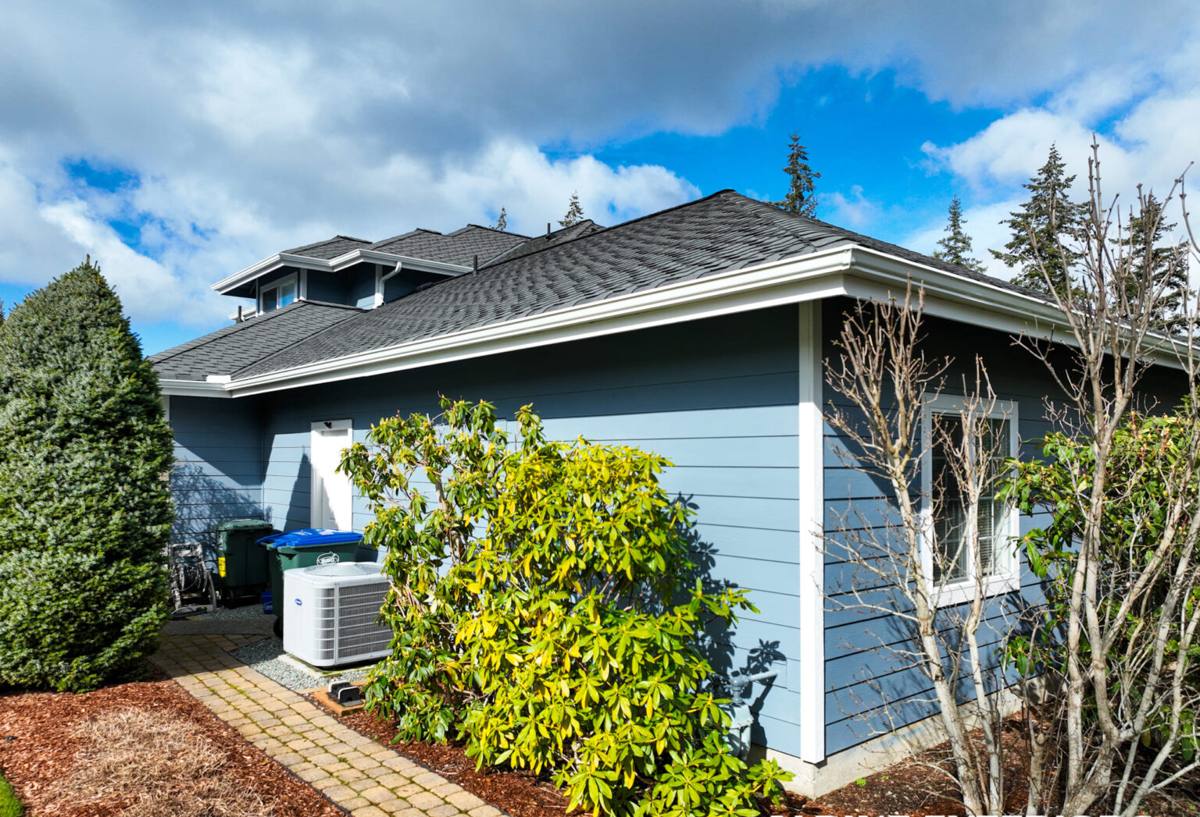
What Winter and Wind Storms Do to Island Roofs
Wind-Driven Rain and Flashing Failures
Most storm damage we see isn't a roof that blew off — it's water that got in through a weak point during a wind event. Driving rain gets pushed sideways and upward under shingle edges, around chimney flashing, at roof-to-wall transitions, and through any flashing detail that was installed to shed water straight down rather than handle wind pressure. On an exposed island roof, those weak points get tested far more often than on a sheltered inland home, so flashing that's "good enough" elsewhere can fail here within a few seasons.
Salt Air and Fastener Corrosion
Marine air carries salt, and salt accelerates corrosion on exposed metal — nail heads, flashing, gutter fasteners, and any hardware that isn't rated for coastal exposure. A storm can loosen material that's already been weakened by years of corrosion, which is why what looks like "storm damage" is sometimes really corrosion damage that a storm finally exposed. We check fastener and flashing condition during every island repair, not just the spot that's currently leaking.
Moss and Trapped Moisture
Whatcom County's wet season runs long, and shaded, north-facing roof sections on Lummi Island can stay damp for weeks after a storm. Moss takes hold in that moisture, lifts shingle edges as it grows, and holds water against the roof deck. A storm that wouldn't have caused a leak on a clean roof can push water straight into a section already compromised by moss growth. Moss removal and prevention are part of a real storm repair here, not a separate service.
Signs Your Roof Took Storm Damage
Not all storm damage is obvious from the ground. Some of it only shows up as a stain on a ceiling weeks later. Here's what we'd want you to check after a windstorm or heavy rain event:
- Missing, cracked, or curled shingles, especially on the side of the roof that faces the prevailing wind
- Granules collecting in gutters or at downspout outlets — a sign of shingle wear accelerated by wind abrasion
- Lifted or bent flashing around chimneys, skylights, vents, or where a roof meets a wall
- New or worsening water stains on interior ceilings or in the attic after a storm
- Debris strikes — branch or limb impact marks, punctures, or dented vent caps
- Sagging or soft-feeling roof sections, which can mean water has already reached the decking
- Visible moss buildup combined with any of the above, which usually means moisture has been sitting longer than one storm event
What a Correct Storm Repair Involves
A storm repair that's done right doesn't stop at the shingle that's obviously missing. Here's what we actually check and do on an island storm repair call:
- Full roof inspection, not just the reported problem area — one storm-damaged spot is often a sign of a second weak point nearby
- Decking check anywhere water may have gotten underneath, since wet decking has to be dried or replaced before new material goes over it
- Flashing repair or replacement at any transition point that shows corrosion, gaps, or improper overlap for wind-driven rain
- Matching shingle or roofing material selected for the existing roof's age and manufacturer where possible, so the repair doesn't stand out or create a mismatched wear pattern
- Fastener upgrade to corrosion-resistant hardware in exposed sections, since standard fasteners degrade faster this close to the water
- Moss and debris clearing in the repaired area and any adjacent sections holding moisture
- Gutter and drainage check, because a repaired roof still leaks if water can't get off it — clogged or damaged gutters are a common contributor to storm damage on shaded island roofs
Repair vs. Replace: What Actually Decides It
Storm damage doesn't automatically mean a full roof replacement, but it doesn't automatically mean a small patch either. The honest answer depends on a few factors we walk through with every homeowner before recommending either path.
| Factor | Points Toward Repair | Points Toward Replacement |
|---|---|---|
| Roof age | Under 10–12 years, or a newer roof with isolated damage | Nearing or past the material's expected service life |
| Extent of damage | Isolated section, single storm event | Multiple sections, or damage layered on existing wear |
| Decking condition | Dry, sound decking under the damaged area | Soft, rotted, or repeatedly saturated decking |
| Moss and moisture history | First occurrence, roof otherwise clean | Long-term moss growth with signs of trapped moisture |
| Fastener and flashing condition elsewhere | Sound hardware on the rest of the roof | Widespread corrosion visible in other sections |
We'll tell you plainly which side of that table your roof falls on. If a repair will genuinely hold up to another few winters of island exposure, we'll say so — there's no reason to sell a full replacement when a correct repair does the job.
Our Process for Lummi Island Storm Repairs
Scheduling Around Ferry Access
Getting a crew and materials onto Lummi Island means working around the county ferry, which is a real scheduling factor that inland Ferndale jobs don't have. We plan material loads and crew timing so we're not making multiple crossings for one job, and we build ferry timing into the estimate up front so there are no surprises about timeline.
Materials Suited to Marine Exposure
For island roofs, we lean toward flashing and fastener materials with better corrosion resistance and, where the existing roofing allows it, shingle products with algae-resistant granules to slow moss and lichen growth in the shaded, damp sections that give island roofs the most trouble. The goal is a repair that's still doing its job five or ten winters from now, not just a patch that gets you through this season.
Straight Answers Before Work Starts
Before any repair begins, we walk the roof, explain what we're seeing, and give you a clear scope and price — no vague "we'll see once we're up there" pricing. If we find something during the inspection that changes the picture, like soft decking under a shingle that looked fine from the ground, we stop and talk with you before doing anything beyond the original scope.
Insurance and Storm Claims
Wind and storm damage is often covered under homeowners insurance, but coverage details vary by policy and by how the damage occurred. We're not your insurance adjuster and won't promise a claim outcome, but we can document the damage clearly with photos and a written assessment that you can submit with a claim. If you're not sure whether your damage is claim-worthy, it's worth having it looked at before you decide — a small repair paid out of pocket is sometimes simpler and faster than a claim, and we'll give you our honest read on which makes more sense for your situation.
Why a Crew That Already Works Lummi Island Matters
A roofer who's never worked the island might not think about ferry scheduling, might not carry the corrosion-resistant hardware a marine environment calls for, and might treat a moss problem as cosmetic instead of a moisture risk. We've done repair and exterior work across Whatcom County long enough to know that Lummi Island roofs age differently than roofs a few miles inland, and we plan every repair — materials, scheduling, and scope — around that reality rather than treating it as an afterthought.
If your roof took damage in a recent storm, or you're seeing signs of moss and moisture buildup that concern you, we're glad to come take a look. Reach out for a free, no-pressure estimate using the form below — we'll walk the roof, tell you honestly what we see, and lay out what a correct repair would involve before you commit to anything.