 Ferndale
 Fiber Cement Siding in Sudden Valley: A Job We Know From Both Ends
Sudden Valley is one of the more distinct communities we work in outside Ferndale itself — a heavily wooded, hilly neighborhood wrapped around the south shore of Lake Whatcom, with its own private road network and homeowners association. Homes here sit under mature second-growth forest on lots where sun and wind exposure can change dramatically from one wall of the same house to the next. When someone calls us specifically about fiber cement siding for a Sudden Valley property, the conversation is usually less about which material to pick — most people who've done any research already know they want fiber cement — and more about whether the crew installing it actually understands what this particular setting demands.
That's what this page is for. Rather than repeat a general siding overview, we're walking through what fiber cement siding specifically needs to do on a Sudden Valley home, what a correct installation looks like given the shade and moisture this neighborhood holds onto longer than most properties, and why we send a Ferndale-based crew that already knows this community instead of treating it like any other stop on the schedule.
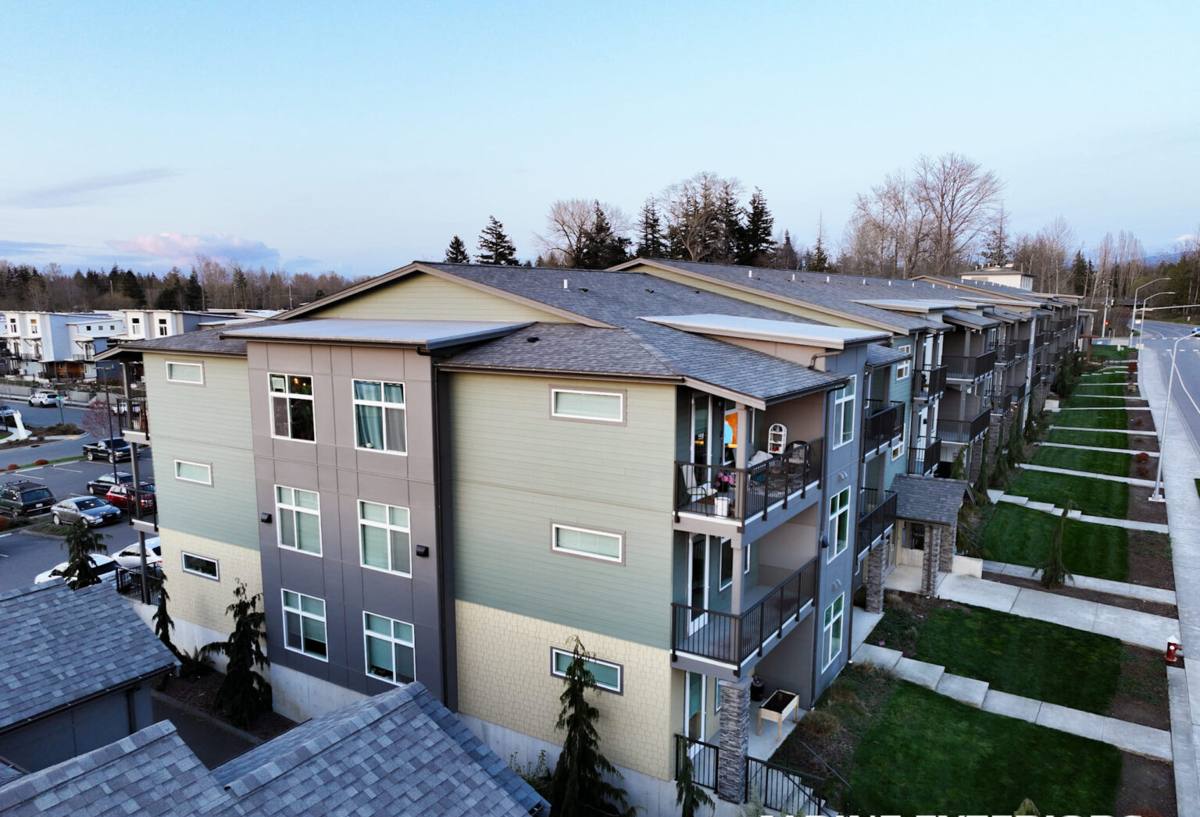
What Sudden Valley's Climate Actually Does to Siding
Heavy Tree Canopy and Walls That Stay Damp Longer
Most Sudden Valley lots sit under significant tree cover, and it's common for a home to have one or two elevations that get very little direct sun for most of the year. That shade slows drying after every rain. A wall that would dry out within a few hours on an open lot can stay damp for a day or longer under heavy canopy, and siding that depends on sun exposure to shed moisture between storms simply doesn't get much of a chance here.
Driving Rain Off the Lake and Uneven Wind Exposure
Lake Whatcom adds humidity on top of Whatcom County's already wet weather pattern, and the hilly terrain around Sudden Valley means wind-driven rain doesn't hit every wall the same way. A home's lake-facing or uphill side can take a very different beating than an elevation tucked behind a hill or a stand of trees. Correct flashing and drainage detailing has to account for that variation rather than assuming one approach works across the whole house.
A Moss Season That Doesn't Really End
Shade, humidity, and mild temperatures are exactly the conditions moss and mildew need, and Sudden Valley has all three for most of the year. Roofs usually show it first, but siding that holds moisture against its surface — porous materials, or products with seams and joints that trap water — picks it up too, especially on north-facing walls that see very little sun from fall through spring.
Why James Hardie Fiber Cement Is the Only Siding We Install Here
We install James Hardie fiber cement exclusively, on every siding job we take on — including every fiber cement project in Sudden Valley. That's a professional standard we hold to everywhere we work, not a Sudden Valley-specific choice, but it's a standard that came directly from seeing which materials hold up in shaded, moisture-heavy conditions like these and which ones don't.
- Non-combustible core: matters for safety and, often, insurance underwriting, especially in a wooded community surrounded by forest.
- Factory-applied ColorPlus finish: baked on under controlled conditions rather than brushed on site, resisting fading and moisture intrusion far longer than field-applied paint — important on walls that stay damp for extended stretches.
- Climate-engineered HZ5 formulation: built for regions with heavy moisture exposure and freeze-thaw cycling, a good match for Sudden Valley's lakeside, shaded profile.
- Dimensional stability: doesn't swell, cup, or warp the way wood-based products can after repeated wetting cycles that never fully resolve on a shaded wall.
- Strong transferable warranty: backed by Hardie provided installation follows their published specifications — worth confirming with any contractor, not just us.
What We Won't Install, and Why
We don't install LP SmartSide, vinyl siding, Cemplank, Allura, primed spruce, or cedar. Each has a legitimate place in the market, and we're not going to claim they're bad products across the board. But on a shaded, moisture-retentive lot like a typical Sudden Valley property, engineered wood is more sensitive to moisture at cut edges and joints, vinyl can trap condensation behind panels that never fully dry out, and painted wood siding needs a refinishing schedule that gets harder to keep up with the less direct sun a wall gets. We'd rather stand behind one system we can install correctly and warranty fully than offer a lower-cost option that quietly shifts long-term maintenance risk back onto the homeowner.
What Correct Fiber Cement Installation Requires on a Sudden Valley Home
Fastening, Flashing, and Drainage Detail
Fiber cement only performs the way it's engineered to when it's installed to Hardie's published specifications — correct fastener type and spacing, proper clearance from grade and roofline, and sealed joints at every transition. On a shaded lot where walls stay damp longer than average, drainage detailing behind the panels matters even more than it would on a sunnier property. A rain-screen gap that lets incidental moisture drain and the wall assembly breathe isn't an optional upgrade here — loosely installed fiber cement will still develop problems on a lot like this, no matter how good the material itself is.
Prepping the Wall Before New Siding Goes On
We don't install new siding over a wall we haven't actually looked at. That means removing the old siding down to the sheathing, checking for rot or moisture damage that's been developing out of sight — common on shaded elevations, where problems don't dry out and announce themselves the way they would on a sunnier wall — and confirming the water-resistive barrier underneath is intact, or replacing it before anything new goes up. Skipping that step to save time is one of the more common ways a fiber cement installation fails early, and it has nothing to do with the material itself.
Comparing Siding Materials in Sudden Valley's Conditions
| Material | Moisture Behavior | Maintenance Under Heavy Shade | Typical Longevity Here |
|---|---|---|---|
| James Hardie fiber cement | Dimensionally stable, resists swelling | Low; factory finish resists moisture-driven fading and chalking | 30+ years with correct installation |
| Vinyl siding | Can trap condensation behind panels in shaded, poorly ventilated walls | Low upfront, but seams stay damp longer under canopy | Variable; shorter on consistently shaded elevations |
| LP SmartSide / engineered wood | Wood-fiber core is moisture-sensitive at cut edges and joints | Moderate to high; edge sealing matters more without sun to dry it out | Depends heavily on installation and upkeep |
| Cedar / primed wood | Absorbs and releases moisture readily | High; needs regular refinishing, especially in shade | Shorter without consistent maintenance |
Our Fiber Cement Siding Process
The steps don't change from house to house, but how carefully we execute each one does — a shaded, moisture-heavy lot like a typical Sudden Valley property leaves less room for shortcuts than a home on open, sunny ground.
- On-site assessment: we walk the exterior and look specifically at how shade, tree cover, and moisture have affected each elevation, since that varies more from wall to wall here than on a typical open lot.
- Written scope and timeline: a clear, itemized scope before any work begins, including how tear-off, sheathing repair, and drainage detailing are handled.
- Tear-off and inspection: old siding comes off down to the sheathing so we can actually see what's underneath rather than build over unknown problems.
- Water-resistive barrier and drainage plane: installed or repaired to current standards, with rain-screen detailing on elevations that stay shaded longest.
- Fiber cement installation: installed to Hardie's published fastening, clearance, and joint-sealing specifications, not a simplified version of them.
- Final walkthrough: trim, caulking, and flashing details checked before we call the job finished.
Why a Local Ferndale Crew Matters for This Job
Sudden Valley is a private community with its own internal road network and homeowners association, and a crew that regularly works here already understands the practical side of that — how to schedule around community access, and how quickly exposure changes from one lot to the next even within the same neighborhood. That familiarity shows up in the details that actually matter on a fiber cement job: which walls need extra drainage detailing because they rarely see direct sun, how flashing gets sequenced on a steep, shaded roof-to-wall transition, and which fastener grade holds up best in a damp, wooded microclimate like this one. A crew that's only ever installed siding on open, sunny lots is going to make different — and often wrong — assumptions here.
A Short Checklist Before Hiring for Fiber Cement Siding in Sudden Valley
- Ask what siding material they install and why, and whether they'll put the warranty in writing
- Confirm current Washington state contractor licensing and active liability insurance
- Ask how they handle homes with heavy shade and tree cover, and what drainage detailing they use on those walls
- Ask about experience working within HOA or private-road communities, including access and scheduling
- Get a written scope that specifies tear-off versus overlay before any contract is signed
If you're weighing fiber cement siding for a Sudden Valley home, we're happy to walk the property with you and give an honest read on what it actually needs. Reach out below for a free, no-pressure estimate.