 Ferndale
 Windows Built for a Coastal Border Town
Blaine sits right on Drayton Harbor and Semiahmoo Bay, a few miles from the Canadian border in Whatcom County. That location is beautiful, but it's hard on a house. Homes here take on salt-laden air off the water, wind-driven rain that comes in sideways more often than straight down, and a wet season that stretches long enough to grow a healthy crop of moss on anything that stays damp. Windows sit at the front line of all of it. A window that would last twenty years in a dry inland climate can start failing in half that time in Blaine if it wasn't installed with this specific environment in mind.
This page is about one job done right in one place: window installation for Blaine homes, from the flashing details that keep water out to the frame materials that hold up against salt air. It's not a general overview of windows everywhere — it's what we've learned working on homes exposed to Whatcom County's coastline.
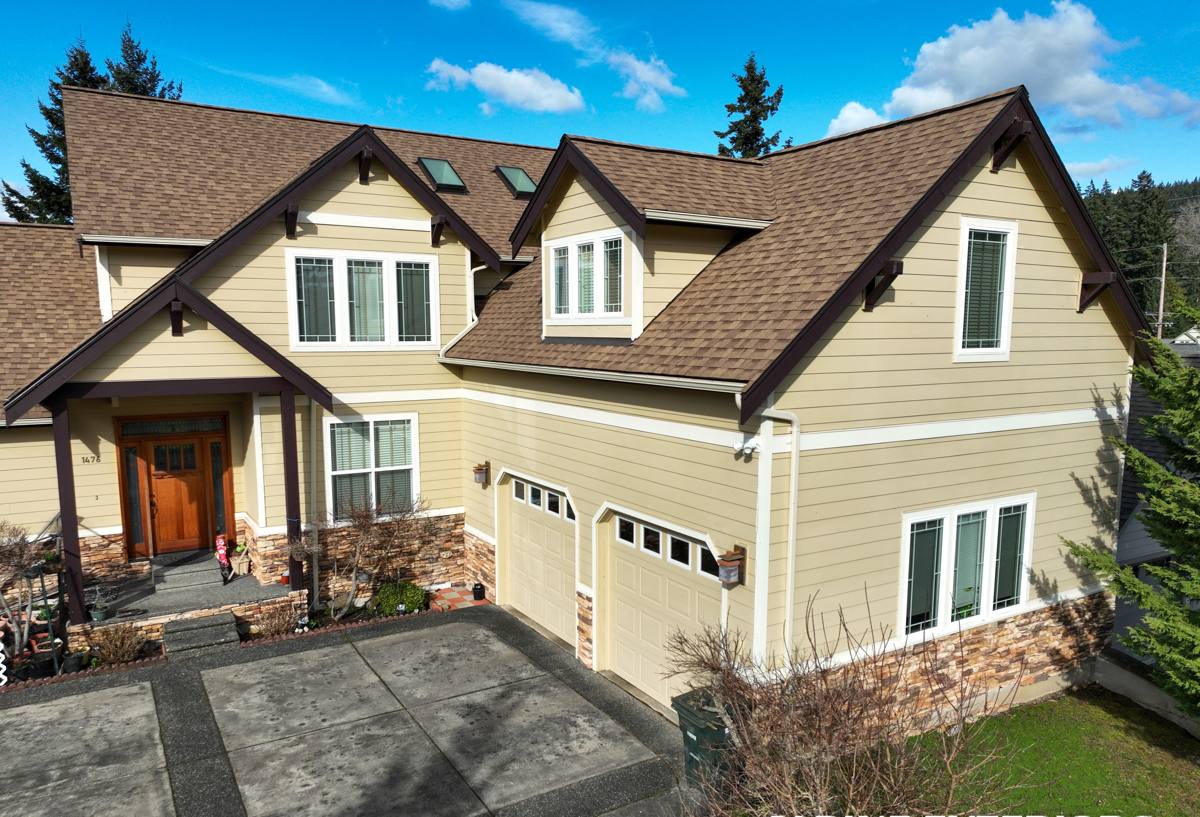
What the Marine Climate Actually Does to a Window
Salt Air and Metal Components
Salt in the air accelerates corrosion on anything metal — window hardware, screen frames, fasteners, and especially aluminum-framed windows that weren't specified for coastal exposure. Over years, corroded hardware means windows that stick, won't latch fully, or develop gaps where the sash no longer seats tight against the frame. Once a window won't close all the way, it stops being weathertight, and the problem compounds fast.
Driving Rain and Wind-Loaded Water
Rain that comes in on a horizontal wind doesn't behave like rain falling straight down. It gets pushed up under trim, into any gap in the flashing, and behind siding that isn't lapped correctly at the window opening. Most window leaks we find in this area aren't failures of the window itself — they're failures of the flashing and weather barrier around it. A window can be expensive and well-built and still leak if the opening wasn't detailed for wind-driven rain.
Moss, Algae, and a Long Wet Season
Whatcom County's wet season runs long, and anything that holds moisture — a sill without proper slope, a corner where caulk has failed, a wood trim piece with peeling paint — becomes a spot where moss and algae can take hold. That growth holds even more moisture against the building, which is how a small trim issue turns into rot over a few seasons if it's ignored.
Signs a Blaine Home Needs New Windows
- Soft or discolored wood trim or sill around the window, especially on the side facing the water or prevailing wind
- Condensation building up between panes on double or triple-glazed units — a sign the seal has failed
- Windows that are hard to open, close, or lock, or that no longer sit flush in the frame
- Visible daylight or a draft you can feel around the frame when it's closed
- Moss or dark streaking on the sill, trim, or siding directly below the window
- A noticeable jump in heating costs without any other explanation
- Paint that's bubbling, peeling, or chalky on wood-framed windows
Any one of these on its own might just need a repair. Several at once, especially combined with soft trim, usually means it's time to talk about replacement before the water damage spreads past the window opening into the wall framing.
What a Correct Installation Actually Involves
The window unit itself is maybe half the job. The other half — the part that determines whether it stays watertight for the next twenty years — is how the opening is prepared and flashed. In a climate that gets driving rain off the water, this is not a place to cut corners.
Removal and Opening Inspection
We pull the old window carefully and check the rough opening before anything new goes in. This is often where we find the real story — rot in the sill plate, a missing or degraded weather-resistive barrier, or flashing that was never installed correctly the first time. Any of that gets addressed before the new window goes in, not covered over.
Flashing and Water Management
A correctly flashed window sheds water down and out, never letting it track back behind the siding. That means flashing tape or pan flashing at the sill, proper lapping of the weather barrier at the sides and head, and a drip cap or head flashing that directs water away from the top of the frame. This sequence matters more in Blaine than it would in a drier climate — it's the difference between a window that handles a wind-driven storm off the bay and one that doesn't.
Setting, Shimming, and Sealing
The window has to be plumb, level, and square, shimmed at the right points so it doesn't bind or sag over time, and fastened per the manufacturer's specification — not just however is fastest. Insulation goes in the gap between the frame and the rough opening without overpacking it, which can bow the frame. Exterior sealant goes only where it should, so any water that does get past the outer defenses still has a path to drain rather than getting trapped.
Interior and Exterior Finish
Trim gets reinstalled or replaced, caulked, and where applicable, primed and painted the same day so no bare wood is left exposed to the weather overnight. Interior finish work is checked for a clean, tight reveal all the way around.
Choosing the Right Frame Material for This Climate
Not every window product is a good fit for salt air and constant moisture exposure. We steer homeowners toward materials that hold up with minimal upkeep in this specific environment, and we're upfront about the trade-offs of each option rather than pushing whatever has the best margin.
| Frame Material | How It Handles Coastal Exposure | Maintenance | Typical Trade-Off |
|---|---|---|---|
| Vinyl | Doesn't corrode or rot; handles salt air well | Low — occasional cleaning | Limited color options; can look less premium on higher-end homes |
| Fiberglass | Excellent — dimensionally stable, resists moisture and corrosion | Low | Higher upfront cost than vinyl |
| Wood | Needs a well-maintained finish to resist moisture; more vulnerable without upkeep | High — repainting/resealing on a regular cycle | Best appearance for historic or traditional homes, but demands ongoing care in this climate |
| Aluminum | Prone to corrosion and thermal transfer near salt air unless specifically coated for coastal use | Moderate to high | We generally don't recommend uncoated aluminum this close to the water |
| Wood-clad (wood interior, vinyl/aluminum-clad exterior) | Good if the cladding is fully sealed at every joint — a weak point if not installed carefully | Low exterior, some interior finish care | Installation quality matters more than with solid vinyl or fiberglass |
For most Blaine homes right on or near the water, we lean toward vinyl or fiberglass for the balance of durability and low maintenance. Wood and wood-clad windows can still be the right call for a specific look, but we're honest with homeowners that they come with a real ongoing maintenance commitment in a marine climate — that's not a knock on the product, it's just what the material needs to perform well here.
Our Process for Blaine Window Projects
- On-site assessment: We look at every window being considered, check the condition of the trim and sill, and note any signs of existing water intrusion before quoting anything.
- Product selection: We walk through frame material, glazing options, and energy performance based on the home's exposure — a window facing the water gets a different conversation than one on a sheltered side.
- Written estimate: Clear pricing per window, including any trim or siding repair the assessment turned up, so there are no surprises once work starts.
- Scheduling around weather: Openings only stay exposed as long as they need to. We plan installation days around the forecast where we can, since an open wall cavity and a Whatcom County rain system don't mix.
- Installation: Removal, opening inspection and repair as needed, flashing, setting, insulating, and finishing — one window fully closed up before moving to the next wherever possible.
- Final walkthrough: We check operation, seals, and finish work with the homeowner before calling the job done.
Why a Crew That Already Works in Blaine Makes a Difference
General contractors from outside the area can install windows competently in a lot of climates and still get the details wrong here, because Blaine's exposure to the bay isn't like installing windows twenty miles inland. A crew that regularly works this stretch of Whatcom County knows which sides of a house typically take the worst weather, what flashing details actually hold up against driving rain off the water, and which trim and siding materials are worth pairing with new windows versus which ones will just create the same moisture problem again in a few years.
There's also a practical side to it: local crews know the permitting process for the jurisdictions around Blaine, show up reliably for scheduled work, and are around afterward if a question comes up post-installation. That matters more with windows than with almost any other exterior project, because a window problem that isn't caught early doesn't stay a window problem — it becomes a framing and siding problem.
What Affects the Cost of a Window Project
| Factor | Why It Matters |
|---|---|
| Number and size of windows | Larger openings and full-house projects cost more but often get better per-unit pricing than one-off replacements |
| Frame material | Vinyl is typically the most budget-friendly; fiberglass and wood-clad cost more upfront |
| Glazing package | Double vs. triple pane, and low-E coatings, affect both cost and long-term energy performance |
| Condition of the existing opening | Rot or water damage found during removal adds repair work that a quote can't fully predict until the old window is out |
| Access and window height | Second-story or hard-to-reach windows take more time and equipment |
| Trim and exterior finish work | Replacing or repainting trim alongside the window adds cost but protects the new installation |
We won't quote a firm number without seeing the windows in person — condition varies too much house to house — but we'll always explain what's driving the price before any work starts.
Keeping New Windows Performing Long-Term
A correctly installed window in this climate still benefits from a bit of regular attention. This short checklist covers what actually matters:
- Rinse salt residue off frames and glass periodically, especially on sides facing the water
- Check exterior caulking once a year for cracking or separation, and touch it up before it fails fully
- Keep gutters and downspouts clear so water isn't sheeting down past window openings
- Watch for moss starting on sills or nearby trim and address it early — it's easier to stop than to reverse
- Operate each window through its full range a few times a year so hardware doesn't seize up from disuse
- Repaint or reseal wood and wood-clad frames on the schedule the manufacturer recommends, not just when it looks bad
None of this is a lot of work, but skipping it is exactly how a well-installed window ends up with a preventable problem five or ten years down the road.
Get a Straight Answer on Your Windows
If your Blaine home has windows that are drafty, hard to operate, or showing water damage around the trim, we're glad to take a look and give you an honest read on whether repair or replacement makes sense. Fill out the form below for a free, no-pressure estimate.