 Ferndale
 Roofing on the Water's Edge: Why Semiahmoo Is a Different Job
Semiahmoo sits right up against the salt water, and that changes what a roof has to deal with compared to homes further inland in Whatcom County. Wind off the water carries fine salt spray onto roof surfaces, rain comes in sideways more often than it falls straight down, and the tree cover around many properties keeps roofs shaded and damp for long stretches of the year. None of that is dramatic on its own, but stacked together over years, it's exactly the combination that shortens the life of an asphalt shingle roof that wasn't built for it.
We work on homes throughout Ferndale and the surrounding Whatcom County waterfront, and Semiahmoo roofs consistently show a specific pattern of wear: granule loss on the windward slopes, moss colonies in shaded valleys and north-facing sections, and soft spots around flashing where wind-driven rain has been finding its way past standard details for years. A shingle roof done right for this location isn't a different product — it's the same asphalt shingle system installed with extra attention paid to the details that matter most in a marine climate.
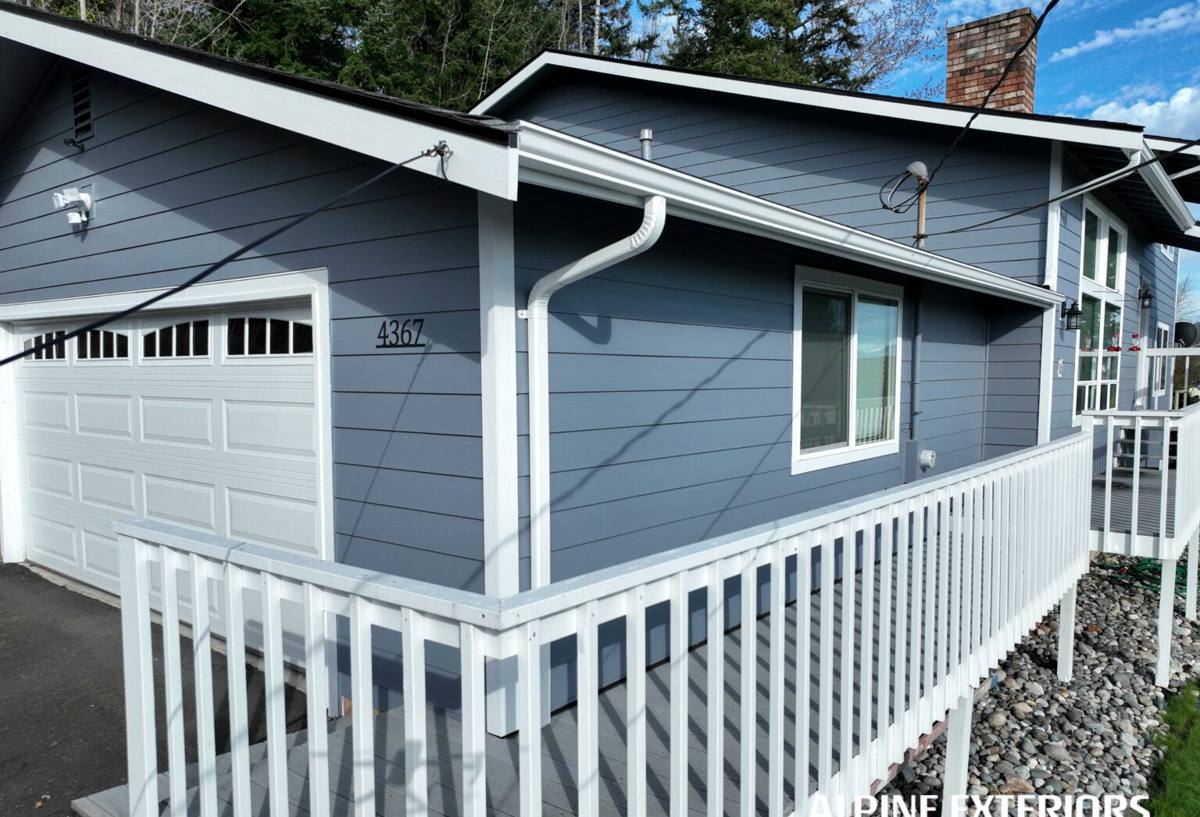
What Semiahmoo's Climate Actually Does to a Roof
Salt Air and Metal Components
Salt-laden air accelerates corrosion on exposed metal — nails, flashing, vent stacks, and drip edge. Standard galvanized fasteners can start showing rust streaks on shingles years before the shingles themselves are worn out. That's a maintenance and appearance problem as much as a structural one, and it's avoidable with the right fastener and flashing choices from the start.
Driving Rain and Wind
Wind off the bay pushes rain up and under shingle tabs rather than letting it simply run off, which is why sealing, nail placement, and underlayment matter more here than they would on a sheltered inland roof. A roof that would perform fine in a calm neighborhood a few miles inland can leak at the same age on an exposed Semiahmoo lot.
Moss and Shade
Tree-lined lots and the marine layer that regularly hangs over the water keep roof surfaces damp longer after every rain. Moss and algae take hold fastest in shaded valleys, on north-facing slopes, and anywhere debris collects. Left alone, moss lifts shingle edges and holds moisture against the roof deck, which is one of the more common causes of premature rot we find when we tear off an old roof in this area.
Signs a Semiahmoo Roof Needs Attention
Most shingle roof problems in this area develop slowly, which is exactly why they're easy to miss until they become expensive. Here's what we tell homeowners to watch for between inspections:
- Moss or dark algae streaking, especially on shaded or north-facing slopes
- Granules collecting in gutters or at the base of downspouts
- Curling, cupping, or lifted shingle tabs, particularly on wind-exposed sides of the roof
- Rust staining around vent stacks, flashing, or exposed fasteners
- Soft or spongy spots underfoot near valleys, chimneys, or skylights
- Daylight visible through the roof deck from inside the attic
- Water stains on interior ceilings, especially after a windy rainstorm rather than a calm one
Any one of these on its own might just mean routine maintenance. Two or three together, especially combined with the age of the roof, usually mean it's worth a real inspection before the next wet season.
What a Correctly Installed Shingle Roof Needs Here
Underlayment
Standard felt underlayment is the minimum, not the standard we'd recommend for a wind-exposed, rain-driven site like Semiahmoo. A synthetic or self-adhering underlayment gives better protection against the wind-driven rain that gets under tabs before the shingles themselves can seal. In valleys and along eaves, an ice-and-water shield membrane is worth the extra material cost for the added margin against wind-forced water intrusion.
Fastening and Sealing
Every shingle needs to be nailed correctly — the right number of nails, in the right place, driven flush without overdriving. It sounds basic, but improperly fastened shingles are one of the most common causes of early failure we see, and it's invisible from the ground. On exposed sites we also pay closer attention to sealant strip activation, since shingles that don't get enough sun and warmth to bond properly are more likely to lift in strong wind.
Flashing
Flashing around chimneys, skylights, vents, and roof-to-wall transitions is where most leaks actually start, not in the open field of shingles. Corrosion-resistant flashing, properly stepped and counter-flashed rather than just caulked, matters more here given the salt air than it would on a typical inland roof.
Ventilation
Balanced intake and exhaust ventilation keeps the attic dry and temperature-regulated, which slows moss growth from underneath and helps shingles last their full rated life. A roof can be installed perfectly and still underperform if the attic beneath it is trapping moisture.
Comparing Shingle Options for a Waterfront Whatcom County Home
| Shingle Type | Typical Lifespan | Best Fit for Semiahmoo |
|---|---|---|
| 3-Tab Asphalt | 15–20 years | Budget-conscious projects; less wind resistance, so best on more sheltered lots |
| Architectural (Laminate) Asphalt | 25–30 years | Our most common recommendation here — better wind rating and thicker profile handles driving rain and salt air better |
| Impact-Resistant / Algae-Resistant Asphalt | 25–30+ years | Worth the upgrade on shaded, moss-prone lots; copper or zinc granules slow algae regrowth |
We don't push homeowners toward the most expensive option by default. On an open, sunny, wind-exposed lot, a well-installed architectural shingle is usually the right balance of cost and performance. On a shaded, tree-covered lot where moss has been a recurring problem, the algae-resistant upgrade tends to pay for itself in reduced maintenance over the life of the roof.
Repair, Recover, or Full Replacement: Cost Factors
Not every roof problem in Semiahmoo means a full tear-off. The right call depends on the roof's age, how much of it is affected, and what we find once we're actually up there looking at the deck.
| Factor | Favors Repair | Favors Full Replacement |
|---|---|---|
| Roof Age | Under 10–12 years | Approaching or past 20 years |
| Extent of Damage | Isolated area (one slope, one valley) | Widespread granule loss or curling across multiple slopes |
| Decking Condition | Solid, dry decking underneath | Soft, delaminated, or water-stained decking |
| History of Leaks | First occurrence, clear single cause | Recurring leaks in different spots over time |
Broad, honest ranges: a targeted repair on a Semiahmoo roof is typically a modest, contained cost, while a full tear-off and replacement runs into the thousands depending on the size of the roof, the pitch, decking condition, and the shingle grade chosen. We won't give you a real number without seeing the roof — anyone who quotes a full replacement over the phone without an inspection is guessing.
Our Process for Semiahmoo Roofing Projects
1. Inspection and Honest Assessment
We start on the roof, not just from the ground. That means checking the deck condition, flashing details, ventilation, and the extent of moss or granule loss before recommending repair versus replacement.
2. Clear, Written Scope
You get a written scope covering materials, underlayment, flashing work, and ventilation changes — no vague "reroof" line item. If we're upgrading to a better underlayment or algae-resistant shingle because of the site conditions, that's spelled out and explained, not buried.
3. Tear-Off and Deck Inspection
On a full replacement, we remove the old roofing down to the deck and inspect it directly rather than roofing over unknown conditions. Any soft or rotted decking gets replaced before anything new goes down — this is the step that gets skipped by crews trying to move fast, and it's the one that determines whether the new roof actually lasts.
4. Underlayment, Flashing, and Shingle Installation
We install underlayment and flashing suited to a wind-exposed, wet-climate site, then install shingles to manufacturer nailing specifications — not faster, looser fastening to save time.
5. Cleanup and Final Walkthrough
Nail and debris cleanup, magnetic sweep of the yard and driveway, and a walkthrough where we show you what was done and answer questions before we consider the job finished.
Maintenance That Actually Extends Roof Life Here
A well-installed shingle roof in Semiahmoo still needs some upkeep to reach its full lifespan, mostly because of the moss and debris load from surrounding tree cover.
- Keep gutters and valleys clear of needles and leaf debris, especially heading into the wet fall months
- Have moss treated or gently removed rather than pressure-washed, which can strip granules and shorten shingle life
- Trim back overhanging branches where possible to reduce shade and debris buildup on north-facing slopes
- Schedule a roof check after any unusually severe windstorm off the water, even if nothing looks wrong from the ground
- Have an inspection done every couple of years once a roof passes the 12–15 year mark
Why It Matters That We Already Work in Semiahmoo
Roofing crews that mostly work drier, more sheltered parts of Whatcom County sometimes underestimate what a waterfront property actually needs — they'll spec a standard underlayment and standard flashing details because that's what works fine where they usually build. On a Semiahmoo roof, that approach tends to show its limits within a handful of wet seasons in the form of granule loss, early moss return, or a flashing leak after a windy storm.
Working this area regularly means we know which slopes on a typical Semiahmoo lot take the worst of the wind-driven rain, which shaded corners need the algae-resistant upgrade instead of standard shingle, and where salt air makes corrosion-resistant fasteners and flashing worth the small added cost. That's not a marketing point — it's the difference between a roof that needs attention again in five years and one that goes the full distance of its warranty.
If your Semiahmoo roof is showing moss, granule loss, or you just want an honest read on how much life it has left, we're glad to come take a look. Estimates are free and there's no pressure — use the form below to get one scheduled.