 Ferndale
 Building a Deck That Can Handle Blaine's Weather, Not Just Look Good on Day One
Blaine sits right on the water at the northwest corner of Whatcom County, close enough to Semiahmoo Bay and Drayton Harbor that salt air is a fact of life for anything built outdoors. Add in driving rain off the Strait of Georgia for much of the year and a moss season that seems to start earlier every fall, and a deck here is working a lot harder than a deck built inland. A design that looks great in a showroom photo can start showing problems within a year or two if it wasn't built with this specific climate in mind. Our approach for Blaine homes starts with the weather, not the finish color.
We're based just down the road in Ferndale and build decks throughout Whatcom County, but Blaine's location right on the water means we treat every project here a little differently — from the hardware we specify to how we frame for drainage. This page covers what that actually means, so you know what to look for whether you hire us or someone else.
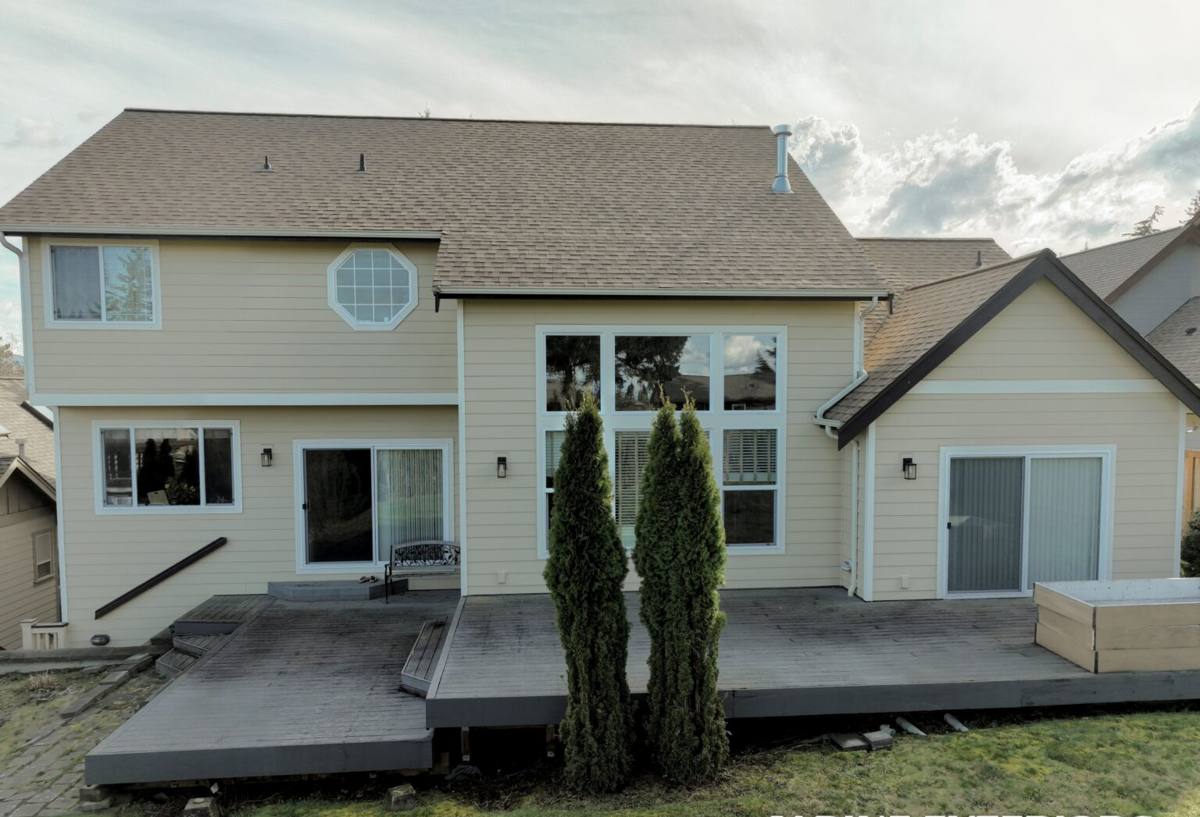
What Blaine's Coastal Climate Actually Does to an Outdoor Deck
Salt Air and Fasteners
Salt-laden air corrodes standard fasteners and connectors faster than most homeowners expect. A deck screw or joist hanger rated for general outdoor use inland can start rusting within a couple of seasons this close to the water. Once a fastener starts to go, it doesn't just look bad — it loses holding strength, and that's a structural issue, not a cosmetic one.
Driving Rain and Standing Water
Rain in this part of Whatcom County often comes in sideways off the water, which means it finds its way into joints, under railing bases, and behind ledger boards that would stay dry in a more sheltered yard. Any spot on a deck where water can collect and sit — instead of shedding off — becomes the first place rot starts, usually out of sight until it's a real repair.
Moss and Algae Season
Shaded decks, north-facing decks, and anything under tree cover stay damp longer here, and that dampness is exactly what moss and algae need to take hold. Beyond looking neglected, a mossy deck surface gets slick and genuinely dangerous underfoot, especially on stairs.
Choosing a Decking Material That's Actually Suited to the Coast
There's no single "best" decking material — there's a best material for your budget, your maintenance appetite, and how exposed your particular lot is to wind and salt spray. Here's how the common options actually compare for a Blaine property.
| Material | How It Handles This Climate | Maintenance | Typical Lifespan |
|---|---|---|---|
| Pressure-treated wood | Affordable and strong, but needs consistent sealing to resist moisture and salt exposure | Annual cleaning and re-sealing recommended | 10-15 years with upkeep |
| Cedar | Naturally rot-resistant and handles our rain well, but salt air will gray and weather it faster than an inland install | Periodic staining or sealing to preserve color and protection | 15-20 years with upkeep |
| Composite (capped) | Doesn't absorb moisture the way wood does, resists moss growth better, holds up well to salt air | Occasional washing, no sealing or staining | 25-30+ years |
| PVC decking | Fully synthetic, essentially immune to rot and moisture damage, best option for the most exposed, wind-and-spray-heavy lots | Lowest maintenance of the group | 25-30+ years |
We're not going to tell you a particular product is "bad" — every material on that list has a place. Our job is to be honest with you about the trade-off: lower upfront cost generally means more of your own time spent maintaining it, especially in a climate that's actively working against unsealed wood. For a lot of Blaine homeowners who want a deck they can actually enjoy rather than a maintenance project, capped composite or PVC ends up being the better long-term value, but if you like the look and feel of real wood and are willing to stay on top of sealing, cedar is a solid choice too.
What's Underneath the Deck Matters More Than What's On Top
A beautiful decking surface on a poorly built frame is a problem waiting to surface — usually literally, as soft spots or a spongy feel underfoot. This is the part of the job that doesn't show up in a finished photo but is what actually determines whether your deck is still solid in fifteen years.
- Footings sized for our soil and frost conditions — not just code minimums, but sized appropriately for the actual load and soil on your lot
- Ledger board flashing that properly sheds water away from the house band joist, since this is one of the most common points of hidden rot on any deck attached to a home
- Corrosion-resistant hardware — stainless steel or coated connectors rated for coastal exposure, not standard-grade hardware that will start rusting within a couple of years this close to the water
- Joist tape or protective barriers on top of framing lumber to keep water from wicking into the wood through screw holes
- Proper slope and drainage built into the frame so water actually runs off instead of pooling on the surface
Designing a Deck That Fits the Way Blaine Homes Sit on Their Lots
A lot of Blaine properties deal with sloped lots, walkout basements, or a view worth protecting, and the deck design needs to work with that rather than fight it. A few things we think through on every project here:
Wind and Railings
Open, elevated, or water-facing decks catch more wind than a sheltered backyard deck would. Railing systems need to be built and fastened with that in mind, not just meet the minimum height requirement.
Drainage Under Elevated Decks
If your deck is elevated over a patio, walkway, or storage area, an underdeck drainage system keeps that space usable and dry instead of turning it into a drip zone every time it rains — which, in this part of Whatcom County, is often.
Sun, Shade, and Moss Exposure
Where the deck sits relative to your house and any tree cover affects how much moss pressure it'll deal with long-term. We factor that into both the layout and the material recommendation, since a heavily shaded deck benefits more from a low-maintenance surface than a sun-drenched one does.
Our Process, Start to Finish
- On-site visit — we walk the lot with you, look at drainage, slope, sun exposure, and how the deck will connect to your home
- Design and material discussion — honest trade-offs on material, layout, and railing options based on your budget and how exposed the site is
- Written estimate — clear scope, materials, and price before any work starts, no surprise add-ons
- Permitting — we handle the paperwork with the local jurisdiction so the structure is built and inspected to code
- Framing and structural work — footings, framing, flashing, and hardware done right, since this is the part that determines how long the deck actually lasts
- Decking, railing, and finish work — the visible part, installed to the manufacturer's specs so warranties stay valid
- Final walkthrough — we go over the finished deck with you and answer any maintenance questions before we consider the job done
Keeping a Blaine Deck Looking Good Through Every Season
Even a low-maintenance composite deck benefits from a bit of seasonal attention here, and a wood deck needs it to actually reach its full lifespan. A simple routine goes a long way against moss, salt residue, and standing water:
- Rinse the surface periodically to clear salt residue and organic buildup before it can feed moss growth
- Clear leaves and debris out of gaps between boards so water can keep draining through instead of pooling
- Check railing posts and stair connections once a year for loose hardware or early rust
- For wood decks, plan on re-sealing or staining on a regular cycle rather than waiting until it visibly needs it
- Keep gutters and downspouts near the deck clear so runoff isn't dumping extra water onto or under the structure
- Address any soft spots, discoloration, or lifting boards right away — small repairs now are far cheaper than structural repairs later
Why It Matters That We Already Work in Blaine
A contractor who mostly builds decks inland can still do competent framing, but they may not think to spec coastal-grade hardware, plan for wind exposure, or factor in how much moss pressure a shaded, damp lot near the water is going to see. Those aren't exotic considerations — they're just the normal, practical adjustments that come from having built and later serviced decks in this specific area. Since we're already working throughout Whatcom County, including Blaine, we've seen firsthand which details hold up here and which ones cause callbacks in year two.
That local familiarity also means straightforward permitting knowledge, realistic timelines that account for our rainy stretches, and a crew that isn't guessing about what this particular coastline does to an outdoor structure over time.
Let's Talk About Your Deck
If you're planning a new deck or replacing one that hasn't held up to Blaine's weather, we're happy to walk the site with you and put together a straightforward, no-pressure estimate. Use the form below to get started.