 Ferndale
 Siding Installation in Blaine: Built for Salt Air, Driving Rain, and a Long Moss Season
Blaine sits about as close to open water and the Canadian border as a Whatcom County home can get, and that position changes what a siding installation needs to hold up against. Homes near Semiahmoo Bay and Drayton Harbor take on salt-laden air almost daily, wind-driven rain that doesn't fall straight down, and a moss season that can run most of the year on shaded walls. A siding installation that would hold up fine twenty miles inland can start showing problems within a few winters on a property facing this kind of exposure — not because the material failed, but because the installation didn't account for what the site actually demands.
This page is specifically about siding installation for Blaine homes — not a general overview of exterior work, and not a roofing or window page with siding tacked on. We install James Hardie fiber cement exclusively, and everything below covers what that installation looks like on the ground here: what the climate requires, what a correct job actually involves step by step, and why a crew that already works this stretch of coastline handles it differently than one passing through.
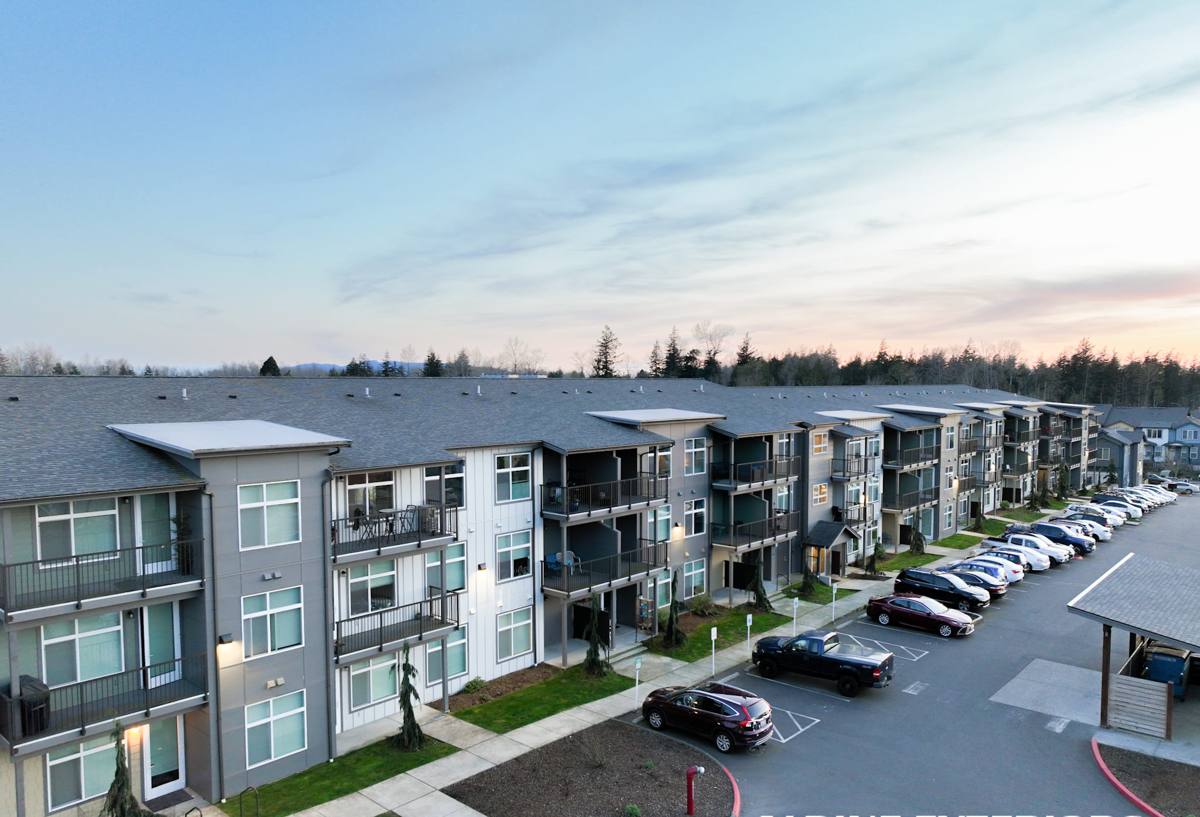
What Blaine's Climate Requires From a Siding Installation
Salt Air and Corrosion Resistance
For homes near the bay or harbor, salt exposure is a daily condition, not an occasional event after a storm. It accelerates corrosion on fasteners, flashing, and any exposed trim hardware, and it works faster the closer a property sits to open water. An installation that uses the wrong fastener type, or skimps on corrosion-resistant flashing at penetrations, is setting up a failure point that salt air will find years before it would in a drier, inland location.
Wind-Driven Rain and Flashing
Storms moving in off the water in Blaine rarely drop rain straight down. Wind pushes it sideways into siding joints, window and door flashing, and the transitions where a roof meets a wall. That sideways load is a different installation problem than vertical rainfall — it requires flashing and lap details that shed water outward even when it's arriving at an angle, and it's the single most common place we find moisture getting behind siding on jobs that weren't installed with this in mind.
A Long Moss Season and Moisture Management
Mild temperatures and near-constant humidity give moss and mildew a growing season that can run close to year-round on north-facing or tree-shaded walls around Blaine. Siding installed without a drainage path behind it stays damp longer than it should, and any surface with even slight porosity becomes a growth surface over time. Getting moisture management right at installation — not just choosing a good material — is what actually keeps a wall dry through this kind of season.
What a Correct Siding Installation Actually Involves
The material matters, but installation quality is what determines whether a siding job holds up in Blaine's climate for decades or starts causing problems within a few wet seasons. A few of the details we treat as non-negotiable, not upgrades:
Substrate and Sheathing Condition
Before any new siding goes up, the sheathing underneath has to be sound. Installing over rotted or soft sheathing just hides a problem that gets worse behind the wall, and on a property this close to the water, existing moisture damage is common enough that we check for it as a standard step, not an exception.
Weather-Resistive Barrier and Rain Screen
A correctly lapped house wrap, installed shingle-style so every seam sheds water downward, is the first line of defense behind the siding. Behind that, a rain screen gap — a small drainage cavity — lets any moisture that does get past the exterior surface drain and evaporate instead of sitting against the sheathing. On water-facing walls in Blaine, this detail does more long-term work than almost any other part of the installation.
Flashing at Every Penetration
Windows, doors, hose bibs, vents, and any other wall penetration need flashing that integrates with the weather barrier rather than sitting on top of it as an afterthought. Given how much wind-driven rain Blaine sees off the water, a gap at a single penetration is enough to let moisture track behind the siding for years before it shows up as visible damage.
Fastener Spec and Placement
James Hardie specifies fastener type, spacing, and placement for a reason, and those specs are more conservative than what some crews use to save time. Under-fastened siding, or fasteners driven at the wrong depth or location, is one of the more common causes of early siding failure we find on tear-offs — panels that buckle, crack at fastener points, or work loose in wind.
Field Cuts, Caulking, and Trim Transitions
Every field cut on fiber cement siding needs to be sealed, and every trim transition and butt joint needs proper caulking with a product rated for the exposure. Skipping this step, or using a lower-grade sealant to save a few dollars, is exactly the kind of shortcut that shows up as a callback two or three winters later, once salt air and driving rain have had time to work on an unsealed edge.
Why We Install Only James Hardie Fiber Cement in Blaine
We narrowed our siding offering to one product after seeing, on service calls and tear-offs across this part of the county, what actually holds up under sustained coastal exposure and what doesn't. Hardie's fiber cement has a non-combustible core, a factory-applied ColorPlus finish that holds color far longer than field-applied paint, and an HZ5 formulation engineered for regions with significant moisture and freeze-thaw exposure — a reasonable match for Blaine's coastline. It's also dimensionally stable, so it doesn't swell, cup, or warp the way engineered wood products can after repeated wetting, and it carries a strong transferable warranty when installed to spec.
We don't install LP SmartSide, vinyl siding, Cemplank, Allura, primed spruce, or cedar. Each has a place in the broader market, and we're not claiming those products are worthless — but in a town with this much sustained salt and wind-driven moisture exposure, we'd rather install and stand behind one system fully than offer a cheaper option that quietly shifts maintenance risk onto the homeowner a few years down the line.
Our Installation Process, Step by Step
- Inspection and estimate: We look at the current siding condition, check for signs of trapped moisture, and note how exposure varies across the different walls — water-facing sides typically need more attention than sheltered ones.
- Tear-off and substrate check: Old siding comes off and the sheathing underneath gets inspected before anything new goes up. Any rot or soft spots get addressed at this stage, not covered over.
- Weather barrier and flashing: House wrap goes on lapped correctly, and flashing gets integrated at every window, door, and penetration before the rain screen and siding go up.
- Rain screen installation: A drainage gap is set behind the siding so any moisture that gets past the surface has a way to drain and evaporate rather than sitting against the wall.
- Siding installation to manufacturer spec: Panels go up with the fastener type, spacing, and clearances James Hardie specifies — the baseline the product's warranty depends on.
- Trim, caulking, and field-cut sealing: Every cut edge, butt joint, and trim transition gets sealed with an exposure-rated product before the job is called finished.
- Final walkthrough: We walk the completed job with the homeowner, cover maintenance expectations specific to a coastal property, and confirm the work matches what was estimated.
Cost Factors for a Blaine Siding Installation
| Factor | What It Affects | Blaine-Specific Consideration |
|---|---|---|
| Home size and story count | Material quantity and labor hours | Taller or multi-story walls facing open water may need extra scaffolding time for flashing detail |
| Sheathing condition | Whether substrate repair is needed before new siding goes up | Properties near the water more often carry hidden moisture damage from prior installations |
| Trim and window/door count | Amount of flashing and detail work required | Every penetration is a potential entry point for wind-driven rain and needs full attention |
| Siding profile and color | Material cost and factory finish selection | Darker ColorPlus finishes can run warmer in direct sun; profile choice affects how the wall reads at a distance |
| Tear-off vs. overlay | Labor scope and disposal | We don't recommend overlay in Blaine — it hides the substrate exactly where moisture problems are most likely |
These are general drivers, not a quote. We walk every property before putting a number on the work, because two homes on the same street can need very different scopes once old siding actually comes off.
Signs an Existing Siding Installation Wasn't Done Right
A lot of what we get called out for in Blaine isn't a bad siding product — it's an installation that skipped a step. Watch for:
- Staining or dark streaks concentrated below window and door flashing
- Panels that buckle or show fastener heads popping through the surface
- Cracked or missing caulk at butt joints and trim transitions
- Soft or spongy siding low on the wall, where drainage should be moving water away
- Siding installed tight against trim or flashing with no visible gap for water to escape
- Moss or mildew that returns quickly after cleaning, especially on shaded walls
- Visible gaps or daylight showing at corners and penetrations
None of these automatically mean a full replacement is necessary, but each is worth a professional look before another wet season adds to whatever's already happening behind the wall.
Why a Crew That Already Works Blaine Matters
Siding installation isn't just following a manufacturer's spec sheet — it's applying that spec to a specific house, in a specific location, with its own wind exposure and sun pattern. A crew that works this coastline regularly has already seen which walls in Blaine tend to stay wet longest, which flashing details earn their keep against wind off the water, and where a shortcut that would be invisible for years inland shows up as a callback within a couple of winters here. That familiarity shapes real decisions on install day, not just talking points in an estimate. It also means that if a warranty question comes up years later, it's a call to a crew still working in the area — not a company that moved on to a different region once the job was done.
If your Blaine home needs new siding, or you're not sure whether an existing installation was done right, we're glad to take a look and give you a straightforward, no-pressure assessment. Reach out using the form below to schedule a free estimate.