 Ferndale
 Deck Repair Built for Birch Bay's Waterfront Conditions
Birch Bay sits right on the water, and that changes what a deck goes through compared to a deck a few miles inland in Ferndale or elsewhere in Whatcom County. Salt-laden air corrodes fasteners and hardware faster. Onshore wind drives rain sideways into ledger boards and stair stringers. And the shade from beach-side trees and marine layer keeps decks damp long after a storm passes, which is exactly what moss and algae need to take hold. We've repaired enough decks in this specific stretch of coastline to know the failure patterns aren't generic — they're Birch Bay patterns, and fixing them right means understanding why they happened in the first place, not just replacing the boards that look bad.
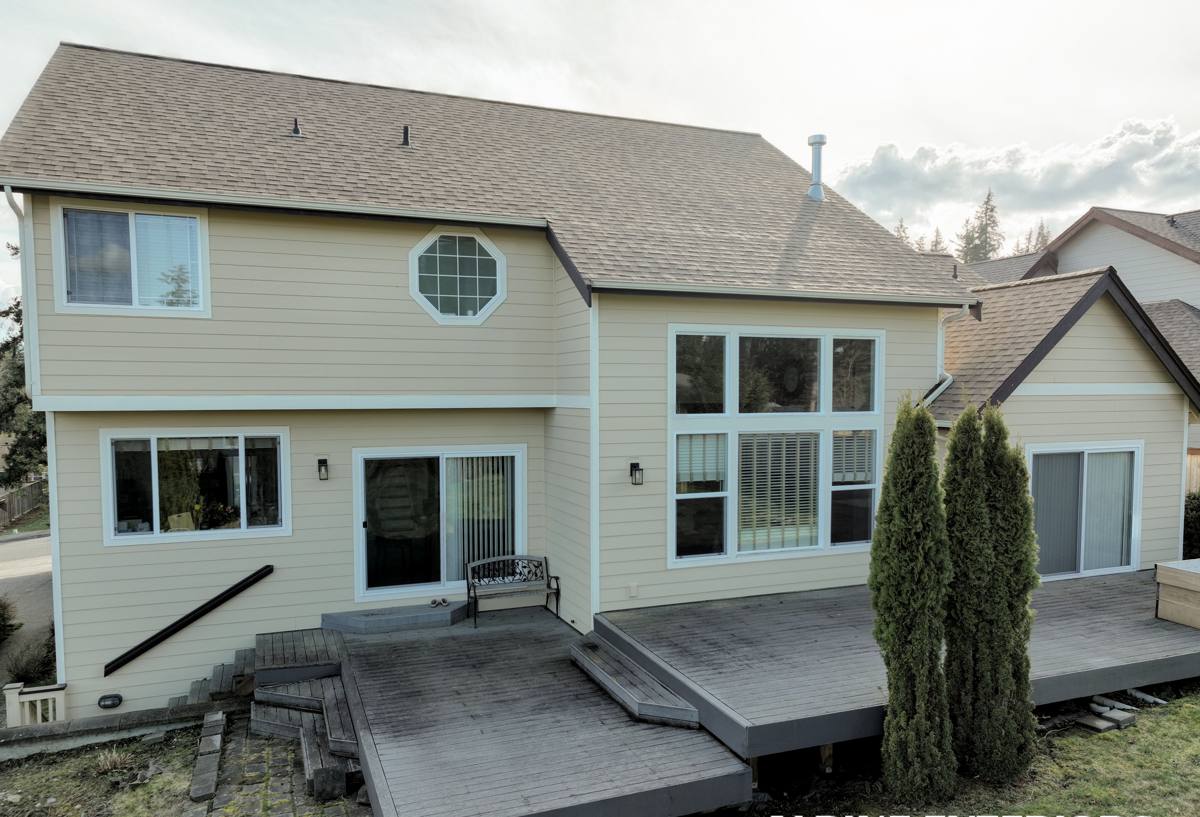
What Salt Air and Moss Season Actually Do to a Deck
Corrosion You Can't See From the Top
The most common failure we find on Birch Bay decks isn't rotten wood — it's corroded fasteners. Standard galvanized nails and screws break down faster in salt-influenced air, and once a fastener starts to rust, it loses grip strength long before it looks obviously bad. A deck board can appear solid on the surface while the screws holding it down are already compromised underneath. This is why a proper repair inspection means pulling boards in a few spots, not just walking the surface and looking for soft spots.
Moss and Algae Are a Moisture Problem, Not a Cleaning Problem
Whatcom County's long wet season, combined with the shade and humidity common near the bay, means moss and algae growth on deck surfaces is nearly constant from fall through spring. Homeowners often treat this as a pressure-washing chore, but moss holds moisture against the wood surface, and that constant dampness is what actually breaks decking down over time — softening fibers, feeding rot at board edges, and making painted or sealed surfaces slick and unsafe. Removing moss without addressing why it keeps coming back (drainage, airflow, shade, sealant condition) just means redoing the same work every year.
Ledger Boards and Stair Stringers Take the Worst of It
The ledger board — where the deck attaches to the house — and stair stringers are the two areas that fail most often on coastal decks. Driving rain gets forced into these connection points, and if flashing was skipped or installed poorly in the original build, water works its way behind the ledger and rots the rim joist it's attached to. This is a structural issue, not a cosmetic one, and it's one of the first things we check on any Birch Bay repair call.
Signs a Birch Bay Deck Needs Repair, Not Just Cleaning
- Boards that feel spongy, springy, or noticeably softer underfoot than the boards around them
- Fasteners with rust streaks bleeding into the wood, or screw heads that are stripped, loose, or missing
- Gaps opening up where the deck meets the house, or daylight visible behind the ledger board
- Stair stringers that flex, creak, or feel less solid than the deck surface itself
- Persistent green or black growth that returns within weeks of cleaning
- Railings that wiggle at the post base, which usually means the post connection or the framing under it has softened
- Discoloration or staining around joist hangers and other metal connectors, a sign the hardware is corroding
How We Approach a Repair Call in Birch Bay
We start with an on-site inspection that goes past the visible deck surface. That means checking the ledger connection, probing a sample of boards and joists with a screwdriver or awl to find soft wood before it's visible from above, and looking at how water actually moves across and off the deck during rain. Birch Bay's exposure means we're specifically checking things a crew working mostly inland might not think to check first — fastener condition, flashing at the ledger, and drainage behind any built-in planters or lower framing.
From there we give you a straightforward assessment: what's cosmetic, what's structural, and what's somewhere in between and worth watching. We do not push full deck replacement when a repair will genuinely hold up — but we also won't sign off on a patch job over a rotted ledger or compromised joist just to keep the price low, because that's the kind of "repair" that turns into a safety issue.
Typical Repair Scope
Most Birch Bay repair jobs fall into one or more of these categories:
- Replacing individual rotted or split deck boards, matched to the existing decking as closely as possible
- Re-fastening loose boards with corrosion-resistant hardware rated for coastal or marine exposure
- Repairing or rebuilding the ledger board connection, including proper flashing to stop water intrusion at the house
- Sistering or replacing damaged joists and rim joist sections found during inspection
- Rebuilding or reinforcing stair stringers that have softened or lost structural integrity
- Tightening, resetting, or rebuilding railing posts where the base connection has failed
- Cleaning, treating, and resealing surfaces after structural repairs are complete, so the fix actually lasts
Materials and Hardware: What We Use and Why
Every repair uses fasteners and connectors rated for exterior, corrosion-prone environments — this isn't optional on a deck this close to the water. Standard interior-grade or basic galvanized hardware is one of the fastest ways a repair fails again within a couple of years in a spot like Birch Bay, so we spec hardware to the exposure, not to the lowest bid.
| Component | Standard Approach | Why It Matters Near the Bay |
|---|---|---|
| Fasteners | Corrosion-resistant, coastal-rated screws and nails | Salt air accelerates rust on standard hardware, leading to loose boards and hidden connection failure |
| Joist hangers & connectors | Stainless or heavy-coated hardware matched to treated lumber | Metal-to-treated-wood contact corrodes faster in humid, salt-influenced air without the right coating match |
| Ledger flashing | Properly lapped flashing installed or corrected at the house connection | Driving rain from onshore wind pushes water into this joint more aggressively than in sheltered inland lots |
| Decking replacement boards | Matched species/profile, or composite where it fits the homeowner's goals | Mismatched boards weather differently and can create uneven moisture retention next to older wood |
| Sealant/finish | Applied only after structural repairs, on clean, dry wood | Sealing over existing moss, algae, or damp wood traps moisture and shortens the life of the finish |
Wood vs. Composite Repairs: An Honest Look
When a section of decking needs replacing, homeowners often ask whether to switch that section to composite. Here's the honest trade-off, not a sales pitch either direction:
| Factor | Wood Decking | Composite Decking |
|---|---|---|
| Moss/algae resistance | More prone to surface growth in shaded, damp spots | Generally resists surface growth better, though not immune in constant shade |
| Maintenance | Needs periodic cleaning and resealing | Lower maintenance, but still needs regular cleaning |
| Repair matching | Easier to source and blend for spot repairs | Harder to match older composite runs; color and profile may differ from discontinued products |
| Upfront cost | Typically lower per board for spot repairs | Typically higher material cost per board |
| Structural framing underneath | Same requirements either way | Same requirements either way — composite decking doesn't fix a bad ledger or rotted joist |
We'll walk you through what makes sense for your specific deck rather than defaulting to one answer. A full composite conversion is a bigger project than a repair call, and it's worth discussing separately if that's a direction you're considering.
What a Repair Typically Costs
Every deck is different, so we won't quote a number without seeing it, but broadly: minor repairs (a handful of boards, re-fastening, spot hardware upgrades) tend to run in the low hundreds to low thousands of dollars. Repairs involving ledger board rebuilding, joist sistering, or stair stringer reconstruction cost more, since they involve structural framing and often some deck surface removal to access the problem. The best way to get an accurate number is a walk-through — we'll break down what's driving the cost so you know exactly what you're paying for.
Why a Local Birch Bay Crew Matters
A contractor who works this stretch of coastline regularly already knows which fastener grades hold up here, where ledger flashing tends to have been skipped on older builds, and how fast moss comes back if drainage and airflow aren't addressed. That's the difference between a repair that lasts and one that's just a temporary patch. We're a Ferndale-based crew serving Whatcom County, including Birch Bay, and we've seen firsthand how the salt air and rain here shorten the life of decks that weren't built or maintained with this exposure in mind. That local pattern recognition is part of what you're paying for — not just labor and lumber.
Maintaining Your Deck After Repair
Once repairs are done, a little seasonal upkeep goes a long way in this climate:
- Sweep debris off the deck surface regularly so it doesn't trap moisture against the boards
- Clean moss and algae buildup before it spreads, rather than waiting until it's heavy
- Check railing posts and stair connections once a year for looseness
- Reseal or refinish wood decking on the manufacturer's recommended cycle, not just when it looks faded
- Keep an eye on the ledger board area after heavy storms for any new staining or gaps
If your deck in Birch Bay has soft spots, loose boards, corroded hardware, or a moss problem that keeps coming back, we're happy to take a look. We offer free, no-pressure estimates and will give you a straight answer on what actually needs fixing — use the form below to get in touch.