 Ferndale
 Why Board & Batten Suits Bellingham Homes
Board and batten has a clean, vertical look that works well on the farmhouse, craftsman, and modern homes common around Bellingham. The style — wide flat panels with narrow strips (battens) covering the seams — reads as simple, but the way it's built determines whether it holds up to a Whatcom County winter or becomes a maintenance headache within a few years. On a local service page like this one, we're focused on one thing: what board and batten needs to perform well specifically in Bellingham, and how we install it so it does.
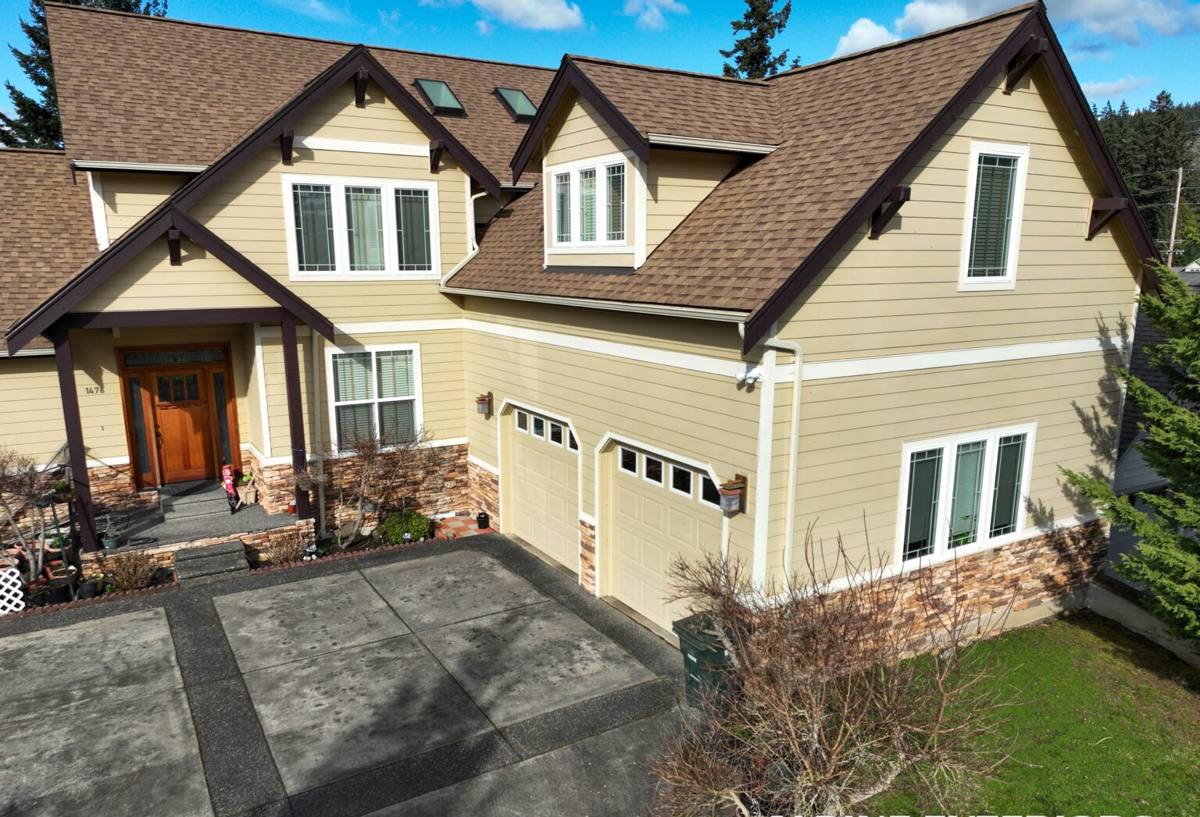
What Bellingham's Climate Does to Vertical Siding
Bellingham sits close enough to Bellingham Bay and the Salish Sea that homes take on a mix of coastal and inland Pacific Northwest weather. That combination is harder on siding than either factor alone, and it shows up in predictable ways.
Salt Air and Fastener Corrosion
Airborne salt accelerates corrosion on fasteners, flashing, and any metal trim. Board and batten has more exposed seams and more fastener penetrations per square foot than lap siding, so using the wrong nails or screws — or leaving them uncoated where they're exposed — creates rust streaks and eventual fastener failure faster here than it would inland.
Driving Rain and Wind-Driven Moisture
Whatcom County storms often bring rain sideways, not straight down. Vertical siding channels water down the face of the wall, which is good when the drainage plane behind it is done correctly — and bad when it isn't, because water finds every unsealed batten seam, unflashed penetration, and gap at trim boards. Board and batten is less forgiving of shortcuts than horizontal lap siding because there are simply more vertical joints for water to test.
A Long Moss and Damp Season
Bellingham's moss season runs long compared to drier parts of the state. Moss and algae hold moisture against the siding surface for extended periods, which matters most on the north and shaded sides of a house. A siding material that absorbs that moisture, or a coating that can't stand up to repeated wet-dry cycling, will show it first in these damp, shaded zones — usually as staining, softening, or coating breakdown.
The Board & Batten System — More Than a Look
Board and batten isn't just a panel with strips nailed over the seams. Done correctly, it's a full wall assembly:
- A water-resistive barrier over the sheathing
- A drainage gap (furring strips or a rain screen product) so any moisture that gets behind the panel can drain and dry instead of sitting against the wall
- Corrosion-resistant fasteners sized and spaced to the manufacturer's specification
- Flashing at every horizontal transition — window and door heads, water tables, roof-to-wall intersections
- Sealed and painted cut edges wherever a panel or batten is trimmed on site
Skip any one of these and the finished wall can look identical to a correctly built one for the first year or two. The difference shows up later, usually as trapped moisture, which is exactly the failure mode Bellingham's climate is set up to cause.
Why We Install James Hardie for This Style
We install James Hardie fiber cement exclusively — not LP SmartSide, not vinyl, not cedar, not primed spruce, not other fiber cement brands. For board and batten specifically, that means HardiePanel vertical siding paired with Hardie trim battens, finished in a factory-applied ColorPlus coating.
A few reasons this combination matters for a Bellingham install:
- Non-combustible core. Fiber cement doesn't feed a fire the way wood-based panels can, which matters for insurance conversations as much as safety.
- Climate-engineered formulation. Hardie's HZ product lines are formulated for regional moisture exposure rather than a one-size-fits-all mix, which is relevant in a wet marine climate like ours.
- Factory-cured finish. ColorPlus coating is baked on under controlled conditions, so it resists the fading and peeling that field-applied paint on wood board and batten is prone to, especially on damp, shaded elevations.
- Dimensional stability. Fiber cement doesn't swell, cup, or split the way wood battens can when they take on and release moisture through repeated wet seasons.
None of this means wood or vinyl board and batten "fails" — plenty of it is out there performing fine. It means that after years of installing and repairing siding in this climate, fiber cement is the standard we're willing to warranty and put our name on.
Board & Batten Material Comparison
| Factor | James Hardie Fiber Cement | Wood (Cedar/Spruce) | Vinyl Vertical Panel |
|---|---|---|---|
| Moisture absorption | Low; won't swell or rot | Absorbs moisture; prone to rot/cupping if uncoated or damaged | Doesn't absorb, but can trap moisture behind it |
| Fire resistance | Non-combustible | Combustible | Combustible; can melt/warp near heat |
| Finish durability | Factory ColorPlus finish, long recoat interval | Field-applied paint/stain needs regular recoating | Color molded in, but can fade and become brittle over time |
| Performance in coastal/salt air | Stable with correct fasteners | Needs diligent maintenance to avoid moisture damage | Generally stable but fasteners and trim can still corrode |
| Impact resistance | Good | Good but dents/splits are possible | Can crack in cold, dent easily |
What a Correct Board & Batten Installation Includes
- Water-resistive barrier installed and lapped correctly before any siding goes up
- Furring or rain screen gap behind the panel for drainage and airflow
- Panels and battens fastened per manufacturer spacing, not "close enough"
- Stainless or hot-dip galvanized fasteners appropriate for a coastal-adjacent climate
- Flashing integrated at every window, door, and horizontal trim intersection
- All field-cut edges sealed and touched up with compatible finish before installation
- Batten reveals consistent and properly caulked with a flexible, paintable sealant
- Clearance maintained between siding bottom edge and grade, decks, or roof lines
Our Process for Bellingham Projects
- On-site inspection. We look at the existing wall assembly, check for hidden moisture damage, and assess how the house's orientation and shading will affect the new siding.
- Tear-off and sheathing check. Old siding comes off and we inspect sheathing condition before covering anything up — this is the point where hidden problems get caught, not after the wall is closed in.
- Water-resistive barrier and drainage plane. We install the barrier and furring/rain screen system so the wall can manage the moisture Whatcom County weather will throw at it.
- Panel and batten installation. HardiePanel and battens go up to Hardie's fastening and spacing specifications, not a generalized approximation.
- Flashing and detail work. Windows, doors, and every horizontal transition get properly flashed and sealed.
- Final inspection and cleanup. We walk the finished wall looking specifically for anything that could become a moisture entry point later.
Cost Factors for Bellingham Board & Batten Projects
| Factor | Why It Affects Price |
|---|---|
| Existing siding removal | Tear-off, disposal, and sheathing repair add labor before new siding can start |
| Wall height and complexity | Gables, dormers, and multiple stories increase access and labor time |
| Batten spacing/density | Narrower reveals mean more battens, more fasteners, and more labor per square foot |
| Moisture or rot repair | Damaged sheathing or framing found during tear-off needs to be corrected before re-siding |
| Trim and accessory work | Corner boards, window trim, and fascia detailing add scope beyond the flat wall area |
| Color selection | Standard ColorPlus colors versus premium or custom options can shift material cost |
We don't publish blanket per-square-foot pricing because these factors vary enough house to house that a number without an inspection isn't a useful one. What we can tell you upfront is that a correctly built assembly — barrier, drainage gap, flashing, fasteners — costs more than a version that skips those steps, and that difference is where most future callbacks and repairs come from.
Maintenance That Actually Matters Here
- Rinse siding periodically to remove salt residue and organic buildup, especially on shaded or north-facing walls
- Check and clear gutters so overflow doesn't run down the wall face
- Inspect caulking at batten seams, trim, and penetrations yearly and re-seal as needed
- Watch for moss or algae developing on damp elevations and address it before it holds moisture long-term
- Trim back vegetation that keeps a section of wall shaded and damp
Correctly installed Hardie board and batten doesn't need repainting on the schedule that field-finished wood does, but it's not a zero-maintenance product — the checklist above is what actually keeps it performing over the decades it's designed for.
Why Hiring a Crew That Works Bellingham Regularly Matters
A lot of what determines whether board and batten holds up here isn't the panel — it's the details a crew either knows to check or doesn't: how much drainage gap this specific microclimate needs, which elevations in Bellingham tend to hold moss longest, and how local wind-driven rain patterns stress vertical seams differently than they would fifty miles inland. Crews that install across a wide range of climates without adjusting for a wet, coastal-influenced county tend to build the same wall everywhere. We install here regularly enough to know where the shortcuts show up first, and we build accordingly.
If you're considering board and batten for a home in the Bellingham area, we're happy to walk the property, look at what you're currently dealing with, and put together a straightforward, no-pressure estimate — no invented urgency, just an honest look at what your home needs.