 Ferndale
 Decking Built for Where You Actually Live
Homes around Lummi Nation sit close enough to the water that the air itself works against a deck. Salt-laden mist off Bellingham Bay and the Strait of Georgia settles into wood grain, metal hardware, and board seams almost every day of the year. Add Whatcom County's long, wet winters and the moss season that follows, and you've got a climate that's genuinely hard on outdoor structures. A deck that looks fine on a dry August afternoon can be hiding real problems by the following spring if it wasn't built with this specific environment in mind.
This page is about one job, done right, for this one area: composite decking for homes in and around Lummi Nation. Not a generic decking overview — what actually matters here, given what the climate does to a deck year after year.
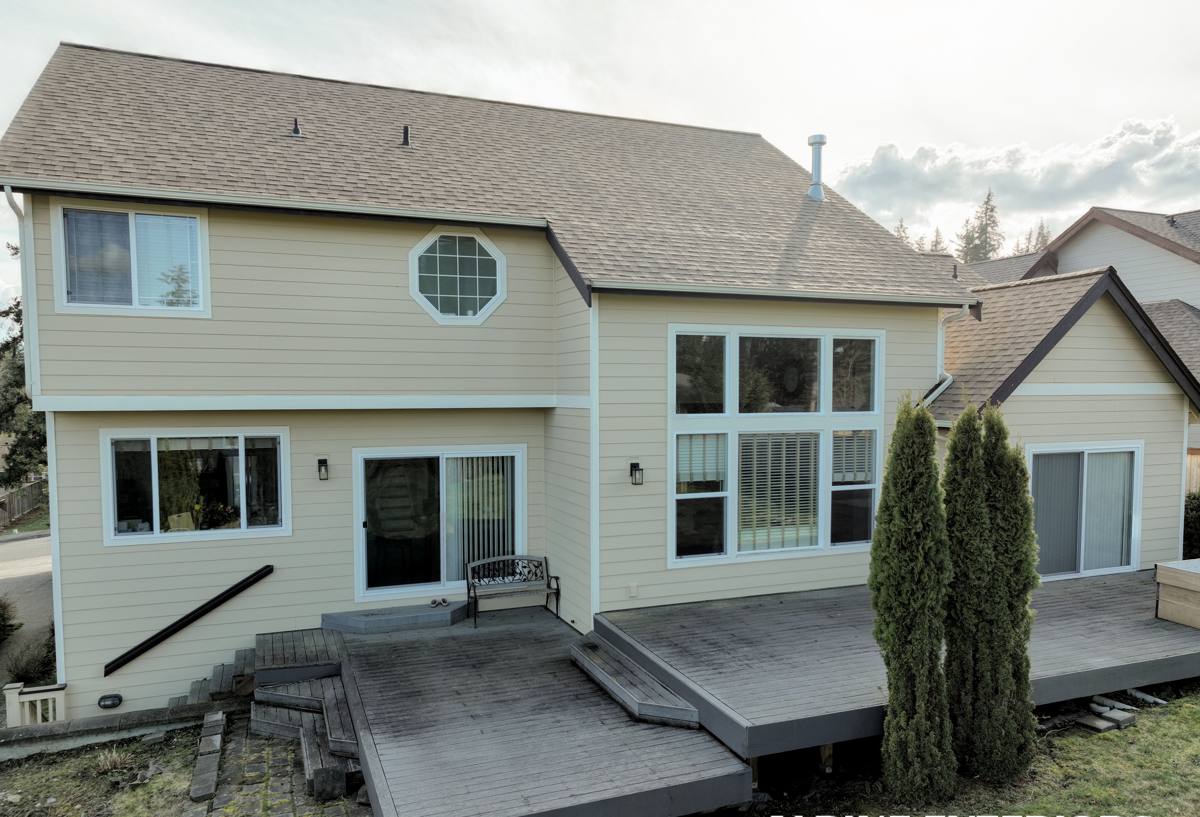
What Salt Air, Rain, and Moss Actually Do to a Deck
Salt Air and Hardware
Salt-laden moisture speeds up corrosion on anything metal — screws, joist hangers, railing brackets, post bases. Once corrosion starts under a board or inside a connection, you don't see it until a fastener fails or a railing post starts to wobble. This is one of the biggest reasons hardware selection matters as much as the decking material itself out here.
Moss, Algae, and Standing Moisture
Whatcom County's damp, low-light winters are ideal conditions for moss and algae growth on any horizontal surface that doesn't dry out quickly. On a deck, that growth tends to start in the gaps between boards, around fastener heads, and anywhere water is slow to drain — turning a walking surface slick and, over time, feeding rot in the substructure underneath.
Driving Rain and Freeze-Thaw Cycles
Rain here often comes in sideways, driven by wind off the water, which pushes moisture into joints and end grain that a calmer climate wouldn't test as hard. Whatcom County doesn't see extreme cold, but it does see repeated freeze-thaw swings through the winter — enough cycles, over enough years, to open up small cracks in materials that weren't built to handle it.
Composite vs. Wood Decking: What Holds Up Near the Water
Wood decking — cedar or pressure-treated — can absolutely be done well here, and we're not going to tell you it's a bad product. But it asks more of the homeowner over its lifetime, and that maintenance burden gets heavier the closer you are to the water. Composite decking shifts that burden toward the manufacturing process instead of your weekend schedule.
| Factor | Composite Decking | Cedar / Pressure-Treated Wood |
|---|---|---|
| Moisture resistance | Engineered to resist swelling and rot; capped boards shed water | Natural material; absorbs moisture unless sealed regularly |
| Maintenance | Periodic cleaning; no staining or sealing required | Annual or biannual staining/sealing to hold up in this climate |
| Moss and algae resistance | Smoother, denser surface resists growth better; still needs cleaning | Porous grain gives moss and algae more to hold onto |
| Upfront cost | Higher material cost | Lower material cost |
| Long-term cost | Lower over 15-25 years due to reduced upkeep | Ongoing sealing, staining, and board replacement add up |
| Appearance over time | Consistent color retention with quality capped boards | Grays and weathers unless maintained on schedule |
Neither material is wrong. Composite tends to make more sense for owners who want a deck they can actually use through the wet season without a maintenance calendar attached to it — which is a big part of why it's become the more common request for decks in this area.
What a Correct Composite Deck Installation Actually Involves
Composite boards are more forgiving than wood in some ways and less forgiving in others. The material doesn't rot, but it will telegraph problems in the framing underneath it — sagging, bouncing, uneven gaps — if the substructure wasn't built right in the first place. Given how much moisture this area sees, the framing and drainage details matter as much as the decking brand you choose.
Framing and Drainage
The joist layout needs to match the specific composite product's span ratings — composite boards generally need tighter joist spacing than wood to avoid flexing over time. Just as important is what happens underneath: proper slope away from the house, ventilation under the deck so moisture doesn't get trapped, and correct flashing where the deck ledger meets the house, since a poorly flashed ledger is one of the most common sources of hidden water damage on any deck in a wet climate.
Fastening and Board Spacing
Hidden fastener systems keep the surface clean and reduce the number of exposed metal points that salt air can attack, but they have to be installed with the gapping the manufacturer specifies — composite boards expand and contract with temperature more than people expect, and gaps that are too tight can cause buckling.
Railings, Fascia, and Trim
Railing posts need solid, properly flashed connections to the frame, not just surface-mounted brackets, since this is a common failure point where water intrusion starts. Fascia boards and trim should use fasteners and hardware rated for coastal or high-moisture exposure — not standard interior-grade hardware — to avoid the corrosion issues described above.
Choosing the Right Composite Board for This Climate
Not all composite decking is built the same way, and the differences matter more here than in a drier climate.
- Capped composite has a protective shell around the core, which resists moisture absorption, staining, and fading far better than uncapped boards — worth the extra cost in a climate this wet.
- Uncapped composite is more budget-friendly but more prone to surface moisture absorption and mold growth over time, especially in shaded, damp spots common under tree cover in this area.
- Mold- and mildew-resistant formulations are worth prioritizing given the length of the moss season here — some product lines are built specifically with this in mind.
- Color choice matters less for heat here than it does in drier inland climates, but darker boards will show pollen, moss spores, and organic debris differently than lighter ones — something worth thinking through before you commit to a color.
We'll walk you through the real trade-offs between product lines based on your specific site — sun exposure, tree cover, and how close you are to the water all factor in.
Our Process for Lummi Nation Deck Projects
We start with a site visit, not a phone quote — deck problems in this area are usually site-specific, driven by drainage, sun exposure, and how exposed the lot is to wind off the water. From there:
- We assess the existing structure (if there is one) for rot, hardware corrosion, and drainage issues before quoting anything.
- We walk through composite product options and hardware specs suited to your exposure level, with honest pricing ranges up front.
- We handle any permitting or inspection requirements that apply to your property — these can vary depending on jurisdiction in this area, and we sort out what applies before work starts, not after.
- We build the frame first and get it right — this is the part that determines whether the deck holds up in ten years, not just how it looks on day one.
- We walk the finished deck with you and explain what maintenance, if any, it actually needs.
Maintenance Checklist for Composite Decks in Whatcom County
Composite decking is low-maintenance, not no-maintenance. In this climate, a few simple habits go a long way toward protecting your investment.
- Sweep debris and standing organic matter off the deck regularly, especially in fall and winter when leaves and needles accumulate.
- Rinse or wash the surface a few times a year to prevent moss and algae from getting established, particularly in shaded areas.
- Check railing posts and stair connections annually for any looseness, which can signal hardware corrosion underneath.
- Keep gutters and downspouts near the deck clear so runoff isn't dumping extra water onto or under the structure.
- Inspect under-deck ventilation gaps periodically to make sure they haven't been blocked by storage, plants, or debris.
Why a Local Crew Matters for This Kind of Project
A crew that only occasionally works near the water tends to under-build for conditions that are routine here — standard hardware where corrosion-resistant hardware is called for, joist spacing sized for a drier climate, drainage details that work fine inland but fail against driving rain off the bay. Working regularly on homes around Ferndale and Lummi Nation means we're not guessing at how this specific environment treats a deck over time — we're building to what we've actually seen hold up and what we've seen fail.
If you're weighing composite decking for a home in the Lummi Nation area, we're glad to come take a look and give you a straightforward, no-pressure estimate — just fill out the form below.