 Ferndale
 Siding Repair Built for Custer's Coastal Weather
Custer sits in one of the more exposed corners of Whatcom County — close enough to open water and marine air that homes here take a different kind of beating than siding a few miles inland. Salt-laden wind, long stretches of driving rain off the Strait, and a moss season that can run eight months or more all work on exterior walls in ways that a generic "caulk and paint" repair won't fix for long. When we get called out to a siding repair in this area, we're not just patching a hole. We're figuring out what let water in, how far it traveled, and what needs to happen so the same spot doesn't fail again in eighteen months.
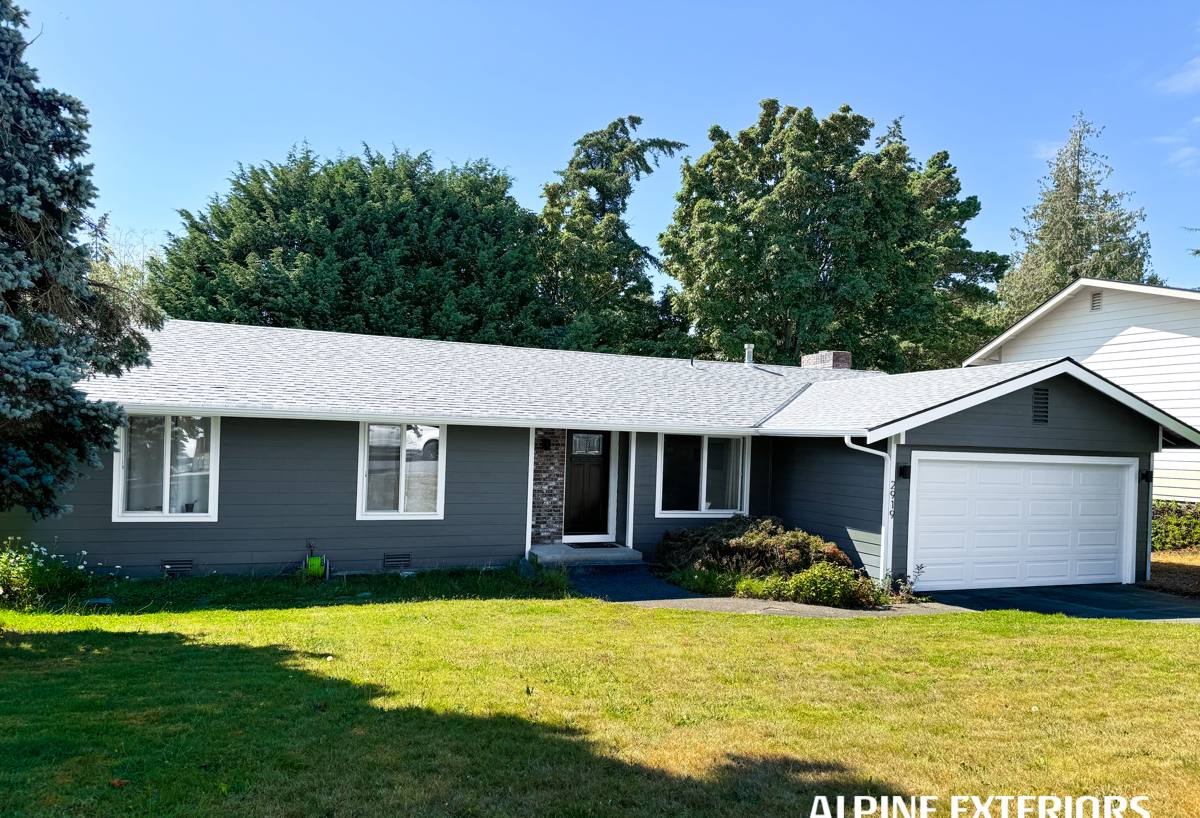
What Salt Air, Driving Rain, and Moss Actually Do to Siding
Salt Air and Corrosion
Airborne salt doesn't just sit on the surface — it works into fasteners, flashing, and any exposed metal trim. Once corrosion starts on a nail or staple, the hold on that piece of siding weakens, seams open up slightly, and water finds a path it didn't have before. This is a slow process, which is exactly why it's easy to miss until a board is already loose or a stain has shown up on the wall behind it.
Wind-Driven Rain
Rain that falls straight down mostly runs off siding the way it's designed to. Rain that's being pushed sideways by wind — which is common for homes with open exposure in this part of Ferndale — gets forced up under laps, into seams, and behind trim boards that were never meant to handle water hitting them from that angle. Over years, that's how you end up with rot and staining concentrated on specific walls of a house rather than spread evenly around it.
Extended Moss Season
Moss and algae need shade, moisture, and time — and this region gives them plenty of all three. Where moss gets a foothold on siding, it holds water against the surface long after the rest of the wall has dried out. On wood-based products especially, that constant low-grade dampness is what starts rot, even in spots that look fine from a distance.
Signs Your Siding Needs Repair, Not Just a Fresh Coat of Paint
Homeowners often ask whether a paint job will solve the problem. Sometimes it will. Often it won't, because the paint isn't what failed — the substrate underneath is. Here's what tells us a repair, not a repaint, is what's actually needed:
- Soft or spongy spots when you press on the siding, especially near the bottom of walls or below windows
- Paint that's bubbling, peeling, or flaking in the same spot repeatedly, even after repainting
- Dark staining or streaking that keeps coming back after cleaning
- Visible gaps opening up at seams, corners, or where siding meets trim
- Persistent moss or algae growth on one section of wall while the rest stays relatively clean
- Boards that look warped, cupped, or slightly out of plane with the wall
- Rust streaks running down from fasteners or metal trim
- Musty odors, peeling interior paint, or soft drywall on the inside wall behind a suspect section
Repair or Replace? How We Make That Call
Not every damaged section needs to come out, and not every repair is worth doing. The decision usually comes down to a handful of factors we check on-site before quoting anything.
| Factor | Leans toward repair | Leans toward replacement |
|---|---|---|
| Extent of moisture damage | Isolated to one board or a small section | Spread across multiple courses or walls |
| Sheathing condition | Dry, solid when probed | Soft, delaminating, or visibly rotted |
| Siding material | Fiber cement with a clean, patchable break | Older wood or engineered wood with widespread swelling |
| Age of the existing siding | Under 10-15 years, otherwise sound | Nearing or past expected service life |
| Root cause | Fixable detail (caulk, flashing, fastener) | Systemic issue (missing weather barrier, poor original install) |
What a Correct Siding Repair Actually Involves
A repair that holds up isn't just about matching the color and closing the gap. It's a diagnostic process first, and a patching job second.
- Find the real entry point. Water often shows up several inches — sometimes a couple feet — from where it actually got in. We trace it back rather than just patching where the stain is visible.
- Check moisture levels. We use a moisture meter on the siding and, where accessible, the sheathing behind it. This tells us whether we're dealing with a surface issue or something that's been sitting wet for a while.
- Remove damaged material fully. Cutting out only the visibly bad section and leaving compromised material next to it is how repairs fail again within a year or two.
- Repair the water-resistive barrier. If house wrap or building paper was torn or improperly lapped, that gets corrected before anything new goes back on.
- Reinstall with correct flashing and fastening. Panels get properly lapped, flashed at penetrations, and fastened per manufacturer spec — not just nailed back into whatever's convenient.
- Match the finish. Where James Hardie ColorPlus siding is involved, we work to match the factory finish as closely as the product line allows rather than relying on field-mixed paint that will weather differently over time.
Repairing Different Siding Types We See Around Custer and Ferndale
Cedar
Older homes in this area often still have cedar siding, and it can look fine on the surface while hiding rot underneath, particularly at butt joints and lower courses where moisture collects. Cedar repairs are workable when the damage is contained, but once rot has spread through multiple boards, patch repairs stop making financial sense compared to replacing that section with a more moisture-stable material.
LP SmartSide and Other Engineered Wood
Engineered wood siding uses an OSB-based substrate that's more sensitive to sustained moisture than solid wood. In our experience, damaged sections — especially at cut edges and seams where water intrusion is most common — don't hold up well to spot repair with more of the same product, because the underlying vulnerability hasn't changed. When we're asked to repair engineered wood siding in a wet-exposure area like this one, we're upfront that a like-for-like patch is a short-term fix, and we'll usually recommend replacing the affected section with James Hardie fiber cement instead.
Vinyl
Vinyl siding repairs are usually straightforward mechanically — panels snap in and out — but the challenge is often color match, since vinyl fades unevenly over years of UV exposure. Vinyl also gets brittle in cold snaps and can crack on impact, which is a repair we see periodically after storm debris or routine yard work.
James Hardie Fiber Cement
This is what we install ourselves, and it's also what we most often recommend converting to when repairing a damaged section of another material. Individual Hardie boards can be cut out and replaced cleanly, ColorPlus finishes are formulated for long-term color retention, and the material itself doesn't absorb and swell with moisture the way wood-based products do. That doesn't mean Hardie siding is immune to problems — poor original installation (insufficient clearance, bad caulking, missing flashing) can still cause issues — but the repairs tend to be more contained and more durable once corrected.
Our Siding Repair Process for Custer Homeowners
- On-site inspection. We look at the damaged area, the surrounding siding, and check for related issues like gutter overflow or grading problems that may be contributing.
- Honest scope and written estimate. You get a clear explanation of what we found, what's driving the damage, and what repair or replacement options make sense — with pricing before any work starts.
- Repair the source, not just the symptom. If a flashing detail or caulk joint is the real problem, that gets fixed regardless of how small the siding damage itself looks.
- Replace what needs replacing. Damaged siding and sheathing come out; sound material stays.
- Finish and match. We work to blend new material into the existing wall as closely as the products allow.
- Clean up and walk-through. We review the completed work with you before we consider the job done.
Why a Crew That Already Works in Custer Makes a Difference
Siding wear isn't uniform across Whatcom County — a house facing open exposure toward the water deals with a different rain and salt load than one tucked into a more sheltered lot a few miles away. Crews who work this specific area regularly get a feel for which walls on which types of lots tend to take the worst of it, which speeds up diagnosis and helps set realistic expectations about what a repair will and won't solve. It also means faster response when a storm knocks something loose, and an established relationship with material suppliers for matching existing Hardie ColorPlus finishes without a long wait.
Protecting Your Siding After the Repair Is Done
A good repair buys you time, but a little upkeep afterward protects that investment. Keep gutters clear so overflow doesn't run down the wall face, trim back vegetation that's shading a wall and feeding moss growth, and do a quick visual check after major windstorms for anything that's come loose. If you notice a repaired area starting to show the same signs again, get it looked at early — in this climate, small gaps don't stay small for long.
If you're dealing with a soft spot, a stubborn stain, or siding that just doesn't look right anymore, we're happy to come take a look. Estimates are free, there's no pressure, and you'll get a straight answer about whether you need a repair, a partial replacement, or nothing at all.