 Ferndale
 Custom Windows Built for Nooksack's Wet, Wind-Driven Climate
Nooksack sits inland along the river valley east of Ferndale, in a stretch of Whatcom County where the weather rarely does anything halfway. Winters bring long stretches of driving rain, spring and fall carry heavy humidity off the valley floor, and shaded north-facing walls can stay damp enough to grow moss for months at a time. Windows in this area take a beating that homeowners in drier parts of the state simply don't deal with. When we talk about "custom" windows for a Nooksack home, we mean windows sized, flashed, and installed to match the actual house in front of us and the actual climate around it — not a one-size-fits-all box order.
This page is about that one job done right in this one area: what local homes need, what a correct installation actually involves, and why the details matter more here than they would somewhere with a milder, drier climate.
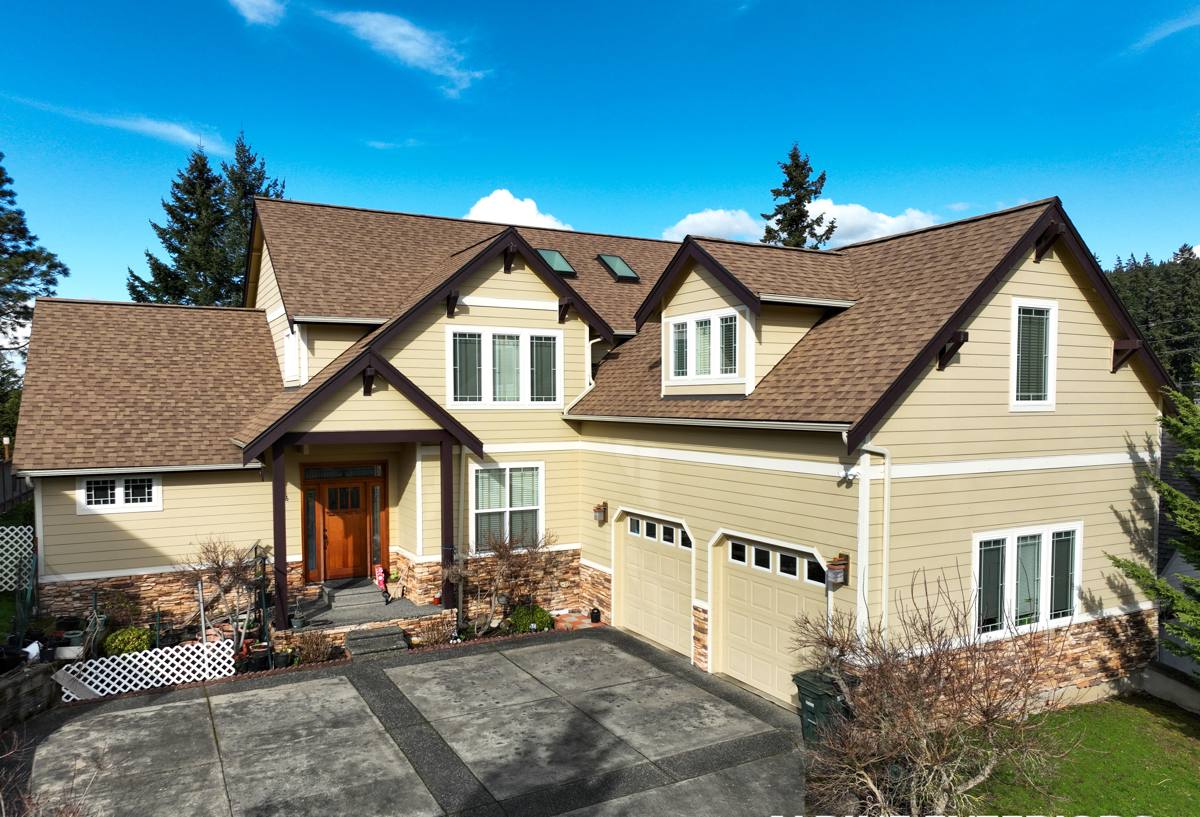
What the Nooksack Valley Does to Windows
Whatcom County's marine-influenced climate means moisture is almost never fully gone. Even without direct exposure to saltwater, homes throughout this part of the county deal with persistent humidity, frequent rain, and the kind of low, lingering dampness that settles into a river valley and doesn't burn off quickly. Add in wind-driven rain events common to the wider Ferndale area, and a window's job isn't just "keep weather out" — it's "keep weather out under sustained pressure, repeatedly, for years."
Moisture Is the Real Enemy
Wood rot, swollen sashes, and fogged double-pane glass almost always trace back to the same root cause: water finding its way past a seal, a sash, or flashing that was never quite right to begin with. In a valley climate like this, a window that's "good enough" in a dry climate can fail years earlier here simply because it's wet so much more often.
Moss and Green Growth
Shaded exteriors, north- and east-facing walls, and areas with heavy tree cover hold moisture longer than open, sun-exposed walls. Moss doesn't just grow on roofs — it takes hold on sills, trim, and frame edges wherever water sits instead of draining. Once moss and algae establish themselves around a window frame, they hold moisture against the material continuously, which speeds up rot in wood trim and can degrade sealants faster than manufacturers rate for.
Wind-Driven Rain at the Seams
Most window failures we see aren't glass failures — they're seam and flashing failures. Rain that's being pushed sideways by wind finds any gap in the flashing, any short caulk bead, or any point where the window wasn't properly integrated with the wall's water management. That's a detail problem, not a product problem, and it's the single biggest reason installation quality matters more than brand name.
Signs Your Nooksack Home's Windows Need Attention
- Fogging or a hazy film between the panes of a double-pane window (the seal has failed)
- Soft, spongy, or visibly darkened wood at the sill or lower frame corners
- Moss, algae, or green staining building up on the frame or trim, even after cleaning
- Drafts or a noticeable temperature difference near the window in winter
- Windows that stick, won't stay open, or are difficult to lock tightly
- Visible gaps between the window frame and the siding or trim around it
- Paint that's peeling or bubbling specifically around the window opening, not the wall generally
- A musty smell near a window that doesn't go away with cleaning
Any one of these can be minor. Two or three together, especially on the same window, usually means water has been getting past the seal for a while.
What "Custom" Actually Means for This Job
Homes in and around Nooksack span a wide range of ages and construction styles — older farmhouses with settled, slightly irregular openings, mid-century ranches, and newer builds with standard framing. "Custom" windows means the replacement is measured and built to the actual opening in front of us, not forced to fit a stock size with extra trim to hide the gaps. It also covers:
- Non-standard openings, including older homes where dimensions have shifted slightly over decades
- Specialty shapes — arched, angled, or oversized openings that don't match catalog sizes
- Matching sightlines and grille patterns across a whole elevation so replacement windows don't look mismatched next to originals you're keeping
- Flashing and water management details built specifically for the wall assembly behind the window, not a generic install
The goal is a window that fits tightly the first time, so the flashing and sealant aren't doing extra work to compensate for a gap that shouldn't be there.
Choosing the Right Frame Material for a Wet Valley Climate
Frame material has a bigger effect on long-term performance here than most homeowners expect, because it's the frame — not the glass — that takes the brunt of sustained moisture exposure. Here's how the common options compare for a climate like Ferndale and Nooksack's:
| Material | Moisture Resistance | Maintenance | Typical Lifespan |
|---|---|---|---|
| Vinyl | Very good — won't rot, doesn't need painting | Low — occasional cleaning | 20-30+ years |
| Fiberglass | Excellent — dimensionally stable, resists warping | Low | 30-40+ years |
| Wood (unclad) | Fair — needs consistent upkeep to stay ahead of rot | High — regular painting/sealing required | Varies widely with maintenance |
| Wood-clad (vinyl or aluminum exterior) | Good — exterior is protected, interior stays wood | Moderate | 25-35+ years |
| Aluminum | Good against moisture, poor thermal performance | Low | 20-30+ years |
We don't push one material as universally "best." A lot of it comes down to the specific wall, the exposure of that side of the house, and what look you're after. What we do steer people away from is unclad wood on heavily shaded, moisture-prone elevations unless the homeowner is committed to a real maintenance schedule — in a valley climate like this, that upkeep isn't optional, it's the only thing keeping rot at bay.
How We Handle a Custom Window Installation
Assessment and Measurement
We start by looking at the actual opening — its condition, its exposure to weather, and any signs of past water intrusion in the surrounding wall. Measurements are taken for the real opening, not assumed from a stock size, and we flag anything that suggests the rough opening or sheathing behind it needs repair before a new window goes in.
Flashing and Water Management
This is the step that determines whether a window lasts fifteen years or forty in this climate. Proper flashing integrates the window with the house wrap and siding so water is directed out and down, never trapped behind the frame. Given how much wind-driven rain this area sees, we don't shortcut this step for speed.
Installation and Sealing
The window is set plumb, level, and square, shimmed correctly so it isn't stressed out of shape, and sealed with materials rated for sustained moisture exposure — not just a bead of caulk at the trim.
Final Inspection
Before we consider a job finished, we check operation, seal integrity, and that the surrounding trim and siding were reintegrated cleanly, with no gaps left for water to find.
Keeping Custom Windows Performing Through Moss Season
A well-installed window still benefits from basic upkeep in a climate like this. A few habits go a long way:
- Clear debris and moss buildup from sills and surrounding trim before it holds moisture against the frame
- Check caulking and sealant around the frame annually, especially after a hard winter
- Keep gutters and downspouts clear so runoff isn't sheeting directly across window openings
- Trim back vegetation that keeps a window's exterior shaded and damp longer than the rest of the house
None of this replaces a correct installation, but it does extend the life of one.
Why a Crew That Already Works in Nooksack Matters
Window installation looks straightforward until the flashing detail is wrong, and by then the problem is hidden behind trim and siding for years before it shows up as rot or a fogged pane. A crew that regularly works homes in the Ferndale and Nooksack area has already seen how the local rain, humidity, and moss season actually behave against different wall assemblies and window types — not in theory, but on real houses in this specific valley. That's the difference between a window that's installed and a window that's installed to hold up here.
If you're dealing with drafty, fogged, or moss-stained windows on a Nooksack-area home, or planning a custom replacement as part of a larger project, we're happy to take a look and walk through your options. Reach out for a free, no-pressure estimate using the form below.