 Ferndale
 Energy-Efficient Windows for Sudden Valley Homes
Sudden Valley homes deal with a specific mix of exposure: salt-tinged air drifting in off the water, driving rain that doesn't fall straight down so much as get pushed sideways into the wall, and a moss season in Whatcom County that runs longer than most homeowners expect. Windows sit right at the center of that exposure. They're one of the largest openings in a wall assembly, one of the more common places for air and water to find a way in, and — when they're old, poorly sealed, or simply worn out — one of the biggest reasons a home's heating and cooling bills run higher than they should. We replace and install windows for homes throughout the Sudden Valley area, and the approach we take is built around what actually holds up under this area's specific combination of salt air, wind-driven rain, and sustained damp.
This page is about one thing specifically: energy-efficient window replacement for Sudden Valley homes. Not a general overview of every exterior service we offer, but a straight look at what local homes actually need from their windows, what a correct installation involves, and why the details matter more here than they would on a more sheltered, inland property.
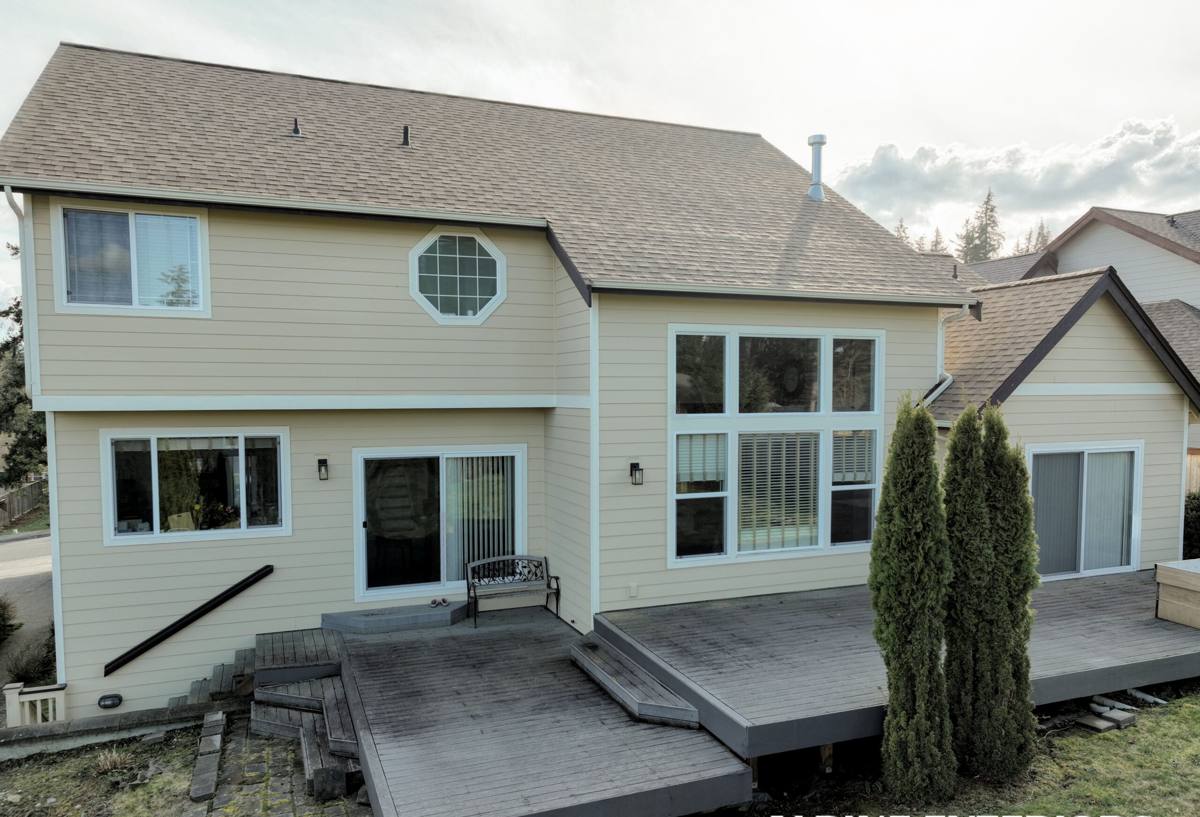
What Sudden Valley's Climate Does to Windows
Salt Air and Hardware Corrosion
Homes in this part of Whatcom County pick up salt-laden air off the water, and that salt exposure is harder on window hardware, fasteners, and metal components than most homeowners realize. Locks, hinges, balances, and screen frames made from lower-grade materials can start corroding years before the glass or the frame itself shows any wear. It's a slow process, which is exactly why it gets missed — by the time a window won't latch properly or a lock feels gritty, the corrosion has usually been working for a while.
Driving Rain and Water Infiltration
Wind-driven rain doesn't behave like a gentle shower running down a wall. It gets pushed sideways and upward into gaps that would never see water on a calmer day, which means window flashing and sealant details that would be adequate somewhere drier simply aren't enough here. Most water intrusion around a window doesn't come through the glass or the sash — it comes through poorly sealed or poorly flashed rough openings, and driving rain finds those weak points faster than ordinary rainfall would.
A Long Moss and Mildew Season
Sustained regional dampness and mild temperatures keep moss and mildew active across a large part of the year in this area. On windows, that shows up as staining and organic growth on sills, trim, and frame corners — especially on shaded or north-facing walls that don't get much chance to dry out between storms. It's mostly cosmetic at first, but sustained moisture sitting against a wood sill or frame edge is exactly the condition that leads to soft, rotting wood if it's left alone.
Condensation and Temperature Swings
Whatcom County's marine climate brings mild but persistent humidity, and older or poorly performing windows show that as condensation — fogging on the interior glass, water pooling on sills, or in worse cases moisture working its way into the space between panes on a failed insulated glass unit. That's not just an annoyance; it's a sign the window isn't managing temperature and humidity the way it should, and it's often the first visible clue that a window's energy performance has dropped.
What "Energy-Efficient" Actually Means in a Window
"Energy-efficient" gets used loosely in the window industry, so it's worth being specific about what actually drives performance. A handful of factors determine how well a window holds heat in, keeps drafts and moisture out, and performs under this area's particular conditions.
Frame Material
The frame affects both insulating value and how well the window tolerates sustained moisture and salt exposure. Some frame materials insulate better than others, some are more dimensionally stable through temperature swings, and some hold up to coastal air with less long-term maintenance.
Glazing and Low-E Coatings
Modern energy-efficient windows use double- or triple-pane insulated glass units, often with a low-emissivity (low-E) coating that reflects heat while still letting daylight through. The right low-E coating and glazing package matters more in a climate like this, where the goal is usually keeping heat in during a long, mild, wet season rather than blocking intense summer sun.
Gas Fills and Spacers
Argon or krypton gas fills between panes improve insulating performance over plain air, and the spacer that separates the panes affects both thermal performance and how well the unit resists seal failure over time. A warm-edge spacer reduces the cold spot that tends to form at the edge of the glass, which is also where condensation and eventual seal failure typically start.
NFRC Ratings Worth Actually Looking At
The National Fenestration Rating Council label on a window gives two numbers that matter most for a home in this climate: U-factor, which measures how well the window resists heat loss (lower is better), and Solar Heat Gain Coefficient (SHGC), which measures how much solar heat passes through. For a mild, cloudy, rain-heavy climate, a lower U-factor generally matters more than an aggressively low SHGC, since the priority is usually retaining heat rather than blocking sun that isn't especially intense to begin with.
Comparing Window Frame Materials for This Climate
| Frame Material | Insulating Value | Moisture & Salt Air Tolerance | Maintenance |
|---|---|---|---|
| Vinyl | Good; hollow chambers can be foam-filled for better performance | Resists corrosion well; UV exposure over many years can affect appearance | Low; no painting or refinishing needed |
| Fiberglass | Very good; low expansion and contraction across temperature swings | Strong resistance to moisture and salt air; dimensionally stable | Low; holds paint and finish well if a custom color is wanted |
| Wood (clad exterior) | Very good on the wood side; performance depends on the cladding | Exterior cladding protects the wood, but any breach exposes it to rot risk | Higher; exposed wood interiors and any unclad areas need upkeep |
| Aluminum | Poor without thermal breaks; conducts heat and cold readily | Corrosion-resistant, but a poor insulator for this climate on its own | Low, but rarely the right performance choice for full-frame replacement here |
There's no single frame material that's correct for every home, but for most full-window replacements in Sudden Valley's coastal, damp conditions, vinyl and fiberglass tend to offer the best combination of insulating performance, moisture and salt air tolerance, and manageable long-term upkeep. We'll walk through the real trade-offs for your specific home rather than defaulting to whichever option is easiest to sell.
What a Correct Window Installation Actually Involves
The window unit itself is only part of the performance equation. Installation detail determines whether a high-quality, energy-efficient window actually performs the way its rating suggests, or ends up leaking air and water within a few years despite a good product behind the trim.
- Sill pan flashing: A properly sloped sill pan directs any water that does get past the window out and away from the framing, rather than letting it pool and soak into the rough opening.
- Correctly lapped flashing tape: Flashing at the head, jambs, and sill needs to be lapped in the right order — like shingles — so water sheds outward at every layer instead of getting trapped behind house wrap.
- Proper shimming and squaring: A window that isn't shimmed level and square will bind, won't seal evenly, and can put stress on the frame that shortens its service life.
- Low-expansion foam or backer rod and sealant: The gap between the window frame and rough opening needs to be insulated and air-sealed correctly, not just stuffed with whatever's on hand.
- Correct exterior sealant joints: Caulking the exterior perimeter with a sealant rated for this climate's sustained moisture exposure, applied at the right joints, is what keeps wind-driven rain from finding its way behind the trim.
Skipping or rushing any one of these steps tends to show up as a callback within a year or two — a drafty spot, a soft sill, or staining on interior drywall below a window. On a property exposed to this much driving rain and salt air, installation quality is arguably as important as the window product itself.
Our Process for a Sudden Valley Window Project
We start with an on-site assessment of the existing windows, looking at frame condition, glass performance, hardware wear, and any signs of water intrusion around the rough openings — not just a quick look from the curb. From there we talk through frame material and glazing options that fit the home's exposure, budget, and the homeowner's priorities, whether that's lowering energy bills, cutting down on drafts and condensation, or replacing windows that have simply reached the end of their service life. Once a scope is agreed on, we handle the full installation — removal, flashing, insulation, and finish work — to the standard this area's climate actually calls for, and we clean up thoroughly before calling the job done.
Signs It's Time to Replace Rather Than Repair
Not every window problem calls for full replacement. A stuck sash, worn weatherstripping, or a single failed seal can sometimes be repaired or replaced individually. But a few signs point toward replacement being the more sensible long-term move, especially on a home with several aging windows at once.
- Visible fog or moisture between panes, which means the insulated glass unit's seal has failed
- Persistent condensation on the interior glass even in normal indoor humidity conditions
- Frames that are soft, discolored, or show signs of rot at corners or sills
- Noticeable drafts near the frame even when the window is fully latched
- Hardware that's corroded, sticky, or difficult to operate smoothly
- A noticeable jump in heating costs without any other clear explanation
Why a Local Crew That Works Sudden Valley Matters
A crew that installs windows in Sudden Valley regularly has a practical sense of how salt air, driving rain, and this area's long moss season actually affect a window installation over time — not just how a product performs in a spec sheet or a showroom. That experience shapes decisions that matter on install day: which sealant products hold up best under sustained coastal moisture, how much attention a shaded, moss-prone wall needs versus a sunnier one, and which hardware and frame materials are worth spending a little more on given what this specific climate does to lower-grade components. It's the difference between windows that perform well for a season or two and windows that still seal, operate, and insulate correctly a decade or more down the road.
What to Expect When You Call Us
We'll walk the exterior with you, look at the existing windows individually rather than assuming every opening needs the same fix, and give you an honest read on what's actually going on — whether that's targeted repairs, replacing a handful of problem windows, or a full-home upgrade. You'll get a clear, written estimate before any work begins, with no pressure to sign on the spot.
If your Sudden Valley home has drafty, foggy, or aging windows — or you're just ready to stop losing heat through glass that's past its prime — reach out using the form below for a free, no-pressure estimate.