 Ferndale
 Fiber Cement Siding for Everson, Washington
Everson sits inland along the Nooksack River valley in Whatcom County, but "inland" in this part of Washington doesn't mean sheltered. The same marine-influenced weather system that soaks Ferndale and the coastline pushes rain and moisture-laden air up the valley for most of the year. Add a long, low-light moss season and the freeze-thaw swings that come with a river valley microclimate, and Everson homes end up asking a lot of their exterior siding — often more than homeowners realize until a wall starts showing problems.
This page is about one thing: fiber cement siding, done correctly, on homes in and around Everson. Not a general siding overview — the specific climate pressures this area puts on a wall, what a correct fiber cement installation actually involves, and how our process works when we're out at your property.
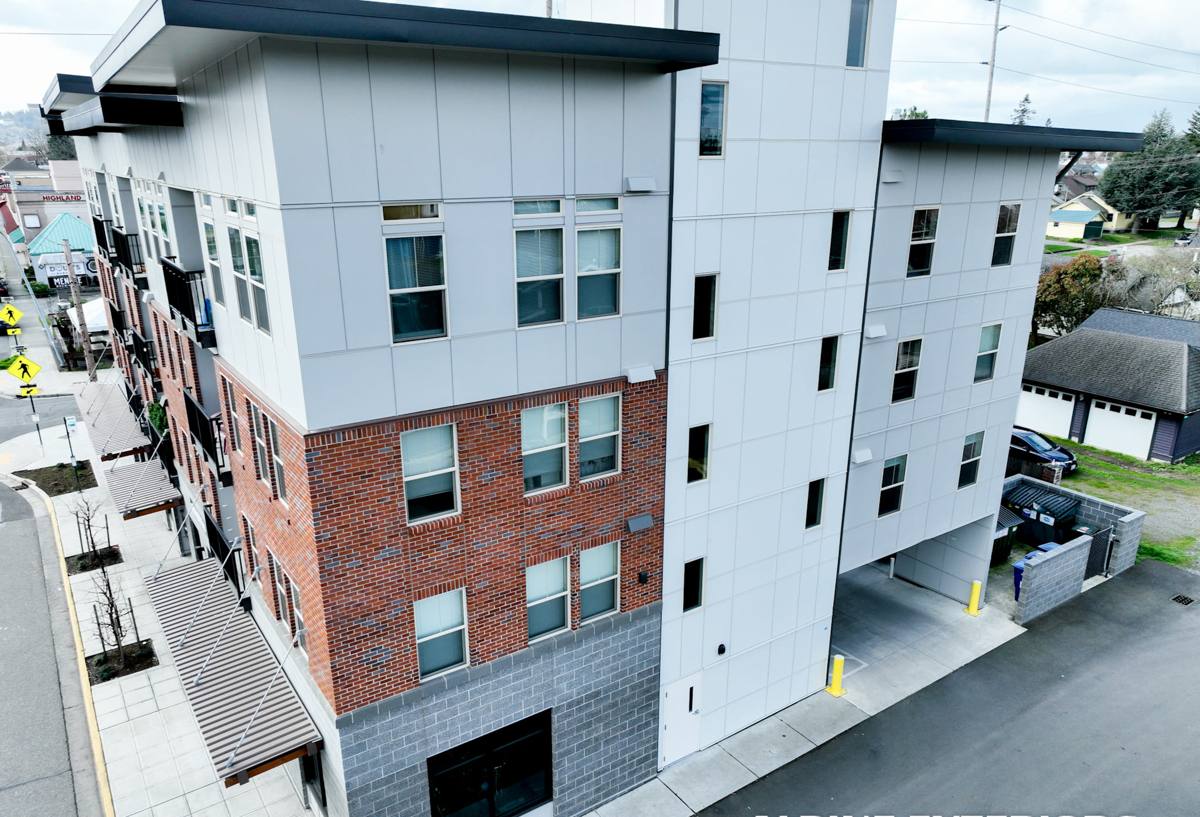
What Everson's Climate Actually Does to a House
Whatcom County's weather pattern is driving rain more than downpour — long stretches of steady, wind-pushed moisture that finds every gap, seam, and fastener hole in a wall system. On homes in the Nooksack valley, that rain doesn't dry off quickly. Shade from mature trees, valley humidity, and shorter winter daylight hours keep north- and east-facing walls damp for days at a time.
- Moss and algae growth on siding that stays damp too long, especially under eaves and in shaded corners
- Swelling, delamination, or soft spots in wood-based or engineered wood products where moisture gets behind the surface
- Caulk and paint failure from repeated wet-dry cycling, which opens the door to water intrusion at joints and trim
- Salt-tinged marine air carried inland off the Strait of Georgia and Bellingham Bay, which accelerates corrosion on unprotected fasteners and hardware
None of this is unique to any one house — it's what the regional climate does to exterior materials generally. The difference is in how a given siding product responds to it, and how carefully it was installed in the first place.
Why Fiber Cement Fits This Climate
Fiber cement is a mix of cement, sand, and cellulose fibers, engineered to hold its shape and finish through wet-dry cycling in a way that wood-based products struggle with. It doesn't swell when it absorbs moisture the way engineered wood siding can, and it doesn't feed mold or moss growth the way raw wood does. That combination is exactly what a moss-heavy, rain-heavy environment like Everson calls for.
We install James Hardie fiber cement exclusively — not as a brand preference, but because it's the product line we're willing to put our name behind after years of working Whatcom County homes. Hardie's HZ5 product line is engineered specifically for cold, wet Pacific Northwest climates, and the factory-applied ColorPlus finish is baked on and warrantied against fading and flaking in a way field-applied paint isn't. We don't install LP SmartSide, vinyl, Cemplank, Allura, or primed wood siding, and we're upfront with homeowners about why — those products each have real trade-offs in moisture behavior, maintenance burden, or long-term finish durability that we don't think hold up well against what this climate does to a house over 20-plus years.
What Correct Installation Actually Involves
Fiber cement performs well when it's installed to manufacturer spec — and performs poorly when it isn't. Most of the fiber cement siding problems we get called out to inspect in Whatcom County trace back to installation shortcuts, not the material itself. A correct job includes:
- Proper water-resistive barrier and flashing behind the siding, with flashing integrated at every window, door, and penetration — not just caulked over
- Correct fastener placement and spacing using corrosion-resistant fasteners, driven to the depth Hardie specifies (not over-driven, which cracks the board over time)
- Minimum clearances from grade, roofing, and decking so the siding isn't sitting in standing water or trapped moisture
- Correctly lapped and gapped joints that allow for expansion without relying on caulk as the primary water seal
- Factory-cut and factory-primed edges wherever possible, with any field cuts properly sealed before installation
This is the part that separates a siding job that looks fine at handoff from one that still looks and performs well in year fifteen. It's also the part that's hardest for a homeowner to verify just by looking at a finished wall — which is why who you hire matters as much as what product goes up.
Signs an Everson Home Needs Siding Attention
| What You See | Likely Cause | Why It Matters |
|---|---|---|
| Persistent moss or dark streaking | Trapped moisture, poor drainage, or shaded wall sections | Moss holds moisture against the surface, accelerating any underlying damage |
| Soft or spongy siding when pressed | Water intrusion behind wood-based or engineered wood panels | Usually indicates sheathing damage is already underway |
| Peeling or bubbling paint | Field-applied finish failing under repeated wet-dry cycling | Exposes the substrate underneath to direct weather |
| Visible fastener rust or staining | Standard fasteners reacting to marine-influenced moisture | Weakens the fastening point and stains the finish |
| Cracked or buckled panels | Improper fastening, missing expansion gaps, or impact damage | Creates direct entry points for water |
Our Process for Everson Projects
1. On-Site Assessment
We walk the exterior with you, note which elevations take the most weather exposure, check existing flashing and trim condition, and identify any moisture or rot issues that need to be addressed before new siding goes up. Covering up a wet wall with new siding just hides the problem.
2. Product and Color Planning
We help you choose the right Hardie profile — lap siding, shingle-style panels, or a mix with trim accents — and walk through ColorPlus color options suited to the home's style and the muted, overcast light common to Whatcom County for most of the year.
3. Removal and Prep
Old siding comes off, the sheathing is inspected and repaired as needed, and a correct water-resistive barrier goes on before a single piece of new siding is installed. This step gets skipped more often than it should on rushed jobs, and it's non-negotiable for us.
4. Installation to Manufacturer Spec
Flashing, fastening, clearances, and joint treatment are all done to Hardie's published installation guidelines — not shortcuts that speed up the job but shorten its life.
5. Final Walkthrough
We go over the finished work with you, confirm trim and caulking details, and make sure you understand the warranty coverage on both the material and the installation.
Why It Matters That We Already Work in Whatcom County
A crew that only occasionally works this far from a job hub tends to treat every home the same way regardless of exposure or microclimate. A crew based in the region and working Ferndale, Everson, and the surrounding Whatcom County communities regularly knows which elevations on a given lot take the worst of the driving rain, where moss builds up fastest, and how the local permitting and inspection process actually works — none of which is guesswork when you're doing it every week instead of once a year.
There's also a practical service argument: warranty claims and follow-up questions are a lot easier to resolve with a contractor who's a short drive away and still doing business in the area, rather than a crew that came through once and moved on.
Questions Worth Asking Any Siding Contractor
- Are you a factory-certified or preferred installer for the specific fiber cement product you're proposing?
- What's your fastener spec, and will you use corrosion-resistant fasteners given the local climate?
- How will you handle flashing at windows, doors, and roof-to-wall transitions?
- What does your warranty actually cover — material, labor, or both — and for how long?
- Can you walk me through why you recommend this specific product for this specific home?
If a contractor can't answer these clearly, that's worth noticing before you sign anything.
What This Costs to Think About
Every home is different — square footage, existing damage, trim complexity, and access all affect the final number — so we don't publish blanket pricing that doesn't mean much until we've actually looked at your house. What we can tell you honestly is that fiber cement typically costs more upfront than vinyl and can run comparable to or above some engineered wood options, but it carries lower long-term maintenance costs and a stronger factory finish warranty, which matters over the 30-plus year lifespan Hardie siding is built for. We'll walk through real numbers for your specific home during a free estimate — no pressure, no inflated "today only" pricing games.
If your Everson home is due for new siding, or you're seeing moss, soft spots, or failing paint and want an honest read on what's going on, we'd be glad to come take a look. The estimate is free, there's no obligation, and you'll get a straight answer about what your home actually needs — not a sales pitch.