 Ferndale
 Deck Repair Built for the Fairhaven Climate
A deck in the Fairhaven area lives a harder life than a deck almost anywhere inland. It sits closer to open water, which means salt-laden air settling into every fastener and joint. It takes on more driving rain than most of the state, and it spends a good chunk of the year damp and shaded enough for moss and algae to get a foothold. None of that is a flaw in the deck — it's just what Whatcom County weather does to exterior wood and hardware over time. The decks that hold up longest here aren't necessarily the ones built with the most expensive materials; they're the ones that were built, and later repaired, with that specific climate in mind.
This page is about deck repair specifically — not new construction, and not a generic overview. It's written for homeowners in and around the Fairhaven area who have a deck that's aging, showing damage, or starting to feel less solid underfoot, and who want to understand what a proper repair actually involves before they call anyone.
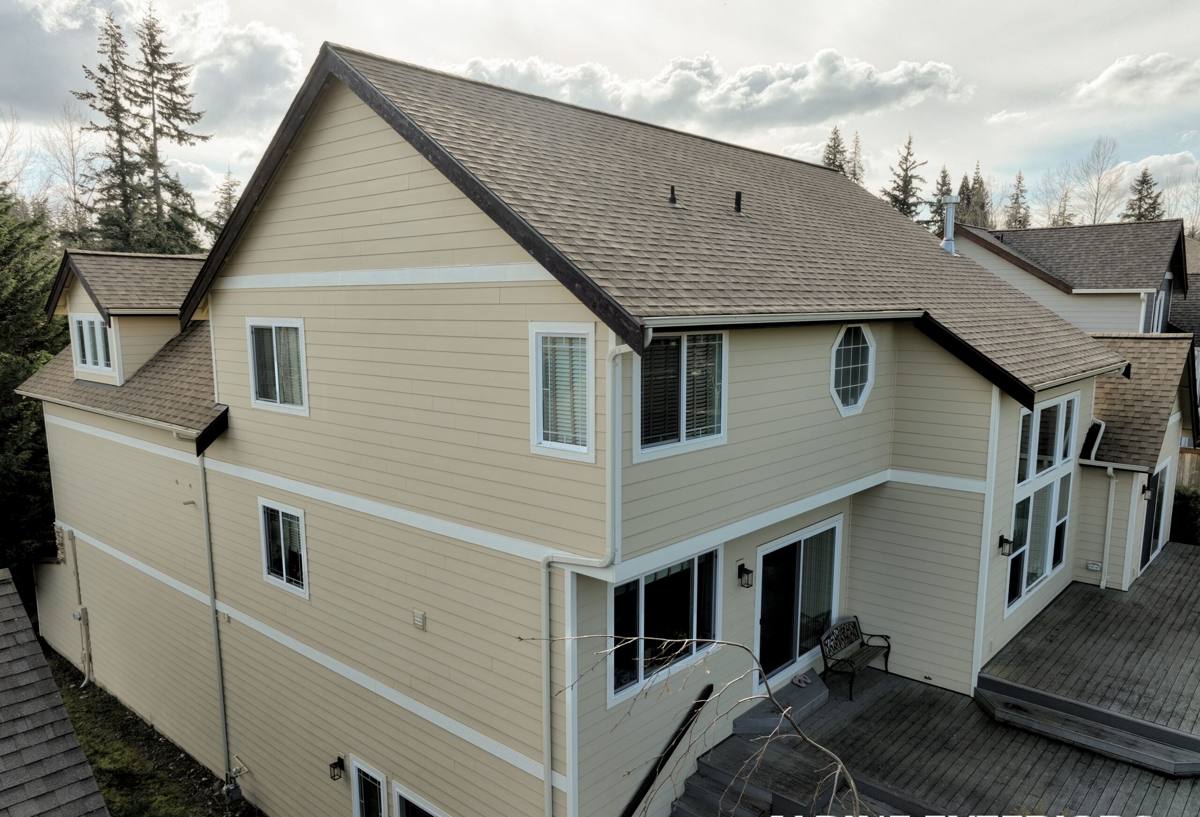
Why Salt Air, Rain, and Moss Are a Tougher Combination Than Any One Alone
Any one of these three stressors is manageable on its own. Together, they compound each other, which is exactly the situation a lot of Fairhaven-area decks are in.
Salt Air and Metal Fasteners
Airborne salt accelerates corrosion in nails, screws, joist hangers, and bolts — especially anything that isn't rated for coastal exposure. Corroding fasteners lose holding strength quietly, from the inside, long before there's a visible sign at the surface. A deck can look fine and still have hardware that's a fraction of its original strength.
Driving Rain and Water Intrusion
Wind-driven rain doesn't just fall straight down — it gets pushed sideways into ledger connections, under railing posts, and into any gap where flashing has failed or was never installed correctly. Water that gets in and can't get back out is the single biggest cause of structural rot in this region's decks.
Moss, Algae, and Trapped Moisture
Whatcom County's long damp season gives moss and algae months to establish themselves on decking boards, especially in shaded or north-facing areas. Beyond being slippery and unattractive, a moss layer holds moisture directly against the wood surface, which speeds up decay in exactly the boards that already get the least sun to dry out.
Signs a Fairhaven-Area Deck Needs Repair
Most deck failures don't happen suddenly. They show early warning signs for months, sometimes years, before anything becomes unsafe. Here's what we tell homeowners to check for, or to have a professional check for them:
- Soft, spongy, or springy spots when you walk across the decking boards
- Railings or posts that wiggle or flex when pushed sideways
- Visible gaps, staining, or dark streaking where the deck meets the house (ledger board area)
- Rust stains bleeding out from nail or screw heads
- Persistent moss or black algae that comes back within weeks of cleaning
- Stair stringers or steps that feel uneven or have visible cracking
- Gaps opening up between boards, or boards that have started to cup or crown
- A musty smell coming from underneath the deck structure
Any one of these on its own is worth a look. Two or more together usually means the damage has moved past the surface and into the structure underneath.
What a Correct Deck Repair Actually Involves
"Deck repair" covers a wide range of work, from swapping a handful of boards to rebuilding the structural connection between the deck and the house. A correct repair starts with figuring out which category a given deck actually falls into — not just fixing what's visible and hoping the rest holds.
Ledger Board and Flashing
The ledger board — where the deck attaches to the house — is the single most important structural connection on most decks, and it's also the most common failure point in a wet climate. Flashing that's missing, cracked, or improperly lapped lets water run straight into the house's rim joist and the deck's framing at the same time. Repairing a ledger connection properly means removing enough decking to actually see the flashing, correcting it so water sheds outward and down, and confirming the fasteners underneath haven't already lost their grip in decayed wood.
Joists, Beams, and Posts
These carry the actual weight of the deck. Rot here is more serious than rot in a decking board because it affects structural capacity, not just appearance. Repair can mean sistering a new piece of framing alongside a damaged joist, replacing a beam section, or in some cases resetting a post that's shifted or lost its footing connection. This is also where corroded joist hangers typically get found and replaced — they're inexpensive on their own, but they're doing a lot of the structural work.
Decking Boards, Stairs, and Railings
This is the most visible layer and the one homeowners usually notice first, but it should be the last thing addressed, not the first — there's little point installing new boards over framing that hasn't been checked. Once the structure underneath is confirmed sound, board replacement, stair repair, and railing tightening or rebuilding can proceed with confidence that the fix will actually last.
Repair or Replace? The Honest Cost Factors
Not every deck problem calls for a full rebuild, and not every deck is worth patching indefinitely. The right call depends on how much of the structure is affected, not just how old the deck is.
| Factor | Leans Toward Repair | Leans Toward Replacement |
|---|---|---|
| Extent of damage | Isolated to a few boards, one section, or one connection point | Rot or corrosion found in multiple structural areas |
| Framing condition | Joists, beams, and posts probe solid; only surface layers affected | Framing is soft, spongy, or shows widespread decay |
| Age of structure | Newer deck with a maintenance gap rather than a design flaw | Original construction lacked proper flashing or ledger detailing |
| Code and safety | Railings, stairs, and spacing already meet current standards | Older deck predates current railing height or guard-spacing rules |
| Cost pattern | One-time repair addresses the actual cause | Repeated repairs to the same area over several years |
As a rough guide, targeted repairs on an otherwise sound deck typically run in the low hundreds to a couple thousand dollars depending on scope, while a full deck rebuild is a much larger investment. We'll always tell you honestly which category your deck falls into rather than defaulting to the bigger job.
Materials: What We Repair With, and Why
Material choice matters more for repairs than for new builds, because a repair has to match or outperform what's already there without creating a mismatch that fails again in a few years.
| Material | Where It Works Well | Trade-Off in This Climate |
|---|---|---|
| Pressure-treated framing lumber | Structural repairs — joists, beams, ledger blocking | Still needs proper flashing and fastener protection; treatment alone doesn't stop water intrusion |
| Cedar or other naturally durable decking | Homeowners who want a traditional wood look and are willing to maintain it | Requires regular sealing/staining to resist moss and moisture in a wet climate |
| Composite decking boards | Board replacement where low ongoing maintenance matters most | Higher material cost; installation details (spacing, fastening) matter more than with wood |
| Stainless or coated coastal-rated fasteners | Any repair within reach of salt air, especially near the water | Costs more than standard hardware but avoids the corrosion that caused the original failure |
Our standard is to match fastener and hardware ratings to coastal exposure even when the original build didn't — using standard interior-grade hardware on a Fairhaven-area deck is a repair that's built to fail again.
Our Deck Repair Process
We keep the process straightforward because deck repair doesn't need to be complicated to be done right — it needs to be thorough where it counts.
- On-site inspection. We check the decking surface, but more importantly we probe the framing, ledger connection, and posts for soft or decayed wood that isn't visible from the top.
- Honest scope and estimate. You get a clear explanation of what's actually failing, what caused it, and what it will take to fix — including whether repair or replacement makes more sense for your situation.
- Structural work first. Any framing, ledger, flashing, or post repairs happen before cosmetic work, so nothing gets built on top of a problem.
- Surface repairs. Decking boards, stairs, and railings are repaired or replaced once the structure underneath is confirmed sound.
- Final check. We walk the deck with you, point out what was fixed and why, and flag anything worth watching going forward.
Living With Moss and Maintenance Long-Term
Repair fixes the current problem, but the Fairhaven area's climate doesn't stop working on a deck once the repair crew leaves. A little routine maintenance goes a long way toward not needing the same repair again.
- Clean moss and algae off decking boards at least once a year, before it has a chance to stain or soften the wood
- Keep gutters and downspouts clear so roof runoff isn't dumping extra water directly onto or under the deck
- Walk the deck a couple times a year and check for soft spots, loose railings, or new rust streaks
- Reseal or restain wood decking on the manufacturer's recommended schedule, not just when it looks worn
- Keep vegetation trimmed back from the deck edge so airflow can actually dry the wood between rains
None of this is complicated, but it's the kind of thing that's easy to let slide — and letting it slide is exactly how a small repair job today turns into a structural one in a few years.
Why It Matters to Hire a Crew That Already Works the Fairhaven Area
Deck repair isn't a one-size-fits-all trade. A crew that mostly works drier inland areas may not think twice about flashing details or fastener ratings that are non-negotiable this close to salt air and driving rain. A crew that already works the Fairhaven area, Ferndale, and the rest of Whatcom County has seen the specific failure patterns this climate produces — which ledger connections tend to go first, which decking materials hold up and which don't, and where moss actually causes structural problems versus just looking bad.
That familiarity shows up in the estimate, too. We're not guessing at what your deck needs based on a generic checklist — we're diagnosing it based on what we've seen fail, and hold up, on decks like it in this same region.
Get a Free, No-Pressure Estimate
If your deck in the Fairhaven area has soft spots, loose railings, rust stains, or moss that keeps coming back, it's worth a second look before it turns into a bigger job. Fill out the form below and we'll walk the deck with you, tell you honestly what we find, and give you a straightforward estimate — no pressure, no upsell.