 Ferndale
 Lynden's Climate Is Harder on Siding Than It Looks
Lynden sits inland from the Salish Sea, but Whatcom County's marine climate doesn't stop at the shoreline. Moisture-laden air moves through the whole county, and Lynden gets its share of long, gray stretches of rain, cool damp mornings, and the kind of persistent humidity that keeps exterior surfaces wet far longer than homeowners in drier climates ever deal with. Add driving rain that hits siding at an angle during winter storms, and a moss season that can run most of the year on shaded or north-facing walls, and you've got a climate that's genuinely tough on exterior materials — even when it doesn't look dramatic day to day.
Most siding failures we see in this area aren't caused by one big storm. They're caused by years of ordinary weather finding the weak points in a product or an installation — a seam that wasn't flashed right, a caulk line that failed, a material that absorbs water it was never designed to shed. A siding job done for Lynden's climate has to account for all of that from day one, not just look good on the day it goes up.
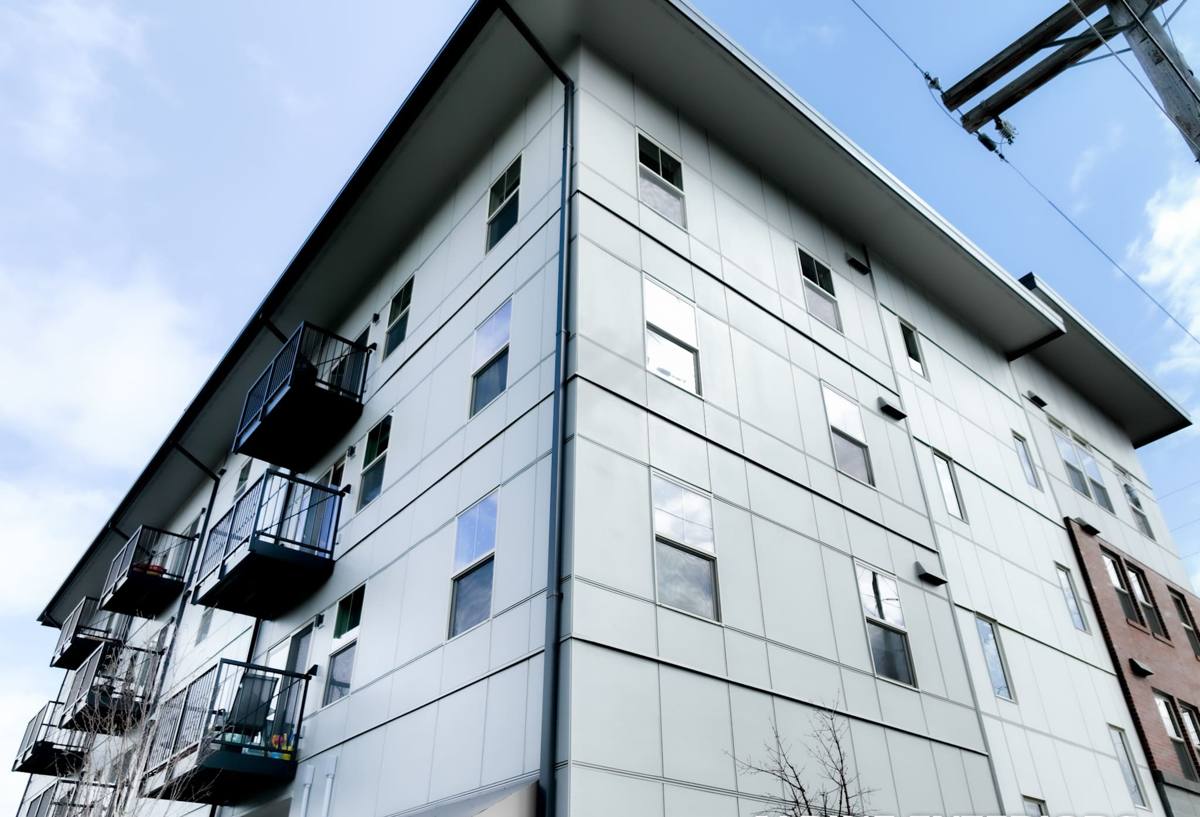
What Driving Rain and a Long Moss Season Actually Do to a Wall
Moisture doesn't stop at the surface
Driving rain pushes water sideways into every gap, seam, and fastener hole in a wall assembly. If the siding material or the installation behind it can't manage that water — shedding it away from the wall, keeping it from getting trapped behind panels, and letting any moisture that does get in dry out again — you end up with problems you can't see from the ground: swollen boards, soft trim, rot in the sheathing, and eventually interior damage. This is why the water management details matter as much as the siding itself.
Moss and algae are a moisture problem, not just a look problem
Moss and algae growth on siding is a sign that a surface is staying damp longer than it should. In Lynden, shaded walls, areas near mature trees, and north-facing elevations are especially prone to it. Beyond the appearance issue, sustained moss and algae growth holds moisture against the siding surface, which accelerates wear on materials that aren't built to handle it and can shorten the life of paint, caulk, and the substrate underneath. A siding system that resists moisture absorption and holds its finish is a real advantage here, not a cosmetic nicety.
Why We Install Only James Hardie Fiber Cement
We made a deliberate decision to install one siding system — James Hardie fiber cement — and not vinyl, LP SmartSide, Cemplank, Allura, or primed wood products like spruce or cedar. That's not a marketing angle; it's a standard we hold because of how each of those alternatives performs over time in a climate like this one.
Fiber cement is a non-combustible material made from cement, sand, and cellulose fibers, engineered specifically for climates with sustained moisture exposure. James Hardie's HZ product lines are formulated for different regional climate zones, and the versions specified for the Pacific Northwest are built with wet-climate performance in mind — resisting moisture-related swelling, cracking, and warping better than wood-based or wood-composite alternatives. The factory-applied ColorPlus finish is baked on under controlled conditions and backed by its own finish warranty, which matters in a region where field-applied paint takes a beating from sun, rain, and humidity cycles. On top of the material itself, Hardie backs its siding with a strong, transferable product warranty — something that carries real weight for homeowners planning to stay in their home for decades or eventually sell.
Vinyl is inexpensive and low-maintenance in the sense that it doesn't need painting, but it can warp, fade, and crack over time, and it doesn't hold up to impact the way fiber cement does. LP SmartSide and other wood-strand composite products rely on engineered wood cores that are more sensitive to sustained moisture exposure at cut edges and seams than fiber cement is. Primed spruce and cedar are beautiful materials, but they're organic wood — they need diligent, ongoing maintenance to keep moisture out, and in a climate with this much sustained dampness, that maintenance burden is significant. We're not saying these products have no place anywhere. We're saying that after years of installing and repairing exterior siding in this specific climate, fiber cement is what we're willing to put our name behind.
What a Correct Fiber Cement Installation Involves
Prep and moisture management come first
Before a single piece of siding goes up, the wall needs a proper weather-resistive barrier, correctly lapped and sealed, with flashing installed at every window, door, and penetration so water is directed out and away from the sheathing. This is the part of the job that's invisible once the siding is on — and it's also the part that determines whether the wall stays dry for the next 30 years or starts failing in five.
Fastening and joints
James Hardie siding has specific fastening requirements — nail or screw type, spacing, and placement all affect how the panels perform over time and whether the warranty stays valid. Butt joints and panel seams need to be treated correctly, whether that means proper caulking or engineered joint details, so water can't work its way behind the siding at the seams — one of the most common failure points on any lap siding installation.
Caulking, paint lines, and factory finish
Even with a factory finish, the cut edges of Hardie planks need to be sealed with the correct touch-up products, and the caulk used at trim, corners, and penetrations needs to be a product rated for exterior movement and moisture exposure. Skipping this step — or using the wrong sealant — is one of the fastest ways to undercut an otherwise good material with a weak point that fails in a year or two.
Fiber Cement vs. Other Siding Options for a Lynden Home
| Material | Moisture Performance in This Climate | Maintenance Over Time | Typical Lifespan |
|---|---|---|---|
| James Hardie Fiber Cement | Engineered for wet climates; resists swelling and rot | Occasional washing; factory finish holds up well | Multiple decades with correct install |
| Vinyl | Doesn't rot, but can warp and let moisture behind panels | Low, but repairs are visible and hard to color-match | Moderate, shorter in harsh sun/temperature swings |
| LP SmartSide / Wood Composite | Vulnerable at cut edges and seams if not sealed correctly | Requires diligent sealing and inspection | Depends heavily on installation and upkeep |
| Primed Spruce / Cedar | Organic wood; absorbs moisture without constant upkeep | High — regular painting and sealing required | Shorter without consistent maintenance |
Our Process, From First Call to Final Walkthrough
Assessment and estimate
We start by looking at the current condition of your siding, trim, and the water management details underneath — not just the surface. In Lynden, that often means paying close attention to shaded elevations, areas near mature landscaping, and any spots where moss or algae have already taken hold. We'll walk you through what we find and what a correct fix looks like before any numbers are discussed.
Install
Once a project starts, we handle removal of the old siding, repair of any damaged sheathing or framing found underneath, correct installation of the weather-resistive barrier and flashing, and then the Hardie installation itself — fastening, joints, and finish work done to manufacturer specification so the warranty stays intact.
Final walkthrough
Before we consider a job finished, we walk the exterior with you, check every seam, corner, and trim line, and make sure caulking and finish work meet our standard — not just an acceptable one.
Long-Term Maintenance in This Climate
Fiber cement is genuinely low-maintenance compared to wood, but "low-maintenance" doesn't mean "no maintenance," especially in a climate that supports moss and algae growth for much of the year. A little attention goes a long way toward protecting the investment.
- Rinse siding periodically with a garden hose to keep dirt, pollen, and organic buildup from taking hold, especially on shaded or north-facing walls
- Keep gutters clear so overflow doesn't run down the siding face repeatedly during heavy rain
- Trim back shrubs and tree limbs that keep siding shaded and damp longer than necessary
- Inspect caulking at trim, corners, and penetrations every year or two, and re-caulk any joints that have cracked or pulled away
- Address moss or algae growth early with a gentle cleaning approach rather than letting it spread and hold moisture against the surface
- Watch for soft spots, discoloration, or bubbling at the base of walls near grade, which can indicate a drainage or flashing issue worth checking
Why Hiring a Contractor Who Already Works in Lynden Matters
Siding work isn't generic. A contractor who already works throughout Whatcom County knows how local moisture patterns behave against different wall orientations, understands the moss and algae issues specific to shaded and low-airflow areas, and has already worked through the flashing and detailing choices that hold up here versus the ones that don't. That local track record matters more than a low bid from a crew that installs siding the same way regardless of climate.
It also matters for the practical side of the job — knowing which suppliers stock the right Hardie profiles and colors locally, understanding typical permitting expectations in the area, and being available if a question comes up after the job is done. A siding job is only as good as the crew standing behind it once the trucks leave.
If your Lynden home needs new siding, or you're not sure whether your current siding is holding up the way it should, we're happy to take a look and give you an honest assessment. Use the form below to request a free, no-pressure estimate.