 Ferndale
 Window Installation for Marietta Homes
Marietta sits low, on the flats near where the Nooksack River drains toward Bellingham Bay, just outside Ferndale proper. That low, open position means homes here pick up a heavier dose of marine air and wind-driven weather than a typical inland Whatcom County lot, even one just a few miles away. Salt-tinged air moves through steadily, rain comes in sideways as often as it falls straight down, and mild, damp conditions keep moss and mildew active across most of the year. None of that is unique to Marietta on its own, but the combination, on flat ground with fewer windbreaks, tends to hit windows harder and sooner than it hits a sheltered, elevated property.
Windows are the single biggest interruption in an exterior wall, and how well one is installed matters more than almost any other detail on the house. We install windows across Ferndale and the rest of Whatcom County regularly, and in Marietta specifically that means building every installation, new construction or replacement, around the amount of wind-driven moisture and salt exposure this stretch of ground actually sees rather than treating it the same as a calmer, more sheltered lot a few streets away.
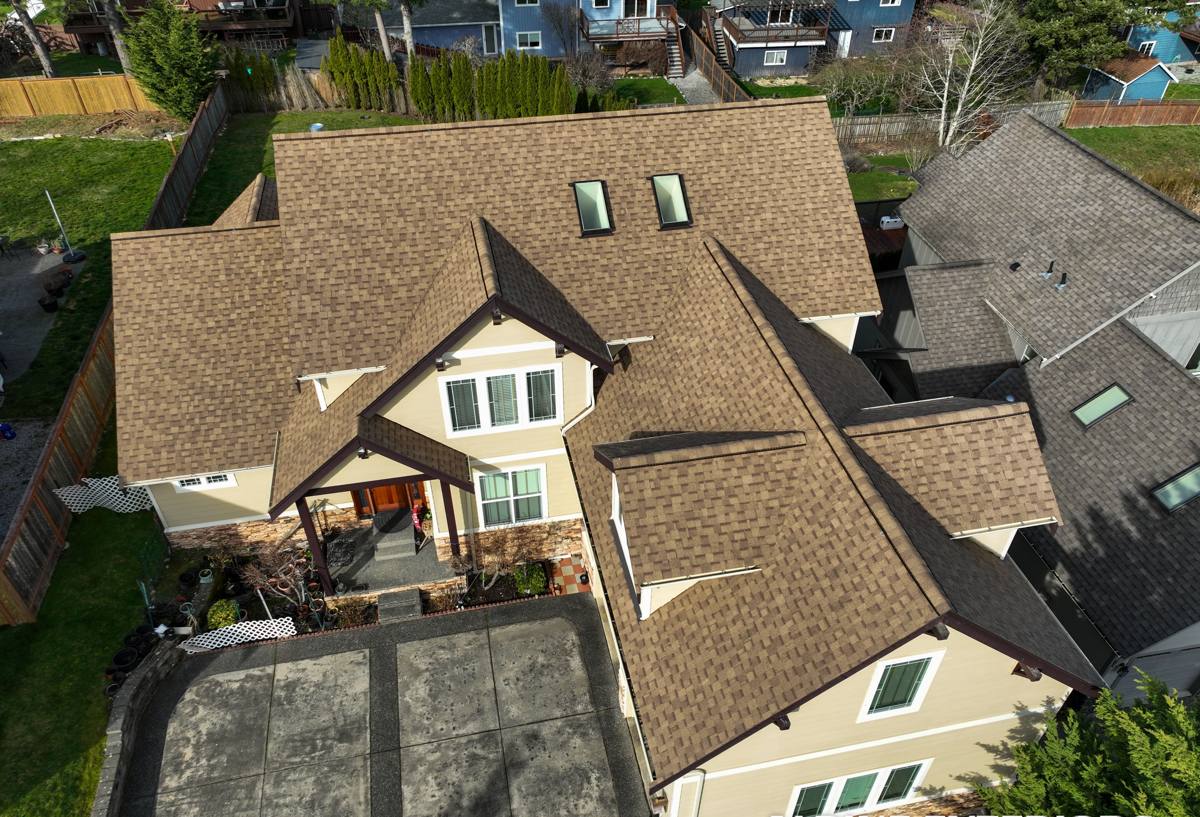
What Marietta's Climate Does to a New Window Installation
Salt Air and Hardware Corrosion
Being close to open water means Marietta homes take in more salt-carrying air than most of inland Whatcom County. That air works on window hardware, screen frames, and fasteners over time, and it's usually the cheapest components — a low-grade fastener, an unfinished screw, a bargain hinge — that show pitting or seizing first. Installation matters here as much as the window itself: corrosion-resistant fasteners and hardware rated for a salt-influenced climate are a small line item that prevents a much bigger headache a few years down the road.
Driving Rain and Wind-Driven Water
Open, flat terrain gives wind less to break against before it reaches a house, and wind is what turns ordinary rain into a sideways problem. That sideways-driven water tests window flashing, head trim, and sill details far harder than a straight-down rain ever would. A window can be a perfectly good product and still leak if the sill pan isn't pitched correctly or the flashing isn't lapped in the right order — most of the leaks we trace back around windows in this area come from the installation, not the glass or frame.
A Long Moss and Mildew Season
Mild temperatures and steady dampness give moss and mildew a long working season across this part of the county, and shaded or low-airflow walls hold onto that moisture longer. Around a window, that shows up first as dark staining at the sill or bottom corners, and on wood trim it can progress into soft, rotting wood if it isn't caught. New installation work is the right time to address any of that, since it's far easier to fix while the opening is already exposed than to discover it later.
Flat Ground and Slower Drainage
Low, flat lots don't shed bulk water as quickly as a sloped or elevated site, and that slower drainage means moisture sits around the base of a house, and around ground-floor window sills, longer after a storm passes. It's a good reason to be deliberate about sill pan pitch and weep-hole placement on any window installed close to grade in Marietta, rather than assuming a standard detail that works fine on a well-drained hillside lot will perform the same way here.
Choosing a Window Frame Material for This Exposure
There isn't one right frame material for every home, but given how much salt air and sustained moisture a Marietta property handles, some materials have a real, practical advantage here.
| Frame Material | Moisture & Salt Air Behavior | Typical Maintenance | Realistic Lifespan Here |
|---|---|---|---|
| Vinyl | Won't rot or corrode; performance depends heavily on weld and seam quality | Low; periodic track and weep-hole cleaning | 20-30 years |
| Fiberglass | Dimensionally stable, holds up well against both moisture and salt exposure | Low | 30-40+ years |
| Wood, painted or clad | Handsome but vulnerable at joints and sills without diligent, ongoing upkeep | Higher; regular paint or finish maintenance | 15-25 years depending on upkeep |
| Aluminum | Conducts cold and is more prone to corrosion in salt-influenced air unless well-finished | Moderate | 20-30 years |
For a low, open, salt-exposed lot like most of Marietta, we lean toward vinyl or fiberglass for most homeowners, but budget, the look you're after, and how long you plan to stay in the house all factor in. We'll walk through the real trade-offs for your specific property rather than defaulting to whatever's easiest to sell.
Full-Frame vs. Insert Replacement
One of the first decisions on a replacement project is whether to do a full-frame installation, which removes the old window down to the rough opening and rebuilds the flashing from scratch, or an insert replacement, which fits a new window into the existing, structurally sound frame. Insert replacement is faster and less disruptive to surrounding siding and trim, and it's a reasonable choice when the existing frame is solid and was flashed correctly to begin with. Full-frame replacement costs more and takes longer, but it's the honest call whenever there's already moisture damage at the sill or jambs, or when the original flashing was never done right — which we see more often on older Marietta homes that have taken decades of this area's wind-driven rain. New construction and additions call for a different approach entirely: a nail-fin window set into fresh framing, with flashing built into the wall assembly as it's built rather than retrofitted around an existing opening.
Our Window Installation Process
- On-site assessment: We look at existing openings, framing condition, current window performance, and the specific sun, wind, and moisture exposure of each wall before recommending anything.
- Product and material selection: We walk through frame material, glass package, and full-frame vs. insert (or new construction) with you, based on your budget and that wall's actual exposure.
- Careful removal: Old windows and trim come out cleanly, with the opening checked immediately for hidden rot, prior water intrusion, or framing damage before anything new goes in.
- Sill pan and flashing installation: A properly pitched sill pan goes in first, followed by jamb and head flashing integrated with the housewrap or building paper, lapped in the correct order so water is directed out and down, never trapped behind the new window.
- Setting and shimming the window: The unit is set level, plumb, and square, and shimmed correctly so it operates smoothly and doesn't bind or sag over time.
- Insulation and air sealing: The gap around the frame is insulated and sealed without over-packing it, since a stuffed cavity can trap moisture against the framing instead of letting it dry.
- Exterior trim and finish sealing: Trim goes back on, and sealant is applied only where it belongs, never as a substitute for proper flashing underneath it.
- Final walkthrough: We test operation, check the seal, and walk you through the finished work before we call the job done.
Installation Details We Treat as Non-Negotiable
Given how much wind-driven rain and salt air a Marietta property takes on, we don't treat these as optional add-ons — they're standard on every window we install here:
- A sill pan pitched to shed water outward, not just a flat surface under the frame
- Head flashing lapped over the housewrap so water sheds down and outward, never trapped behind the siding
- Jamb flashing tied into the surrounding wall assembly, not left to caulk alone
- Weep holes and drainage paths left clear and functional after installation, not sealed shut
- Corrosion-resistant fasteners and hardware rated for a salt-influenced marine climate
- Insulation around the frame that seals air movement without trapping moisture against framing
- Exterior sealant used as a finish layer, applied over correct flashing rather than in place of it
None of these add meaningfully to the cost of a window relative to the unit itself, but skipping any one of them is exactly what turns a window that should last decades into one that's leaking behind the wall within a few wet seasons.
New Construction vs. Replacement Window Installation
Not every window job in Marietta is a straight swap. Additions, garage conversions, and new construction call for nail-fin windows set into framing as the wall is built, with flashing integrated into the housewrap sequence from the start rather than retrofitted later. That's a cleaner installation in some ways, since there's no old opening or old damage to work around, but it still has to be sequenced correctly with the rest of the building envelope or it creates the same wind-driven-rain vulnerabilities as a poorly done replacement. Replacement work, on the other hand, is about working within what's already there: matching or improving on the existing rough opening, dealing honestly with whatever condition the old flashing and framing are actually in, and not assuming everything behind the old trim is fine just because it looks fine from outside.
Cost Factors for Window Installation in Marietta
| Factor | What It Affects | Why It Matters Here |
|---|---|---|
| Full-frame vs. insert | Labor scope, trim and siding disruption | Full-frame costs more but is the right call when flashing or framing is already compromised |
| Frame material and glass package | Unit cost and long-term maintenance | Corrosion and moisture resistance matter more here than on an inland, sheltered lot |
| Number and size of openings | Total material and labor cost | Larger or custom openings take more time to flash and finish correctly |
| Hidden rot or framing damage | Repair costs discovered once trim comes off | Slower drainage on flat ground can let moisture sit longer before it's noticed |
| Site access | Labor time and equipment needs | Ground-floor and low-elevation openings are usually straightforward, but every property differs |
Exact pricing depends on your specific home, opening count, and condition, which is why we walk the property in person rather than quoting a number sight unseen.
Why a Crew That Already Works in Marietta Matters
A crew that installs windows across Ferndale and the rest of Whatcom County regularly knows how salt air, wind-driven rain, and a long moss season actually behave on real homes here, not just how a product performs on a spec sheet. In a low, open area like Marietta, that experience shapes real decisions on install day: how aggressively to pitch a sill pan on a ground-floor window facing prevailing wind, which corrosion-resistant hardware is worth the small added cost, and where extra flashing attention pays for itself the first time a winter storm rolls in off the water. It also means showing up already understanding that a Marietta property doesn't behave quite like a sheltered lot a few miles inland, instead of applying a one-size-fits-all approach to every job in the county.
Free, No-Pressure Estimate for Your Marietta Window Project
Whether you're replacing aging, drafty windows or installing new ones as part of an addition or remodel, we're glad to walk your Marietta property, look at what's actually going on with your current windows and framing, and give you a straightforward, honest recommendation. Reach out using the form below to schedule a free, no-pressure estimate.