 Ferndale
 Kendall's Climate Puts Real Demands on a Roof
Kendall sits in the rural foothill country east of Ferndale, in the Nooksack River valley where Whatcom County's weather shows a different side of itself than it does closer to the water. The rain still comes hard and sideways during fall and winter storms, but the tree cover is heavier here, homes sit shaded longer through the day, and moisture has more places to linger on a roof deck. Add in the wind that funnels through the valley and the wet, heavy snow that can show up in a cold snap, and you have a set of conditions that wears out a roof faster than most homeowners expect.
A roof in Kendall isn't fighting one problem, it's fighting several at once: standing moisture from shade and tree debris, driving rain that finds every weak seam, and the kind of temperature swings that stress fasteners and flashing over years of freeze-thaw cycles. Whatever roofing material goes on a Kendall home needs to hold up to all of that without constant upkeep, and that's exactly where metal roofing earns its reputation.
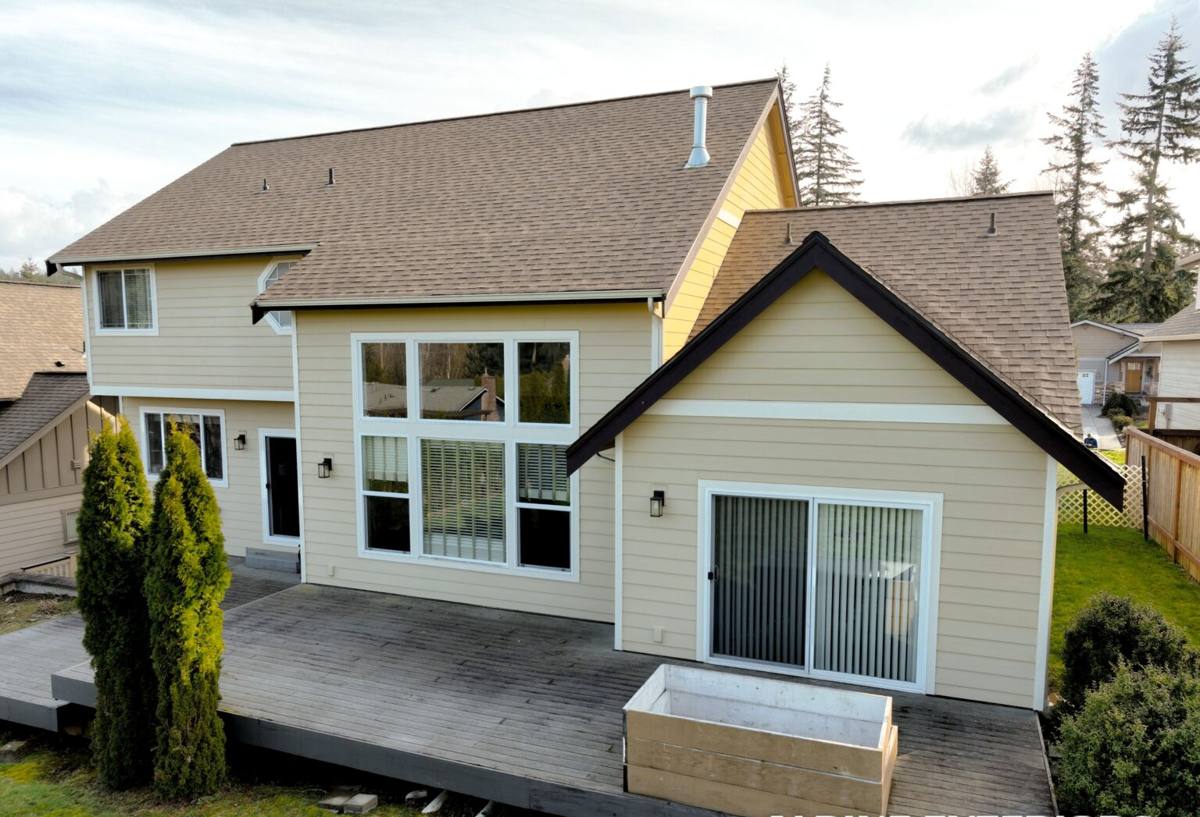
Why Metal Roofing Makes Sense for Kendall Homes
Metal roofing isn't the right answer for every home or every budget, but for the conditions Kendall deals with, it solves problems that asphalt shingles struggle with long-term.
Moss and Debris Shed Differently on Metal
Whatcom County's long moss season is one of the most consistent complaints we hear from homeowners in the shaded, tree-lined parts of Kendall. Asphalt shingle roofs give moss spores something to grab onto — the granulated surface holds moisture and organic debris in place, and moss gets a foothold within a season or two under heavy shade. A properly installed metal roof has a smooth, hard surface with a steep enough profile in most cases that water, needles, and moss spores don't sit still. That doesn't mean a metal roof never needs cleaning, but it dramatically cuts down how fast moss and algae can establish themselves compared to a shingle roof in the same yard.
Wind and Snow Load in the Foothills
Being farther from the coast doesn't mean Kendall is sheltered from wind — valley terrain can actually accelerate gusts through certain corridors, and a loose or lifted shingle is a common failure point in older roofs out this way. A correctly fastened metal panel system is mechanically locked or fastened at intervals engineered to resist uplift, which matters more here than it does in a calm, open suburban lot. Metal also sheds wet snow more readily than shingles, reducing the load a roof structure has to carry during a cold snap.
Choosing the Right Metal Roofing System
"Metal roofing" covers more than one product, and the right choice depends on the home, the roof pitch, and the budget. We walk every Kendall homeowner through the real trade-offs rather than pushing one system for every job.
| System | Best For | Trade-offs |
|---|---|---|
| Standing seam (concealed fastener) | Long-term, low-maintenance performance; homes with moss/moisture concerns | Higher upfront cost; requires an experienced crew to install correctly |
| Exposed fastener panel | Outbuildings, shops, budget-conscious projects | Fasteners need periodic inspection and eventual replacement as gaskets age |
| Stone-coated steel / metal shingle | Homeowners who want a traditional shingle look with metal's durability | More seams and fastener points than standing seam; costs more than exposed fastener panel |
For homes with heavy tree cover and shaded roof planes, we typically steer homeowners toward standing seam or a well-installed metal shingle system, since fewer exposed fasteners means fewer points where moisture can eventually work its way in.
What a Correct Metal Roof Installation Actually Involves
Metal roofing has a reputation for being low-maintenance, but that reputation only holds up when the installation is done right. A metal roof is far less forgiving of shortcuts than an asphalt shingle roof — small mistakes in the underlayment or flashing don't show up as an obvious problem until years later, usually as a leak that's expensive to trace.
Underlayment and Moisture Control
Every metal roof needs a high-temperature synthetic or self-adhered underlayment beneath the panels, not the standard felt used under shingles. Metal panels transmit heat and cold differently than shingles do, and the underlayment has to handle condensation on the underside of the panel as well as any wind-driven rain that gets past the seams. This layer is invisible once the job is done, which is exactly why it's worth asking about before work starts.
Fastening and Panel Layout
Panel spacing, fastener spacing, and the direction panels run all affect how well the system handles wind and thermal expansion. Metal expands and contracts with temperature more than most homeowners realize, and panels that are fastened too rigidly can buckle or work fasteners loose over time. Concealed-fastener systems need clips installed at the correct spacing to allow that movement without compromising the seal.
Flashing, Penetrations, and Transitions
Valleys, chimneys, vent pipes, and wall transitions are where nearly every roof leak actually starts, metal or otherwise. Metal roofing requires custom-formed flashing at these points rather than the generic pre-formed pieces sometimes used on shingle roofs, because the panel profile has to be matched precisely. This is the single most common place we find corners cut on metal roofs installed by crews without much metal-specific experience.
Ventilation
A metal roof still needs a properly vented attic or roof assembly underneath it. Without adequate airflow, trapped moisture can condense on the underside of the metal, leading to problems that have nothing to do with the roof surface itself and everything to do with what's happening in the attic.
Our Process for a Kendall Metal Roofing Project
We keep the process straightforward and give homeowners a clear picture of what's happening at each stage:
- On-site assessment — we look at the existing roof deck, ventilation, moss and moisture patterns specific to the property's shade and tree exposure, and note anything that needs attention before new roofing goes on.
- Tear-off vs. overlay decision — most metal roofing goes on over a fully torn-off deck so we can inspect and repair sheathing, though some systems can be installed over existing roofing in limited situations. We'll tell you honestly which applies to your roof.
- Deck repair and underlayment — any soft, rotted, or moss-damaged decking gets replaced before underlayment goes down, since panels installed over a compromised deck won't perform no matter how good the metal is.
- Panel installation — panels, clips, and fasteners go in to the system manufacturer's spec, with custom flashing formed and installed at every valley, penetration, and transition.
- Final walkthrough — we go over the finished roof with the homeowner, cover basic care, and make sure gutters and downspouts are clear before we leave the job site.
Keeping a Metal Roof Sound Through Whatcom County Weather
A well-installed metal roof needs far less upkeep than shingles, but "low-maintenance" isn't "no-maintenance," especially with Kendall's tree cover and long moss season. A little seasonal attention goes a long way:
- Clear needles, leaves, and branch debris from valleys and behind chimneys where wind can pile it up, even though it won't sit and build moss the way it does on shingles
- Keep gutters and downspouts flowing freely so water isn't backing up under the roof edge during heavy rain
- Trim back overhanging branches where practical to reduce shade, debris, and the risk of limb damage during winter storms
- Have fasteners and flashing checked periodically on exposed-fastener systems, since gaskets and washers are the parts most likely to age out over time
- Watch for any staining or streaking on ceilings after major storms, which is the earliest sign of a flashing or penetration issue worth catching early
What Metal Roofing Costs in Kendall
Every roof is different, but the main cost drivers stay consistent. We give straightforward, written estimates rather than vague ranges once we've actually seen the roof.
| Factor | Why It Affects Cost |
|---|---|
| Roof pitch and complexity | Steeper roofs and more valleys, dormers, or penetrations mean more labor and more custom flashing |
| System type | Standing seam costs more upfront than exposed-fastener panel but needs less long-term maintenance |
| Tear-off and deck condition | Moss and moisture damage found under old roofing sometimes means deck repair before new roofing goes on |
| Access and site conditions | Tree cover, steep driveways, and limited staging area on rural Kendall lots can add time to a project |
| Panel material and finish | Steel, aluminum, and coating options vary in cost and in how they hold up to coastal-influenced moisture over time |
Metal roofing costs more upfront than asphalt shingles, but it's a longer-term investment — the value shows up in decades of service life and far less time spent dealing with moss, granule loss, and shingle replacement in a climate that's hard on both.
Why Hiring a Crew That Already Works in Kendall Matters
Kendall isn't downtown Ferndale, and a roofing crew that's never worked the shaded, tree-covered lots and rural access out this way will make assumptions that don't hold up. Knowing how moss actually behaves on a shaded metal roof under heavy fir and cedar cover, how wind moves through the valley, and what deck condition typically looks like under old roofing in this specific area comes from doing the work here repeatedly, not from a general roofing background. It also means a shorter response time if something needs attention after a storm, since we're not routing a crew across the county for a single callback.
If you're weighing metal roofing for a home in Kendall, we're happy to take a look and walk you through what your roof actually needs — no pressure, no upsell, just a straight answer. Reach out using the form below for a free estimate.