 Ferndale
 Sandy Point's Waterfront Location Puts Extra Demands on a Roof
Sandy Point sits right on the water in Whatcom County, and that location shapes almost everything about how a roof ages here. Homes just outside Ferndale but exposed to open water deal with a combination most inland roofs never see at the same intensity: salt-laden air moving off the water, wind-driven rain that hits roof planes sideways instead of straight down, and a long, wet moss season that starts early and doesn't let up until summer. None of that is unusual for this part of Washington. What's different in Sandy Point is how much of it stacks together on the same roof, year after year.
A roof that's installed without accounting for that combination doesn't necessarily fail fast — it usually fails slowly, in ways that aren't obvious until there's already water damage underneath. A roof that's installed correctly for this environment, on the other hand, can go the better part of its expected lifespan without surprises. The difference is almost entirely in the details of the installation, not the shingle brand on the wrapper.
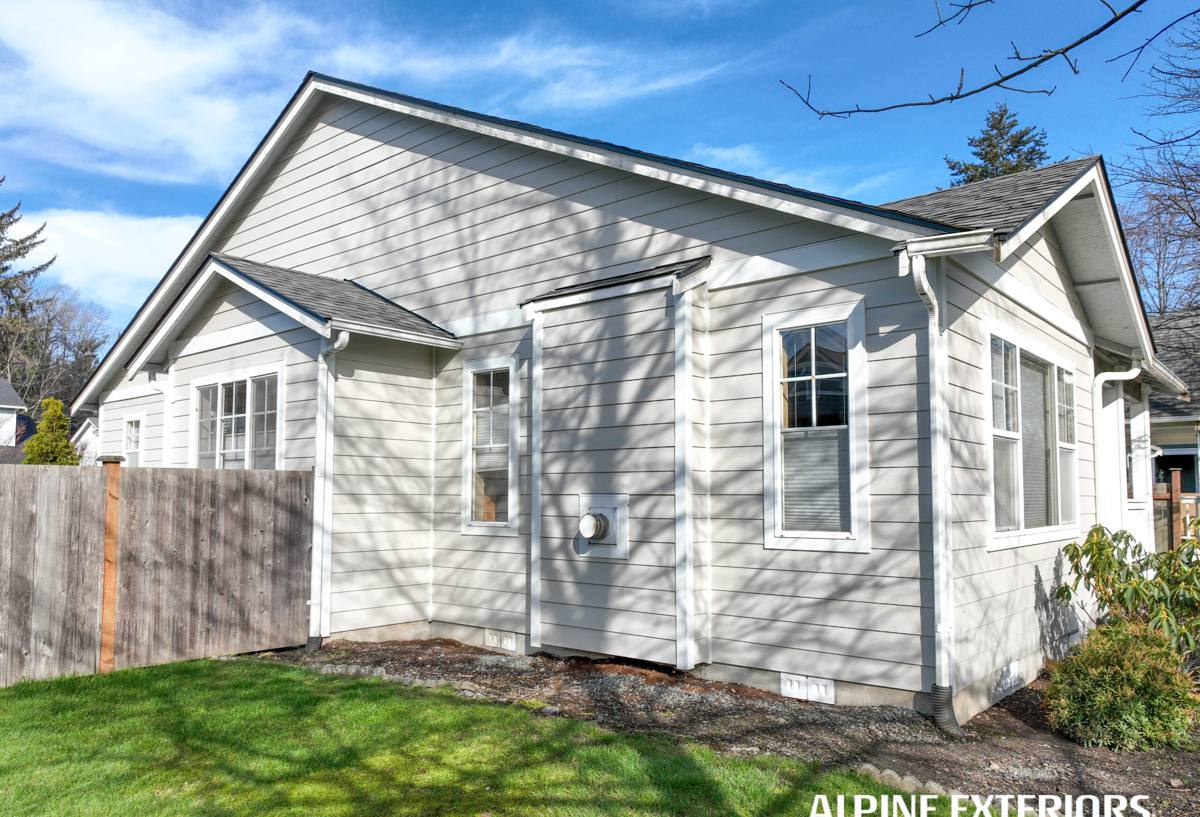
What Salt Air, Rain, and Moss Actually Do to a Roof Over Time
Salt-Laden Air and Metal Components
Every roof has metal in it somewhere — flashing, drip edge, fasteners, vent boots, valley metal. In a waterfront environment like Sandy Point, salt carried in the air accelerates corrosion on anything that isn't properly rated or protected. Cheap or mismatched fasteners can start rusting years before the shingles themselves show wear, and once a fastener corrodes, it loses its grip and its seal at the same time. That's a slow leak waiting to happen, usually in a spot that's hard to spot from the ground.
Wind-Driven Rain and Water Intrusion
Straight-down rain is easy for any roof to shed. Rain that's being pushed sideways by wind off the water is a different problem — it can work its way up under shingle edges, into laps that weren't sealed tight, and through fastener penetrations that would be fine in calmer conditions. This is why the underlayment, flashing, and sealing details matter as much as the visible roofing material. A roof can look perfectly installed from the street and still let water in during a driving storm if those underlying details were rushed.
Moss, Shade, and Trapped Moisture
Whatcom County's wet season gives moss plenty of time to establish itself, and shaded roof planes near trees or on the north side of a house are especially prone to it. Moss isn't just a cosmetic issue. It holds moisture directly against the roofing material, works its way under shingle tabs as it grows, and can lift edges enough to let water underneath. On an older roof, moss growth is often the first visible sign that moisture is already being retained longer than it should be.
Signs Your Sandy Point Home Needs a New Roof, Not Another Repair
Repairs make sense when a roof has isolated damage and the rest of the roofing system is still sound. Full replacement makes sense once the roof as a whole is past the point where patching addresses the real problem. Some signs worth taking seriously:
- Granule loss heavy enough that you can see bare or shiny patches on asphalt shingles
- Shingles that are curling, cupping, or cracking across multiple areas of the roof, not just one spot
- Moss or algae covering large sections rather than a few isolated patches
- Rust staining or visible corrosion around flashing, vents, or metal valleys
- Soft spots in the roof deck, or sagging visible from the ground or the attic
- Daylight visible through the roof boards from inside the attic
- Water stains on interior ceilings, especially ones that reappear after every heavy rain
- A roof that's approaching or past the age range typical for its material, with recurring repair calls
If a few of these apply, it's worth having someone look at the whole roof rather than chasing individual symptoms one at a time.
What a Correct New Roof Installation Involves
Tear-Off and Deck Inspection
A proper installation starts with a full tear-off down to the roof deck, not an overlay on top of old material. That's the only way to actually see what's underneath — soft or delaminated sheathing, past water damage, or ventilation problems that have been hidden by the old roofing for years. Any damaged decking gets replaced before anything new goes down. Skipping this step is one of the most common ways a new roof ends up with problems inside its first few years.
Underlayment and Ice-and-Water Barrier
Given how much wind-driven rain a Sandy Point roof deals with, the underlayment layer matters more here than it would on a sheltered inland roof. A quality synthetic underlayment across the full roof, with self-adhering ice-and-water barrier at eaves, valleys, and other vulnerable spots, gives the roof a real second line of defense if wind ever pushes water past the surface layer.
Flashing Details
Flashing around chimneys, skylights, walls, and roof-to-roof transitions is where most leaks actually originate, far more often than the field of the roof itself. Correct installation means new flashing, properly lapped and sealed, matched to the roofing material — not old flashing reused to save time, and not caulk used as a substitute for proper metalwork.
Ventilation
A roof deck that can't breathe traps moisture from inside the house against the underside of the roofing material, which shortens its life regardless of how good the shingles are. Balanced intake and exhaust ventilation is part of a correct installation, not an optional extra, and it also helps reduce the damp, cool conditions that moss favors.
Choosing a Roofing Material for This Environment
There's no single "best" roofing material for every home — it depends on budget, the look you want, and how much long-term maintenance you're willing to take on. Here's how the common options compare for a salt-air, high-moss location like Sandy Point:
| Material | How It Handles Salt Air & Rain | Moss & Maintenance | Typical Lifespan |
|---|---|---|---|
| Architectural Asphalt Shingle | Good, especially with corrosion-resistant flashing and fasteners | Moderate — benefits from periodic cleaning and moss treatment | 25–30 years |
| Standing Seam Metal | Excellent when properly coated and fastened for coastal exposure | Low — sheds moss more easily due to smooth, sloped surface | 40–50+ years |
| Cedar Shake | Sensitive to sustained moisture; requires careful detailing near the water | High — natural wood is more prone to moss and rot in this climate | 20–30 years with diligent upkeep |
We install all of these, but for waterfront exposure specifically, we're upfront with homeowners: cedar shake looks great and plenty of people want that look, but it's the highest-maintenance option in a moss-prone, salt-air environment, and it needs a homeowner committed to regular upkeep to get its full lifespan. Asphalt and metal both require less babying and hold up more predictably here, which is why they're what we recommend most often for Sandy Point roofs unless a homeowner has a strong reason to go another direction.
Our Installation Process
- On-site assessment — we look at the existing roof, the deck condition where accessible, ventilation, and any problem areas the homeowner has already noticed.
- Written estimate — material options, scope of work, and pricing laid out clearly, with no pressure to decide on the spot.
- Scheduling around weather — we plan installation windows with Whatcom County's rain patterns in mind, since a roof needs a reasonably dry stretch to go on correctly.
- Tear-off and deck repair — full removal of old roofing, deck inspection, and replacement of any compromised sheathing.
- Underlayment, flashing, and ventilation installation — the layers that do most of the actual work keeping water out.
- New roofing material installation — installed to manufacturer specification so material warranties stay valid.
- Site cleanup and final walkthrough — debris and old materials hauled off, and we walk the finished roof with the homeowner.
Why a Crew That Already Works in Sandy Point Matters
Sandy Point isn't a typical suburban subdivision. Many waterfront communities in this area, Sandy Point included, have narrower private roads and more limited access points than a standard neighborhood, which affects how a crew stages equipment, dumpsters, and material delivery. A crew unfamiliar with those constraints can end up wasting a homeowner's time figuring out logistics that a local crew already knows how to plan around.
There's also the exposure factor itself. A contractor who mainly works roofs a few miles inland doesn't necessarily think about corrosion-resistant fasteners, coastal-rated flashing, or moss-prone shaded areas as a default — because most of their jobs don't demand it. A crew that regularly works Sandy Point and similar waterfront properties around Ferndale builds those considerations into the estimate and the installation from the start, rather than treating them as an upsell or an afterthought.
What Affects the Cost of a New Roof Here
Every roof is different, so exact pricing depends on a site visit, but the main cost drivers on a Sandy Point job are usually roof size and pitch, the material chosen, how much deck repair is needed once the old roofing comes off, and site access. As a very rough starting point, most full residential roof replacements in this area land somewhere in the low five figures for asphalt shingle up to considerably more for standing seam metal or cedar shake, depending on the home's size and complexity. We'd rather give you an honest number after seeing the actual roof than a figure that doesn't hold up once we're up there.
Keeping a New Roof Performing After Installation
A correct installation is most of the work, but a little upkeep afterward goes a long way in this climate. Keeping gutters clear so water isn't backing up under the eaves, trimming back overhanging branches that shade roof sections and encourage moss, and having the roof looked at every couple of years rather than only when there's a visible problem all help a new roof reach its full expected lifespan. Moss treatment on a new roof is far easier and cheaper than dealing with moss that's had years to establish itself.
If your Sandy Point roof is showing its age, or you just want an honest opinion on whether it's a repair situation or a replacement situation, we're happy to take a look. There's a form below to request a free, no-pressure estimate — no obligation, just a straight answer about what your roof actually needs.