 Ferndale
 Why Point Roberts Roofs Age Differently Than Roofs Inland
Point Roberts sits on its own little peninsula off the tip of Whatcom County, surrounded on three sides by Boundary Bay and the Strait of Georgia. That location is part of what makes it a beautiful place to own a home — and part of why the roofs here take more punishment than roofs even a few miles inland in Ferndale or Bellingham. Salt-laden air moves off the water and settles on every exposed surface. Wind-driven rain comes in sideways off the water during fall and winter storms instead of falling straight down. And the long, damp Pacific Northwest shoulder seasons give moss and moisture months at a time to work into anything that isn't sealed up right. A roof repair here has to account for all three, not just patch the spot that's leaking.
We've worked on homes throughout Whatcom County, including the shoreline and marine-exposure properties around Point Roberts, and we've seen what generic patch jobs look like two winters later. This page walks through what actually holds up out here, what a correct repair involves, and how we handle the logistics of working in a community that's geographically its own island in most practical ways.
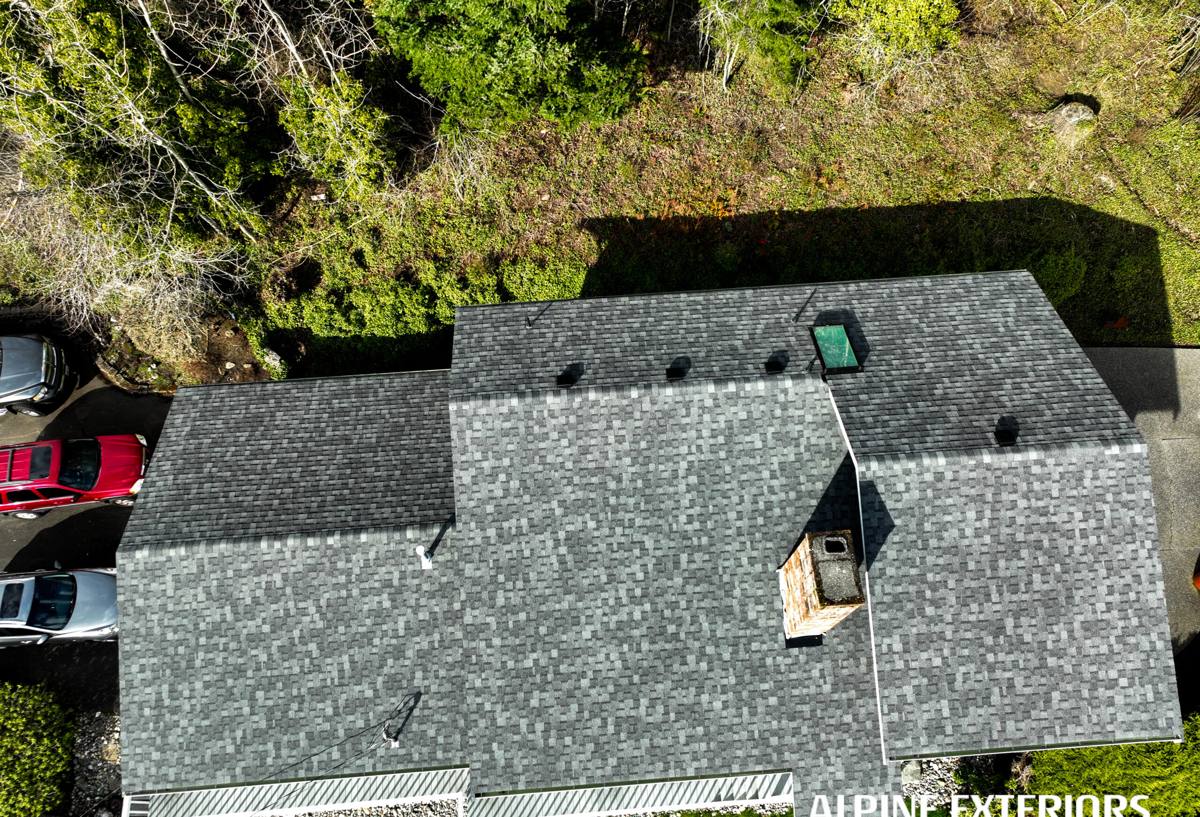
What Salt Air, Rain, and Moss Actually Do to a Roof
Salt Air and Metal Fatigue
Salt in the air isn't just a coastal cliché — it's corrosive to exposed metal. Nail heads, flashing, vent boots, gutter fasteners, and any exposed metal trim take the brunt of it. Galvanized fasteners that would last decades in a dry inland climate can start rusting and weeping stains within a few years this close to the water. Once a fastener corrodes, it loses its grip and its seal, and that's exactly where water starts finding its way in.
Driving Rain and Wind-Driven Water
Point Roberts gets exposed to weather off open water with very little to break the wind. Rain doesn't just fall on a roof here — it gets pushed sideways under shingle tabs, up under ridge caps, and into any gap in flashing that would stay dry in a more sheltered location. Repairs that rely on gravity alone to shed water (rather than proper laps, sealed fasteners, and underlayment that handles wind-driven moisture) tend to fail first in exactly this kind of exposure.
Moss Season
Whatcom County's wet season stretches long, and shaded or north-facing roof sections can stay damp for weeks at a time. Moss and algae take hold in that environment, and once established, moss does more than look bad — it lifts shingle edges, holds moisture against the roof deck, and works its root structure into seams and granule surfaces. A repair that doesn't address the moss causing the problem in the first place is a temporary fix at best.
Signs a Point Roberts Roof Needs Repair, Not Just a Watch-and-Wait
Because this climate is harder on roofing, small issues turn into active leaks faster here than they would somewhere drier. These are the signs worth acting on:
- Granules collecting in gutters or at downspout outlets — a sign the shingle surface is wearing thin
- Moss or dark streaking concentrated on shaded or north-facing slopes
- Rust staining running down from flashing, vent boots, or nail heads
- Curling, cupping, or lifted shingle edges, especially on the side of the roof facing prevailing wind and rain
- Soft spots, staining, or a musty smell in the attic or ceiling below a given roof section
- Daylight visible through the roof deck from inside the attic
- Cracked or displaced ridge cap shingles after a windstorm
- Gutters pulling away from the fascia, which redirects water back up under the roof edge
Any one of these on its own might just need monitoring. Two or more together, especially heading into fall storm season, usually means it's time for a proper look before it turns into interior damage.
What a Correct Roof Repair Actually Involves
Diagnosis Before Patching
A leak's exit point and its entry point are often not the same spot — water travels along rafters and sheathing before it shows up as a stain. A correct repair starts with tracing the water back to where it's actually getting in, not just sealing the spot where the ceiling stain appears. That sometimes means pulling back shingles or checking the attic from the inside before any patching begins.
Matching Materials and Fastening for the Exposure
Given the salt air and wind exposure, we use fasteners and flashing rated to hold up in a marine-influenced environment, not standard hardware that's fine for a sheltered inland roof. Shingle or material matching also matters — a patch in the wrong material, weight, or color doesn't just look wrong, it can shed water differently than the surrounding roof and create a new failure point at the seam.
Flashing and Ventilation, Not Just Shingles
A large share of the leaks we find on coastal homes trace back to flashing — around chimneys, skylights, vent pipes, and roof-to-wall transitions — rather than the field of the roof itself. Ventilation matters too: a roof deck that can't breathe stays damp longer after every rain, which feeds moss growth and accelerates rot in the sheathing underneath. A repair that only addresses visible shingle damage without checking the flashing and airflow around it is treating a symptom.
Repair vs. Replacement: What Actually Drives the Decision
| Factor | Leans Toward Repair | Leans Toward Replacement |
|---|---|---|
| Age of roof | Under roughly two-thirds of expected material lifespan | Near or past the end of its expected service life |
| Extent of damage | Isolated to one section, flashing point, or slope | Widespread across multiple slopes or systemic moss/moisture damage |
| Decking condition | Sheathing is solid beneath the damaged area | Soft, rotted, or delaminated decking found during inspection |
| Underlayment condition | Original underlayment intact and dry elsewhere | Underlayment failing broadly, not just at the repair site |
| Frequency of past repairs | First or second repair on this roof | Repeated repairs to the same or nearby areas |
We'll always tell you honestly which side of this table your roof falls on. Most of the time, a well-diagnosed repair is the right call — replacement is only worth recommending when the underlying deck or underlayment has already been compromised.
Our Process for Point Roberts Homes
Scheduling Around the Border
Point Roberts is part of Whatcom County and part of the United States, but by land it's only reachable through Canada. That's not a small detail for scheduling a roofing crew — it affects how we plan material delivery, how much lead time an emergency tarp-and-repair visit needs, and why we batch trips efficiently rather than making multiple short runs. We build that reality into our estimate and scheduling conversation up front instead of surprising you with it later.
Inspection and Written Scope
We inspect the affected area and the roof generally — not just the spot you called about — and give you a written scope of what we found and what we recommend, including photos where useful. If we find something beyond the original complaint, like early moss growth on an adjacent slope, we'll flag it rather than staying silent and letting it become next year's emergency call.
The Repair Itself
We remove and replace only the compromised material, matching shingle type, color, and fastening pattern as closely as possible, and we address the underlying cause — corroded flashing, failed underlayment, or trapped moisture — not just the visible surface damage. Fasteners and flashing are selected for the marine air exposure common on this stretch of coast.
Cleanup and Documentation
We clear debris, magnet-sweep for stray fasteners, and leave the site clean. For homeowners who aren't on-site full time — which describes a lot of Point Roberts properties — we can document the completed work with photos so you have a record even if you weren't able to be there in person.
Why Local, Weather-Tested Experience Matters Here
A lot of Point Roberts homes are part-time residences, vacation properties, or homes owned by people who live elsewhere and only visit periodically. That combination — an absentee ownership pattern plus a harsh marine climate — is exactly the situation where small roof problems go unnoticed the longest. A slow leak that would get caught quickly in a full-time residence can sit for weeks or months in a home that's only occupied part of the time, and by the time it's discovered, it's often bigger than a simple patch.
That's the case for working with a crew that already understands this specific stretch of coastline — the way the wind comes off the water, the shaded slopes that hold moss longest, the border logistics that affect scheduling, and the fastening and flashing choices that actually hold up here rather than just meeting a generic spec. We'd rather tell you honestly that a repair will hold for years than oversell a fix that fails the first hard winter storm.
Maintenance That Extends the Life of a Repair
A good repair lasts longer with basic upkeep between visits. None of this requires a contractor every time — most of it is homeowner-level maintenance, or something we can bundle into an annual check if you're not local full-time.
- Keep gutters and downspouts clear so water isn't backing up under the roof edge
- Trim back overhanging branches that keep shaded roof sections damp longer than they need to be
- Have moss physically removed rather than just chemically treated when it's established, since dead moss still holds moisture against the roof
- Check attic ventilation isn't blocked by insulation or debris, since trapped moisture accelerates every other problem on this list
- Walk the roofline visually after major windstorms for lifted shingles or displaced ridge caps
- Address small leaks the season they appear rather than waiting for a dry stretch to "deal with it later"
Getting an Honest Look at Your Roof
If you're dealing with a stain on the ceiling, visible moss, or just want a roof that's been through a few winters checked before the next storm season, we're glad to take a look. We'll tell you plainly whether it's a repair, what's driving the damage, and what it'll take to fix it right for this climate — no upsell, no guesswork. Fill out the form below for a free, no-pressure estimate on your Point Roberts roof.