 Ferndale
 Deck Building for Sandy Point's Waterfront Exposure
Sandy Point sits out on the water in Whatcom County, and that location changes what a deck needs to survive compared to a deck built a few miles inland. Homes here take a steadier dose of salt-laden air, more wind-driven rain coming in sideways off the water, and a moss season that runs longer than almost anywhere else in the Ferndale area. A deck built without those conditions specifically in mind — using inland framing habits, standard hardware, or whatever decking happens to be on sale — tends to show problems early: corroding fasteners, a ledger board quietly trapping moisture against the house, boards that stay slick with moss well into a season when a drier deck would have dried out weeks earlier. We build decks for this stretch of coastline regularly, and this page is about what actually goes into a deck that holds up here, not a generic overview of deck building in general.
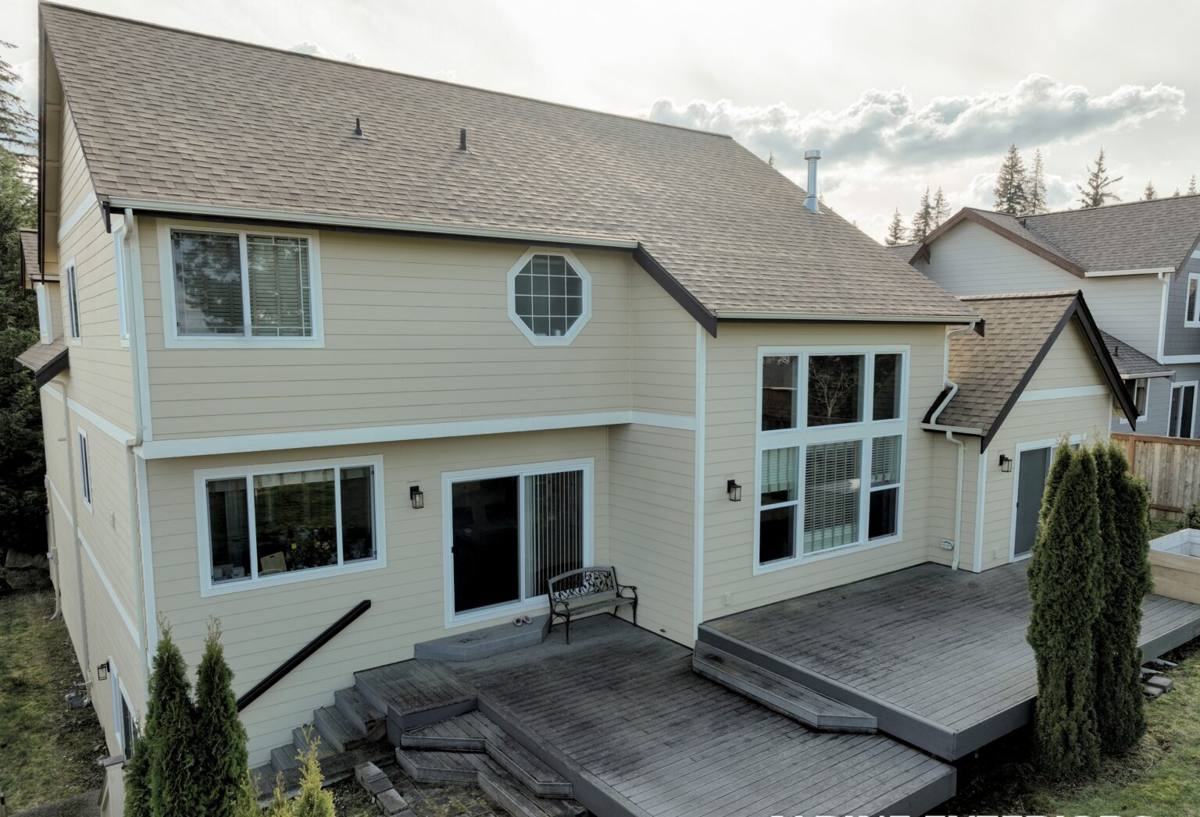
What Sandy Point's Climate Does to a Deck
Salt Air and Fastener Corrosion
Open water exposure means more salt in the air, and salt is hard on metal. Standard fasteners, brackets, and hardware corrode faster here than they would on a deck set back from the water, and once a fastener starts rusting it loses holding strength well before the rust is visible from a few feet away. That matters most in structural connections — joist hangers, ledger bolts, post bases — where a weakened fastener isn't just cosmetic, it's a safety issue.
Driving Rain and Ledger Moisture
Wind off the water pushes rain sideways more often than it falls straight down, and a deck ledger board is one of the more vulnerable spots on a house for exactly that reason. Where the deck framing attaches to the house, water can track behind poorly flashed ledger boards and sit against the wall sheathing and framing, which is a slow, hidden path to rot that often isn't caught until siding or trim work is already needed alongside the deck repair.
A Long Moss Season
Shaded areas and near-constant moisture keep moss and algae active on Sandy Point decks for a longer stretch of the year than inland properties see. Beyond looking bad, a mossy deck surface is a genuine slip hazard, and sustained moss growth on a wood deck holds moisture against the boards in a way that speeds up surface decay, especially in low spots, board gaps that have started to close up, or areas that don't get much sun.
Wind and Structural Loading
Decks with open exposure toward the water also take more sustained wind than a deck tucked behind a windbreak of trees or neighboring structures. That's a factor in railing attachment, post bracing, and how the whole structure is tied back to the house — details that matter more here than they would on a sheltered inland lot.
Decking Material Options for a Sandy Point Property
Material choice matters more here than in a calmer climate, because the gap between a material that's suited to sustained coastal exposure and one that isn't shows up faster. Here's how the common options actually compare for this specific setting.
| Material | Performance in Salt Air and Moisture | Maintenance |
|---|---|---|
| Pressure-treated wood | Affordable and workable, but needs consistent sealing to resist moisture and salt exposure; end grain and fastener points are the weak spots | Annual cleaning and periodic re-sealing |
| Cedar | Naturally rot-resistant and a good look, but softer and more prone to surface weathering under sustained salt and moisture than composite or PVC | Regular cleaning, periodic finish maintenance |
| Capped composite | A protective cap resists moisture absorption and salt exposure well; performs strongly in this kind of coastal setting | Occasional washing, no sealing or staining |
| Cellular PVC | Fully synthetic and essentially immune to rot and salt-driven decay; among the most stable choices for direct water exposure | Low — occasional washing |
We'll talk through the honest trade-offs of each for your specific deck — upfront cost, appearance, and how much upkeep you actually want to take on — rather than pushing whichever material carries the best margin.
What a Correctly Built Deck Involves Here
Footings and Framing
Footings need to be set below frost depth and sized appropriately for the soil conditions on the lot, and framing lumber should be rated for ground contact or exposure where it's called for. On a waterfront lot, we don't cut corners on footing depth or framing spec just because the visible part of the job is the decking surface — the structure underneath is what actually determines how long the deck lasts.
Ledger Attachment and Flashing
The ledger board is the single most important detail on a house-attached deck in this climate. It needs to be properly flashed so that water sheds away from the house rather than tracking behind the ledger, and it needs to be bolted — not just nailed — into solid framing. Given how much wind-driven rain this location sees, this is not a spot to under-build.
Fasteners and Hardware
Given the corrosion risk from salt air, hardware selection matters more here than inland. Stainless steel or high-grade coated fasteners and connectors hold up significantly longer than standard galvanized hardware in sustained salt exposure, and that difference shows up as loose railings and corroding joist hangers years sooner on a deck built with the wrong hardware for the setting.
Decking Board Selection and Spacing
Board spacing affects drainage and drying time, which matters directly for how long moss and algae can gain a foothold on the surface. Proper gapping lets water and debris pass through instead of pooling, and it's one of the simplest details that gets skipped on a rushed job.
Railings and Code Requirements
Railing height, baluster spacing, and post attachment all need to meet current building code, and on an exposed waterfront lot, railing post connections deserve extra attention given the added wind load. We build to code as a floor, not a ceiling.
- Ledger board properly flashed and lag-bolted into solid framing, not just nailed
- Footings set to correct depth for local soil and frost conditions
- Stainless or coated corrosion-resistant fasteners and hardware throughout
- Decking material matched to your maintenance expectations and budget, not just the lowest sticker price
- Board spacing that allows proper drainage and airflow underneath
- Railings and post attachment built to current code, sized for the site's wind exposure
Repair, Resurface, or Full Rebuild
Not every Sandy Point deck problem calls for tearing the whole thing out. A deck with sound framing and footings but tired, weathered boards can often be resurfaced with new decking over the existing structure, which costs less and takes less time. But if the ledger board has been letting water in for a while, if joists or posts show soft spots or rot, or if the framing was never properly sized to begin with, resurfacing just puts new boards on top of a problem that's still there. We'll tell you honestly which situation you're in before you spend money on the wrong fix.
Signs It's Time to Call Someone
- Boards that feel soft, spongy, or spring underfoot
- Moss or algae that comes back within days of cleaning
- Rust streaks around fasteners or visibly corroding hardware
- Gaps opening up between the ledger board and the house siding or trim
- Railings or posts that feel loose or wobble under load
- Staining on the wall directly above where the deck attaches to the house
Our Process for a Sandy Point Deck Project
We start with an in-person walk-through of the site — checking existing framing if there's a deck to replace, looking at how the house wall behind the ledger location is holding up, and talking through what you actually want out of the space. From there we go over material options honestly, including maintenance expectations, before putting together a written estimate. Once a project starts, we follow the same footing, framing, flashing, and fastener standards described above regardless of which decking material you choose, because those structural details are what determine whether the deck is still solid in ten years, not just what it looks like on day one.
Why a Crew That Already Works Sandy Point Matters
A contractor who builds decks in sheltered, inland settings all day doesn't necessarily think about ledger flashing, fastener grade, or board drainage the same way a crew that works this specific stretch of waterfront does. We've seen how fast standard hardware corrodes here, how long moss holds on in shaded corners, and where wind-driven rain actually gets into a structure that looked fine on paper. That experience shapes real decisions on build day — which hardware grade is worth the extra cost, how much attention the ledger flashing gets, and where we won't cut a corner even if it would save a few hours. Sandy Point's direct water exposure means its homes deal with a heavier version of the same conditions the rest of the Ferndale area sees, and a deck built for that reality holds up longer than one built to a generic spec.
What to Expect When You Call Us
- An honest look at your site, and your existing deck if you have one, before we recommend anything
- A clear explanation of material trade-offs for your specific situation and budget
- A straight answer on whether resurfacing, repair, or a full rebuild actually makes sense
- A written estimate with no pressure to sign on the spot
If you're planning a new deck, replacing a tired one, or just want an honest opinion on what's happening under an existing deck at your Sandy Point property, we're glad to take a look. Reach out using the form below to schedule a free, no-pressure estimate.