 Ferndale
 Storm Season and Marietta Roofs: A Different Kind of Wear
Marietta sits close to the water, just outside Ferndale in Whatcom County, and that location shapes everything about how a roof ages here. It's not one storm that causes most of the damage we get called out for — it's the combination. Wind off the water drives rain sideways under shingle edges. Salt-laden air accelerates corrosion on fasteners and flashing faster than it would inland. And the long wet season, stretching from fall through spring, keeps roof surfaces damp long enough for moss to take hold and stay there. A roof that would hold up fine in a drier climate can develop real problems here within a few seasons if it isn't built and repaired with these conditions in mind.
Storm damage repair in Marietta isn't just about patching what a single windstorm knocked loose. It's about recognizing that the underlying roof has been dealing with marine weather all year, and any repair has to account for that ongoing exposure — not just the visible damage from the last storm.
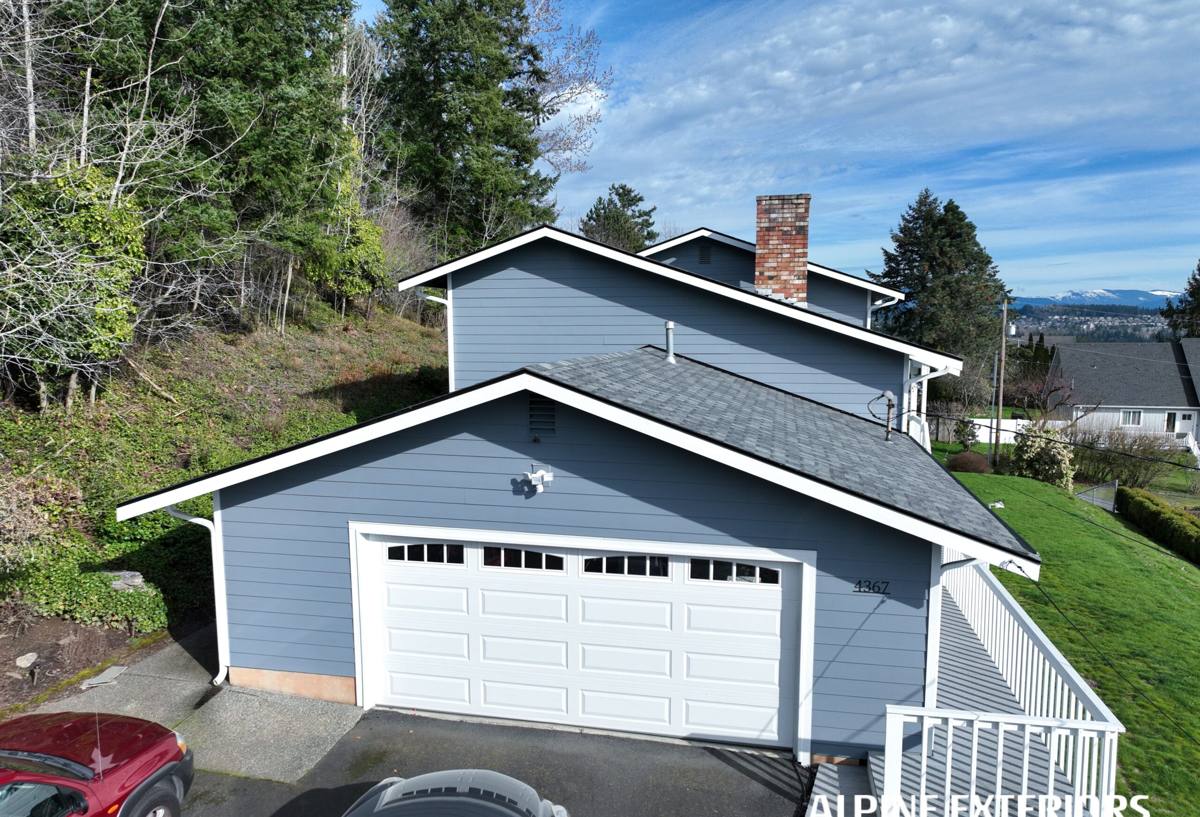
How Storm Damage Shows Up on a Marietta Roof
Wind and Rain Damage
After a windstorm, the obvious signs are missing or torn shingles, and those get found quickly. The less obvious damage is what happens to shingles that got lifted but didn't tear off completely. Wind can break the adhesive seal along a shingle's edge without removing it, leaving a flap that looks fine from the ground but lets wind-driven rain underneath during the next storm. Flashing around chimneys, vents, and roof valleys is another common failure point — it's designed to shed water, but a hard gust can bend or separate it just enough to open a gap.
Moss and Trapped Moisture
The other kind of damage builds slowly. Moss mats hold moisture directly against the shingle surface long after a storm has passed, which accelerates granule loss and, over time, can work moisture down to the decking underneath. A roof with a heavy moss problem is often more vulnerable to storm damage, too — moss lifts shingle edges just enough for wind to get a grip on them. We treat moss removal and storm damage repair as related problems, not separate ones, because on a lot of Marietta roofs they are.
What a Correct Storm Damage Repair Actually Involves
A repair that only replaces the shingles you can see from the driveway isn't a real repair — it's a temporary cover-up. Correct storm damage repair means pulling back the affected area far enough to inspect what's underneath: the decking, the underlayment, and the flashing details at every penetration and edge. If water has been getting in for any length of time, the decking can be softened or the underlayment compromised even where the shingles themselves look intact.
We also match materials and methods to what's already on the roof, or explain clearly when an upgrade makes sense — for example, swapping in corrosion-resistant flashing at a valley that failed, even if the rest of the roof uses standard flashing, because that spot is clearly taking more abuse than the rest of the roof.
- Tear back damaged shingles far enough to expose sound material on all sides, not just the visibly broken section
- Check decking for soft spots, discoloration, or delamination before replacing anything on top of it
- Inspect and replace underlayment in the repair area, not just the shingles
- Rebuild flashing details at valleys, chimneys, and vent penetrations rather than caulking over old flashing
- Match shingle type, color, and exposure to the surrounding roof so the repair doesn't stand out or create a mismatched water path
Our Inspection-to-Repair Process
Every storm damage call starts with a full inspection, not just a look at the spot the homeowner noticed. Wind and moss damage often show up in more than one place, and it's not unusual to find a second problem area the homeowner didn't know about.
- Initial roof inspection, including the interior attic or ceiling if there's any sign of water intrusion
- Documentation of the damage with clear notes on cause and extent, useful if you're filing an insurance claim
- A written repair plan and estimate that explains what's being done and why, in plain terms
- The repair itself — decking, underlayment, flashing, and shingle work, done in the sequence that actually sheds water correctly
- A final walk-through so you can see what was done before we consider the job finished
Common Storm Damage We See in Marietta and How We Approach It
| Damage Type | What's Actually Happening | Our Repair Approach |
|---|---|---|
| Lifted or missing shingles | Wind breaks the adhesive seal or tears shingles loose, exposing underlayment | Replace affected shingles and re-seat surrounding ones; check underlayment before covering it back up |
| Flashing separation | Metal flashing at valleys or penetrations bends or pulls away, opening a gap for water | Remove and rebuild the flashing detail rather than patching over it with sealant |
| Moss-related granule loss | Trapped moisture breaks down shingle surface faster than normal weathering | Remove moss, treat the roof, and repair or replace shingles where granule loss has gone too far |
| Soft or spongy decking | Prolonged moisture intrusion has weakened the plywood or boards under the shingles | Cut out and replace the affected decking before any new roofing material goes down |
| Debris impact damage | Branches or blown debris puncture or crack shingles directly | Localized shingle and underlayment replacement, with a check for hidden decking damage at the impact point |
Materials We Use for Coastal Whatcom County Conditions
Salt air is hard on fasteners and exposed metal. We use corrosion-resistant fasteners and flashing on repairs in areas like Marietta rather than standard galvanized options, because the marine air here shortens the working life of anything less. For moss-prone roofs, we'll often recommend zinc or copper strips near the ridge as part of a repair — they release trace metal ions when it rains that discourage moss regrowth, which is a meaningful help in a climate where moss season runs most of the year.
We also pay close attention to underlayment quality. A synthetic underlayment with good water resistance is worth the modest added cost on a roof that's going to see this much sustained rain, and it gives you a real second line of defense if a shingle ever fails again between now and your next roof replacement.
Storm Damage and Insurance Claims: What Homeowners Should Know
Not every repair needs to go through insurance, but when a storm event causes clear, sudden damage, a claim is often worth filing. We provide honest, factual documentation — photos, notes on cause, and a clear scope of repair — that you can hand to your adjuster. We won't inflate a scope of work to chase a bigger payout, and we're direct if we think damage is more consistent with age and gradual wear than a single storm event, since that distinction matters for how a claim gets handled. Getting that assessment right upfront saves you from disputes with your insurer later.
Cost Factors in Storm Damage Roof Repair
Costs vary enough from job to job that we don't quote broad numbers without seeing the roof, but a few factors consistently drive the price up or down:
| Factor | Why It Matters |
|---|---|
| Extent of decking damage | Replacing rotted decking adds material and labor beyond simple shingle replacement |
| Roof pitch and access | Steeper or harder-to-reach roof sections take longer and require more safety setup |
| Flashing complexity | Valleys, chimneys, and multiple penetrations take more time to rebuild correctly than a flat expanse of shingles |
| Shingle match availability | Matching an older roof's discontinued color or style can affect material sourcing and cost |
| Moss and debris removal | A heavy moss mat has to be cleared and the roof surface assessed before repair work can start |
Preventing Repeat Damage After the Repair
A good repair fixes the current problem. Keeping it from happening again means staying ahead of the conditions that caused it — which, in Marietta, means managing moisture and moss year-round rather than just after a storm.
- Clean gutters and downspouts at least twice a year so water isn't backing up under the roof edge
- Trim back tree limbs that overhang the roof, since they drop debris and keep sections shaded and damp
- Have moss growth treated before it forms a thick mat, not after
- Check flashing at chimneys and valleys annually, since these are the first points to fail in wind
- Schedule a roof inspection after any significant windstorm, even if nothing looks obviously wrong from the ground
Why Hiring a Crew That Already Works Marietta Matters
A roofer who works this stretch of Whatcom County regularly knows which parts of a roof tend to fail first in this climate, how bad a given moss season is likely to get, and what kind of wind exposure a Marietta property typically deals with compared to a more sheltered inland lot. That's not something you can fully substitute with general roofing experience from a drier or more inland region. It also means faster response after a storm — we're not driving in from out of the area to give you an estimate, and we're still around afterward if you have a question about how the repair is holding up.
If you've got storm damage, a stubborn moss problem, or just want a second opinion on a roof section that's been bothering you, we're glad to come take a look. Estimates are free and there's no pressure to move forward — you'll get a straight answer about what's actually going on and what it would take to fix it.